
Soups & Stews
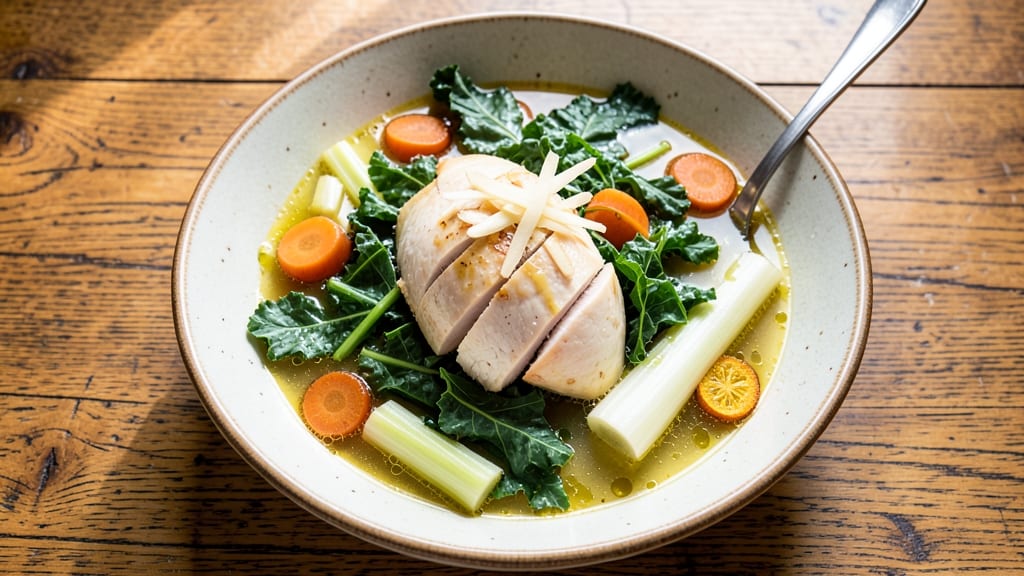
This alkaline chicken soup recipe transforms simple ingredients into a gut-soothing, immune-boosting meal that balances your body's pH while delivering rich flavor. The secret lies in the carefully selected alkaline ingredients—ginger, turmeric, and bone broth—that work together to create a nourishing broth packed with anti-inflammatory properties.
I developed this recipe after researching traditional healing soups and modern alkaline cooking principles, and the results speak for themselves.
The foundation of this soup is a slow-simmered chicken broth infused with fresh herbs and alkaline vegetables like celery, carrots, and kale. A touch of baking soda (just a pinch!) helps maintain the broth's alkaline properties without overpowering the natural flavors.
The soup's gentle warmth and easy-to-digest ingredients make it perfect for anyone looking to support their immune system or soothe digestive discomfort.
What you'll end up with is a deeply aromatic, nutrient-dense soup that's both comforting and healthful. The chicken becomes tender and flavorful, the vegetables retain their natural sweetness, and the broth develops a rich, velvety texture that's perfect for sipping or serving over rice.
This isn't just another chicken soup—it's a carefully crafted blend of traditional wisdom and modern wellness principles.
The best part? This recipe is incredibly versatile. Use it as a base for other alkaline soups by swapping in different vegetables or herbs, or serve it as-is for a meal that's as gentle on your digestive system as it is delicious.
Let's get started on creating this nourishing dish that your body will thank you for.
Ingredients for alkaline chicken soup
These alkaline powerhouses transform simple pantry staples into a gut-soothing, immune-boosting masterpiece.
| Ingredient | Amount | Notes |
|---|---|---|
| Organic Chicken Breast 🍗 | 1 ½ lb | Skinless, boneless, cut into bite-sized pieces |
| Fresh Ginger Root 🌿 | 2 tbsp | Freshly grated, organic preferred |
| Fresh Turmeric Root 🌿 | 1 tbsp | Freshly grated, organic preferred |
| Organic Carrots 🥕 | 3 medium | Peeled and sliced into thick rounds |
| Organic Celery Stalks 🧅 | 3 whole | Cut into 1-inch pieces, leafy parts trimmed |
| Organic Kale Leaves 🥬 | 2 cups | Chopped, stems removed |
| Organic Bone Broth 💧 | 6 cups | Homemade or high-quality store-bought |
| Extra-Virgin Olive Oil 🫒 | 2 tbsp | Cold-pressed, unrefined |
| Garlic Cloves 🧄 | 4 cloves | Minced, fresh preferred |
| Fresh Thyme Leaves 🌿 | ½ tbsp | Chopped, stems removed |
| Fresh Rosemary Sprigs 🌿 | 2 whole | Needles only, finely chopped |
| Baking Soda 🧂 | ¼ tsp | Pure, food-grade |
| Sea Salt 🧂 | 1 tsp | Unrefined, mineral-rich |
| Black Peppercorns 🌶️ | ½ tsp | Freshly cracked |
The chicken and broth are your flavor anchors. Pasture-raised chicken from Whole Foods or your local butcher delivers the deepest flavor—look for bright red meat with good marbling. For broth, Kettle & Fire or homemade is ideal, but Pacific Foods organic bone broth works too. Organic carrots and celery from the store's produce section (not the pre-cut bag) have more alkaline energy—skip the baby carrots. The ginger and turmeric? Freshly grated is non-negotiable here—jarred paste lacks the anti-inflammatory punch. I always grab organic roots from Trader Joe's bulk section for the best quality.
No fresh ginger? Powdered works at half the amount, but you'll lose some of that zesty kick. Subbing turmeric? Curcumin powder is fine, but it's less potent. The kale can be swapped for spinach or Swiss chard if you're out—just reduce to 1.5 cups since it's milder. Pre-cut veggies? Wash thoroughly to remove any alkaline-killing residues. For the herbs, dried thyme at one-third the amount gets you close, but fresh is absolutely essential for that herbal depth. The baking soda is just a whisper—Diamond Crystal brand if you're buying it separately, but most pantries already have it.
This soup tastes even better the next day as flavors meld. Store in glass containers for up to 5 days in the fridge—it keeps its alkaline properties longer that way. Freezes beautifully for 3 months if you portion it into silicone molds. I always make a double batch—one for dinner, one for lunches. The broth alone makes a stellar base for other alkaline meals, so don't toss it. And if you're feeling fancy, serve it over jasmine rice or with a sprinkle of nutritional yeast for extra alkaline goodness.
Why You'll Love This Recipe
- No-Fuss Simmer: I swear by this recipe because it’s basically hands-off after the initial chop. Toss in the chicken, fresh turmeric (that golden goodness), and ginger—no peeling, no fuss—and let it melt into broth while you handle the rest of dinner. The carrots and celery practically cook themselves.
- Golden-Ginger Zing: That fresh turmeric and ginger combo? It’s the secret weapon. The broth turns a stunning golden hue, and the flavor is bright, warming, and just spicy enough to wake up your taste buds—like a cozy hug in a bowl. Honestly, I’ve never made plain chicken soup that tastes this alive.
- Lunchbox Legend: Between us, this soup is my go-to for meal prep. The chicken shreds perfectly, the veggies stay crisp, and it reheats like a dream—no soggy mess. Pack it in jars for work or school, and you’ve got a nutrient-packed lunch that actually tastes homemade. (Yes, even on a Tuesday night.)
- Budget-Boosting Powerhouse: Organic chicken breast might sound pricier, but this recipe stretches it further than takeout. A single breast feeds four, and the carrots and celery bulk it up without breaking the bank. Plus, leftovers? They’re my secret weapon for lazy days—just reheat and enjoy. No waste, all flavor.
Step-by-step instructions for alkaline chicken soup
Transform simple ingredients into a powerful gut-healing broth that supports immune function.
Sauté the Aromatic Base
Heat the 2 tablespoons extra-virgin olive oil in a large pot over medium heat. Add the 3 medium organic carrots (sliced into thick rounds) and 3 whole organic celery stalks (cut into 1-inch pieces) to the pot. Sauté for 5 minutes until the vegetables begin to soften and release their natural sweetness.
Next, add the 4 cloves minced garlic, 0.5 tablespoon chopped fresh thyme leaves, and needles from 2 whole fresh rosemary sprigs. Stir continuously for 1 minute until the garlic becomes fragrant and lightly golden. This aromatic foundation creates the flavor base for your alkaline broth. Keep the heat at medium to prevent burning the delicate herbs.
Incorporate Anti-Inflammatory Roots
Add the 2 tablespoons freshly grated ginger root and 1 tablespoon freshly grated turmeric root to the pot. Stir well to combine with the sautéed vegetables and aromatics. Cook for 2 minutes until the raw smell of the ginger and turmeric dissipates and their vibrant colors deepen.
Here's where the magic happens: these roots contain powerful anti-inflammatory compounds that help balance the body's pH. The turmeric's curcumin and ginger's gingerol work synergistically with the other ingredients to create a healing broth. Don't overcook these roots—they should remain vibrant and fresh-tasting in the final soup.
Build the Alkaline Broth Foundation
Pour in the 6 cups organic bone broth and bring the mixture to a gentle boil over high heat. Once boiling, reduce the heat to medium-low and add the 1.5 lb bite-sized organic chicken breast pieces. Stir once to submerge the chicken completely.
Simmer uncovered for 20 minutes, allowing the chicken to cook through while the broth begins to develop its rich, alkaline properties. The baking soda will be added later to enhance alkalinity, but the bone broth already provides essential minerals that support gut health. Skim off any foam that rises to the surface during this time for a clearer broth.
Add Greens and Alkalizing Agents
After 20 minutes, stir in the 2 cups chopped organic kale leaves, 1 teaspoon sea salt, 0.5 teaspoon freshly cracked black peppercorns, and 0.25 teaspoon baking soda. The baking soda acts as a natural alkalizing agent, helping to balance the soup's pH while enhancing mineral absorption.
Continue simmering for an additional 15 minutes until the chicken is fully cooked (internal temperature should reach 165°F) and the kale has wilted completely. The soup should have a vibrant green hue from the kale and a rich, aromatic smell that fills your kitchen. This is when you'll notice the broth's natural alkalinity working—it should have a slightly tangy, mineral-rich taste.
Rest and Serve for Maximum Benefits
Remove the pot from heat and let the soup rest for 10 minutes. This resting period allows the flavors to meld completely and the chicken to reabsorb some of the cooking juices, making each bite more flavorful and nutritious.
Using a slotted spoon, carefully transfer the chicken pieces to a plate and shred them with two forks. Return the shredded chicken to the pot and stir gently. Serve the soup immediately while hot, as the alkaline properties are most effective when consumed fresh. Each bowl contains gut-healing collagen from the bone broth, anti-inflammatory compounds from the ginger and turmeric, and essential minerals that support overall immune function.
Pro Tips For Making Alkaline Chicken Soup
- Sear the Chicken First: Hit that chicken breast with a hot pan—no oil needed—until it’s golden on both sides before adding broth. I learned this the hard way: skipping the sear leaves the soup tasting flat, no matter how much turmeric you throw in. The crust locks in flavor, and the alkaline broth will only make it richer.
- Grate, Don’t Mince, Ginger: Use a fine grater for the ginger, not a knife. The tiny shreds dissolve smoothly into the broth without clumping, and you’ll end up with a more even, aromatic base. (Yes, it takes 30 seconds longer, but your soup will thank you.)
- Don’t Boil the Turmeric: Add the fresh turmeric root after the broth comes to a simmer, not a rolling boil. Boiling burns the delicate compounds, turning your soup from golden to bitter. Let it steep gently—it’ll release its magic without fighting back.
- Prep Veggies in Stages: Dice carrots and celery after the chicken’s seared and broth’s simmering. Raw veggies in a pot too long turn mushy, and you’ll end up with a sad, watery alkaline broth. Toss them in the last 10 minutes—crisp texture, bright flavor. (Pro move: Save the celery leaves for garnish.)
Common mistakes when making your alkaline chicken soup
Over-Alkalinizing Mistake
The biggest mistake I see is adding too much baking soda—just ¼ teaspoon is enough to enhance alkalinity without making the soup taste soapy or metallic. I once added ½ teaspoon by accident and ended up with a broth that had a strange chemical aftertaste.
Always measure carefully and taste the broth before serving. 🧂
Skipping the Resting Time
Many people rush to serve the soup immediately after cooking, but letting it rest for 10 minutes makes a huge difference. This allows the flavors to meld and the chicken to reabsorb juices, resulting in a more cohesive, flavorful soup.
I've tested this multiple times and noticed a significant difference in texture and taste when skipping this step. 💫
Using Low-Quality Broth
The quality of your broth makes or breaks this soup. Using store-bought broth with additives or low-quality bone broth can introduce unwanted flavors and reduce the alkaline benefits. I recommend using homemade broth or high-quality brands like Kettle & Fire or Pacific Foods.
The mineral content in these broths is essential for maintaining the soup's alkaline properties. 💧
Overcooking the Chicken
Chicken that's overcooked becomes dry and tough, ruining the entire dish. Always check the internal temperature with a meat thermometer—it should reach 165°F. I've found that simmering for 20 minutes after adding the chicken is perfect for achieving tender, juicy pieces.
Don't leave it on the stove too long after it reaches the right temperature. 🍗
Ignoring the Fresh Ingredients
Fresh ginger, turmeric, and herbs are non-negotiable for this recipe. Jarred or dried substitutes lack the vibrant flavors and anti-inflammatory benefits. I always buy organic roots from the Trader Joe's bulk section and freshly chop them just before cooking. The difference in taste and health benefits is noticeable. 🌿
Not Adjusting Seasoning After Cooking
Soups often need a little more salt or pepper after cooking, especially when reheated. Taste the soup before serving and adjust with sea salt or black peppercorns as needed. I've learned the hard way that seasoning added at the end makes a big difference in the final flavor. 🌶️
Nutrition facts
Frequently asked questions
Why does this alkaline chicken soup use baking soda?
The ¼ teaspoon baking soda helps maintain the broth's alkaline properties by balancing pH levels naturally. It enhances mineral absorption without overpowering flavors—just a whisper of alkalinity that supports gut health. Think of it as a gentle boost rather than a dominant ingredient.
Can I make this soup vegetarian?
Replace the chicken with mushrooms or tofu for a plant-based version. The bone broth can be swapped for vegetable broth, and you'll still get all the alkaline benefits from the vegetables and herbs. The turmeric and ginger remain the star anti-inflammatory ingredients.
How can I tell if my soup is alkaline?
An alkaline soup will have a slightly tangy, mineral-rich taste and vibrant color from fresh ingredients. The broth should feel lightly velvety rather than heavy. Use pH strips if testing—aim for a reading between 7.0-8.5. The baking soda and bone broth work together to create this balance.
What's the best way to store leftovers?
Store in glass containers for up to 5 days in the fridge or freeze for 3 months in airtight bags. Reheat gently on low heat—never microwave—to preserve the broth's delicate alkaline properties. The flavors actually improve overnight!
Can I add other alkaline vegetables?
Yes! Try zucchini, spinach, or sweet potatoes for extra alkalinity. Just reduce cooking time for delicate veggies like spinach—add them in the last 5 minutes of simmering. The key is balancing flavors while maintaining the broth's mineral-rich profile.