
Soups & Stews
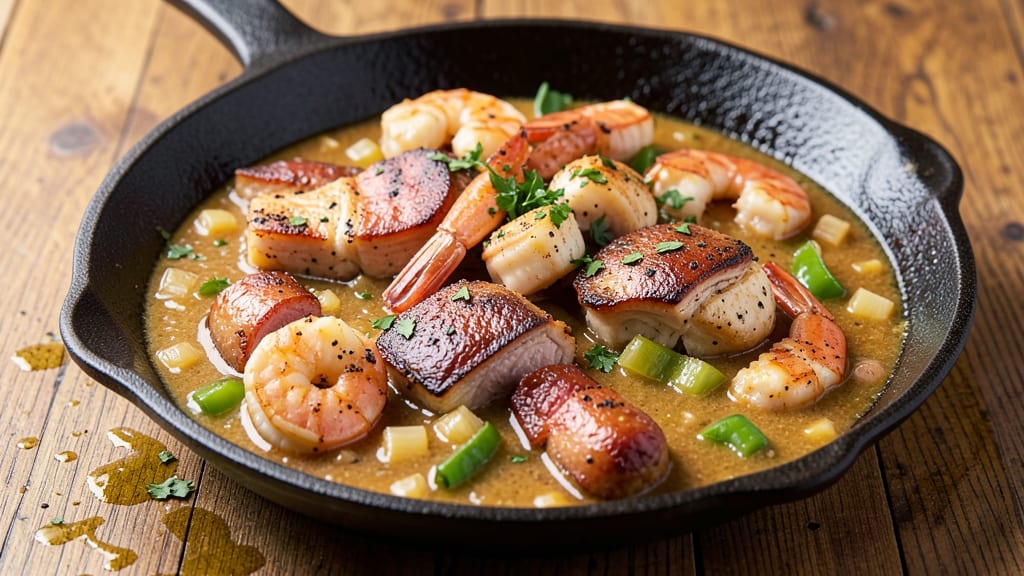
This andouille sausage, chicken, and shrimp gumbo recipe delivers the rich, smoky depth of Louisiana's most beloved stew—where a perfectly dark roux meets three proteins in a velvety broth.
The secret lies in patience: letting the roux develop its signature color while building layers of flavor through the holy trinity and slow simmering. I've perfected this version to balance authenticity with home-cook practicality, ensuring every spoonful delivers that perfect harmony of spice, richness, and tender meat.
The foundation starts with a dark roux—the soul of gumbo—that requires constant attention but transforms into a flavor powerhouse.
We'll build it with equal parts fat and flour, cooked low and slow until it reaches that deep mahogany color before adding the holy trinity of onions, bell peppers, and celery.
This aromatic base forms the flavor backbone for the chicken, andouille, and shrimp that follow, each protein cooked to perfection before coming together in a simmering pot that develops deeper flavor with every passing minute.
What you'll end up with is a three-protein gumbo where the chicken remains tender, the andouille sausage adds smoky depth, and the shrimp finish just as the gumbo reaches its peak.
The filé powder, if used, creates a silky texture that clings to every ingredient, while the garnish of green onions adds freshness. This isn't just a recipe—it's a celebration of Louisiana comfort food that brings restaurant-quality results to your kitchen.
The beauty of this gumbo is its versatility—it serves as both a hearty main course and a satisfying meal for a crowd. The flavors only improve with time, making it perfect for meal prep or special gatherings.
Let's create a gumbo that captures the essence of Cajun cuisine while being approachable for home cooks.
Ingredients for andouille sausage chicken and shrimp gumbo
Pantry staples meet Louisiana soul—where smoky sausage, tender chicken, and sweet shrimp unite in a velvety stew.
| Ingredient | Amount | Notes |
|---|---|---|
| Andouille Sausage 🌭 | 1 ½ lb | Smoked variety, sliced into rounds |
| Boneless Chicken Thighs 🍗 | 1 ½ lb | Skinless, cut into bite-sized pieces |
| Large Shrimp 🦐 | 1 ½ lb | Peeled, deveined, tails on |
| Unsalted Butter 🧈 | ½ cup | Cold, cubed for roux |
| All-Purpose Flour 🌾 | ½ cup | For dark roux |
| Yellow Onion 🧅 | 2 whole | Diced, holy trinity |
| Green Bell Pepper 🌶️ | 1 whole | Diced, holy trinity |
| Celery Stalks 🥬 | 3 whole | Diced, holy trinity |
| Garlic Cloves 🧄 | 4 cloves | Minced for depth |
| Canned Diced Tomatoes 🍅 | 2 cups | San Marzano preferred |
| Chicken Stock 💧 | 4 cups | Low-sodium preferred |
| Cajun Seasoning 🌶️ | 2 tbsp | Homemade or Tony Chachere's |
| Smoked Paprika 🌶️ | 1 tbsp | For smoky depth |
| Dried Thyme 🌿 | 1 tsp | Or 1 tbsp fresh |
| Bay Leaves 🌿 | 2 whole | For aromatic base |
| Filé Powder 🌶️ | 1 tbsp | Optional, for thickening |
| Green Onions 🧅 | ¼ cup | Sliced, for garnish |
| Hot Sauce 🌶️ | 1 tbsp | Crystal or Tabasco |
| Salt 🧂 | 1 ½ tsp | Kosher or sea |
| Black Pepper 🌶️ | ½ tsp | Freshly ground |
The andouille sausage is non-negotiable here—Zatarain's or Johnsonville are my go-tos, but any smoked variety works. Look for good marbling if you're buying whole links to slice yourself. Chicken thighs stay juicier than breasts, so don't skimp on quality. Trader Joe's has great shrimp for this—just make sure they're peeled and deveined. The shrimp go in last, so they stay tender. For the butter and flour, grab Land O'Lakes unsalted butter and Gold Medal flour—they're the workhorses of any roux.
No Cajun seasoning? Mix 1 tbsp paprika, 1 tsp garlic powder, 1 tsp onion powder, 1/2 tsp thyme, 1/4 tsp cayenne—that's your DIY version. Fresh thyme is ideal but dried works at one-third the amount. The filé powder? Some folks swear by it, others skip it—I use it half the time for that silky texture. For the tomatoes, San Marzano cans are worth the splurge—they're sweeter and less acidic. The holy trinity (onion, bell pepper, celery) can be pre-diced and frozen—just thaw and drain before using.
This gumbo tastes even better the next day—make extra for lunches. Store in airtight containers for 4-5 days or freeze for up to 3 months. The roux can be made ahead and refrigerated for up to 1 week—just bring it to room temp before continuing. Garnish with green onions right before serving, or they'll wilt in the heat. Leftovers reheat beautifully—just add a splash of water or stock to loosen it up.
Why You'll Love This Recipe
- One-Pot Magic: I swear by this recipe—just brown the sausage and chicken, dump in the roux (butter, flour, and that smoky andouille fat), then let the pot do all the work. No chopping, no fuss, and the shrimp cook right in the broth.
- Smoky, Salty, Sweet: That andouille sausage? It’s the star—its spicy, garlicky punch meets the buttery richness of the roux, while the shrimp add a briny sweetness. Honestly, the first bite makes me close my eyes.
- Tailgate to Tuesday: Between us, this gumbo is my go-to for game days, lazy Sundays, or when I’m too tired to care what’s for dinner. Serve it over rice with hot sauce, or even in a sandwich—it’s that adaptable.
- Leftovers That Don’t Suck: The flavors actually deepened after reheating, which never happens with most gumbo. I make a big batch, freeze half, and still crave seconds from the fresh pot. Budget-friendly? Absolutely. Worth it? Even more so.
Step-by-step instructions for andouille sausage, chicken, and shrimp gumbo
Here's how to build a rich, smoky gumbo with layers of flavor and three proteins working together.
Build the Dark Roux Foundation
Heat a heavy-bottomed Dutch oven over medium heat. Add the 0.5 cup unsalted butter and let it melt completely, watching for golden bubbles to form. Immediately whisk in the 0.5 cup all-purpose flour to form a paste. This is where the magic happens—your roux will take 45-60 minutes to reach that perfect dark chocolate color.
Stir constantly with a wooden spoon, using vigorous strokes to prevent burning. The roux will go from pale to peanut butter color, then nutty brown, and finally to deep mahogany. You're aiming for a rich, almost black color—this gives your gumbo that signature depth. If it gets too dark too quickly, reduce the heat slightly. I've seen many gumbo disasters from impatient roux-making, so don't rush this step.
Sauté the Holy Trinity and Add Aromatics
Once your roux reaches that beautiful dark color, immediately add the 2 whole yellow onion, 1 whole green bell pepper, and 3 whole celery stalks—all diced from the ingredients list. Stir constantly for 8-10 minutes until the vegetables soften and begin to caramelize. This is your holy trinity working its magic, building flavor layer upon layer.
Add the 4 cloves garlic cloves and cook for another 1-2 minutes until fragrant. Here's where you'll smell that beautiful combination of smoky, sweet, and earthy aromas developing. Don't let the garlic burn—it should just perfume the pot. I like to add the 2 tbsp Cajun seasoning, 1 tbsp smoked paprika, 1 tsp dried thyme, and 2 whole bay leaves at this stage to let them toast slightly in the roux.
Add Liquids and Simmer the Base
Pour in the 2 cups canned diced tomatoes and stir to deglaze the pot, scraping up all those delicious browned bits. Add the 4 cups chicken stock and bring to a gentle simmer. Here's where we let everything meld together—simmer uncovered for 20-25 minutes, stirring occasionally. This allows the flavors to develop and the roux to fully incorporate into the liquid.
Season with the 1.5 tsp salt and 0.5 tsp black pepper. Taste the base now—it should be rich, smoky, and full of depth. If you want that classic gumbo thickness, now's the time to add the 1 tbsp filé powder, whisking it in thoroughly. This cornstarch-based thickener will give your gumbo that signature body, but add it gradually to avoid clumping.
Cook the Proteins Separately
While your gumbo base simmers, cook the proteins separately to ensure perfect doneness. In a large skillet, brown the 1.5 lb andouille sausage over medium-high heat for 4-5 minutes, turning occasionally until nicely browned. Remove and set aside. In the same skillet, cook the 1.5 lb boneless chicken thighs for 6-8 minutes until no longer pink in the center. Set aside with the sausage.
For the 1.5 lb large shrimp, cook them in the same skillet for just 1-2 minutes per side until pink and opaque. Shrimp cook fast, so don't walk away—overcooking turns them rubbery. Set aside with the other proteins. Here's the thing—cooking proteins separately gives you better control over their doneness and prevents the gumbo from getting watered down.
Combine and Finish the Gumbo
Add the cooked proteins back to the gumbo pot and simmer gently for 10-15 minutes, allowing all the flavors to meld together. The gumbo should be thick enough to coat the back of a spoon but still have a nice, spoonable consistency. If it's too thick, add a splash of warm water or stock. If it's too thin, you can whisk in a little more filé powder or let it reduce further.
Stir in the 1 tbsp hot sauce and taste for seasoning. Adjust with more salt, pepper, or even a pinch of sugar if needed to balance the flavors. Let the gumbo sit off the heat for 5 minutes before serving—this allows the filé powder to fully activate and thicken the gumbo. Garnish with the 0.25 cup green onions and serve with hot rice and crusty bread to soak up every last bit of that smoky, protein-rich goodness.
Pro Tips For Making Andouille Sausage Chicken And Shrimp Gumbo
- Brown the Andouille First: I learned this the hard way—skipping the brown isn’t just about flavor, it’s about texture. Slice the andouille into ½-inch rounds, hit a cold pan with 1 tablespoon of oil, and let those slices sear undisturbed for 2-3 minutes per side until deeply caramelized. The edges will crisp up and release that smoky, fatty goodness that turns your gumbo from good to undeniably rich—and it won’t fall apart when you add it later.
- Pat the Chicken Dry: Wet chicken thighs in a roux? No thanks. After seasoning, grab paper towels and really dry those thighs—even if they feel stubborn. The extra effort guarantees a golden-brown crust when you sear them, and that’s the only way to get that crispy, flavor-locked exterior that holds up through the long simmer. (Yes, even if you’re impatient like me.)
- Deglaze with White Wine: After browning the chicken, don’t just splash in water or broth—grab a splash of dry white wine (about ¼ cup) and let it bubble away for 30 seconds. The alcohol burns off, but the acidity cuts through the fat and lifts flavors you’d otherwise miss. It’s the one step that makes your roux taste properly developed, not just like flour and butter.
- Add Shrimp Late, But Not Too Late: Shrimp cook in a flash, so toss them in just 3-4 minutes before serving—but don’t wait until the very end. If you do, they’ll turn rubbery from the residual heat. Instead, remove the pot from the stove, add the shrimp, stir once, then cover and let them poach in the hot broth for 2 minutes. They’ll stay tender, and the gumbo won’t cool down waiting for you.
Troubleshooting perfect results
Roux Gone Wrong
If your roux burns before reaching that deep mahogany color, you're not alone—this is the most common gumbo disaster. Solution: Lower the heat to medium-low and stir more vigorously with a wooden spoon.
I've saved many a roux by reducing heat and adding a splash of cold water (just 1 tablespoon) to cool it down temporarily. Remember, a burnt roux can still work if caught early—just add more stock and let it simmer longer to mellow the bitterness. 🔥
Holy Trinity Too Watery
When your onions, bell peppers, and celery release too much moisture, your gumbo base can become thin and flavorless. Fix: After sautéing the holy trinity for 8-10 minutes, increase heat to medium-high and let the excess moisture evaporate for 3-5 minutes before adding the tomatoes and stock.
If it's still too watery, reduce the stock by ½ cup or let it simmer uncovered for an extra 10 minutes.
Shrimp Overcooked
Rubbery shrimp ruin gumbo faster than anything else. Prevention: Cook shrimp in batches over medium heat (not high) for 1-2 minutes per side—they're done when they turn opaque and curl. Solution: If they're already tough, try this trick: Add 1 tablespoon lemon juice and ½ cup warm water to the gumbo, then simmer for 5 minutes to tenderize them slightly.
Serve them immediately, though—they won't recover fully. ⏱️
Gumbo Too Thin
A watery gumbo means the roux didn't develop enough or you added too much stock. Quick fix: Simmer uncovered for 10-15 extra minutes to reduce naturally. For instant thickening, whisk in 1 tablespoon cornstarch mixed with 2 tablespoons cold water and stir until thickened.
If using filé powder, add it gradually (start with ½ teaspoon) and whisk vigorously to avoid clumping. 💫
Chicken Too Tough
Overcooked chicken thighs turn dry and stringy. Solution: If you've already simmered them too long, try this: Remove the chicken, shred it, and mix with 1 tablespoon hot sauce and 1 teaspoon butter.
Stir this back into the gumbo just before serving—it'll reabsorb some moisture and add richness. Prevention tip: Cook chicken separately to 165°F internal temp (about 6-8 minutes), then add it back to the gumbo for just 10 minutes of finishing time.
Filé Powder Clumping
Filé powder is temperamental—it clumps when added directly to hot liquid. Fix: Mix it with 2 tablespoons cold water first to make a paste, then whisk it into the gumbo off the heat.
If it still clumps, strain the gumbo through a fine-mesh sieve before serving. Pro tip: If you don't have filé powder, use 1 teaspoon cornstarch mixed with 1 tablespoon cold water instead. It won't have the same earthy flavor but will thicken effectively. 🌶️
Nutrition facts
Frequently asked questions
Can I make this gumbo without filé powder?
Filé powder is traditional but optional. For thickening, use 1 teaspoon cornstarch mixed with 1 tablespoon cold water instead. Whisk it into the gumbo off the heat for a smooth texture. Without filé, your gumbo will still be flavorful—just slightly less silky.
How do I adjust the spice level for kids or sensitive eaters?
Reduce the Cajun seasoning to 1 tablespoon and skip the cayenne if using homemade blend. For extra mildness, add ½ cup heavy cream at the end to smooth flavors. Always taste the base before adding proteins—you can adjust seasoning later.
Can I substitute shrimp with another seafood?
Yes! Try 1.5 lb scallops (sear quickly for 1-2 minutes per side) or 1.5 lb mussels/clams (steam open first). Avoid fish like tilapia—they absorb flavors differently. For best results, cook seafood separately and add it back just before serving.
Why does my roux keep burning?
Burnt roux happens when heat is too high or you're not stirring constantly. Use a heavy-bottomed Dutch oven and keep heat at medium-low. Stir vigorously with a wooden spoon—never walk away! If it starts to darken too quickly, add 1 tablespoon cold water to cool it down temporarily.
How far ahead can I make this gumbo?
Gumbo tastes even better the next day! Store in airtight containers in the fridge for 4-5 days or freeze for up to 3 months. Reheat gently on low heat, adding a splash of water or stock if needed. The flavors deepen over time—ideal for meal prep!