
Soups & Stews
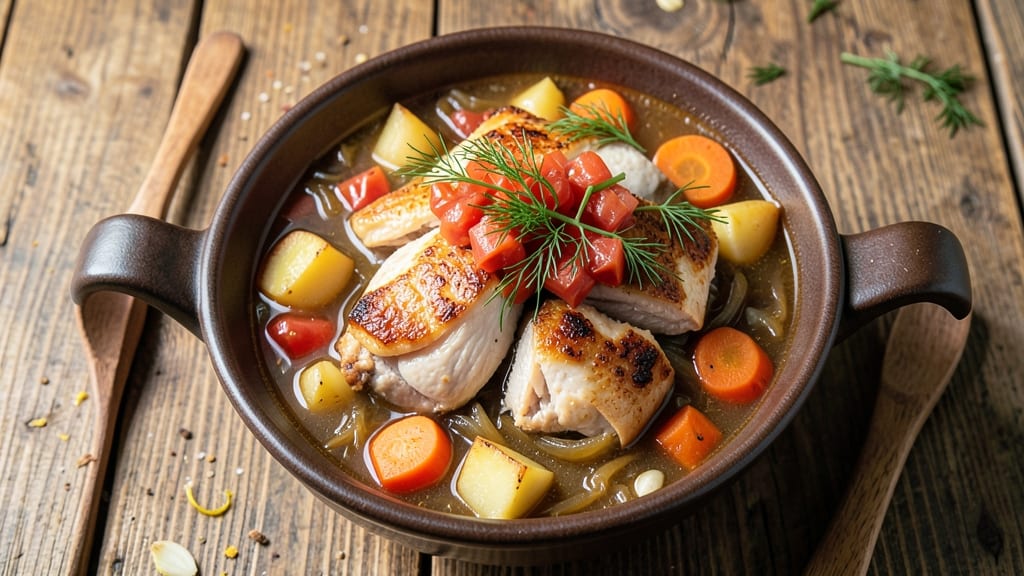
This Armenian chicken soup recipe delivers the soul-warming comfort of a traditional Jejew—a fragrant, herb-infused stew that simmers for hours to develop deep, layered flavors. 💛 The secret lies in slow-cooking chicken with aromatic spices, fresh herbs, and tender vegetables until every ingredient melts into a rich, velvety broth.
I've adapted this classic Armenian dish for modern kitchens while preserving its cultural essence, ensuring each spoonful feels like a hug in bowl form.
The beauty of this recipe is its simplicity combined with profound flavor development. You'll start with a base of onions, garlic, and tomatoes that form the aromatic foundation, then build layers of warmth with cinnamon, allspice, and bay leaves.
The chicken cooks until fork-tender, while potatoes and carrots absorb the rich broth, creating a hearty, satisfying meal that's perfect for chilly evenings or when you need nourishment.
What makes this Armenian chicken soup truly special is how the flavors meld together over time. The herbs—fresh dill and parsley—add brightness, while the spices create warmth that lingers long after the last bite.
The result is a comforting bowl that's equally at home on a weeknight dinner table or as a centerpiece for family gatherings. This is the kind of soup that warms both body and spirit.
Once you taste this authentic version, you'll understand why Armenian Jejew holds a special place in home cooking traditions. The recipe scales beautifully for crowds, and the leftovers reheat even better the next day.
Ready to experience the comfort of Armenian home cooking? Let's begin with the ingredients that will transform your kitchen into a taste of Armenia.
Ingredients for armenian chicken soup
Six aromatic spices, fresh herbs, and tender chicken—this is the soul of Armenian comfort food.
| Ingredient | Amount | Notes |
|---|---|---|
| Boneless, Skinless Chicken Thighs 🍗 | 2 ½ lb | Trimmed of excess fat |
| Yellow Onions 🧅 | 2 whole | Medium size, diced |
| Garlic Cloves 🧄 | 6 cloves | Fresh, minced |
| Canned Crushed Tomatoes 🍅 | 14 ½ oz | San Marzano preferred |
| Russet Potatoes 🥔 | 2 lb | Peeled, cubed |
| Carrots 🥕 | 4 whole | Medium size, halved lengthwise |
| Fresh Dill 🌿 | ½ cup | Chopped, stems removed |
| Fresh Parsley 🌿 | ¼ cup | Chopped, for garnish |
| Ground Cumin 🌶️ | 1 tsp | Toasted for depth |
| Ground Allspice 🌶️ | ½ tsp | Freshly ground preferred |
| Ground Cinnamon 🌶️ | ½ tsp | Warm, not sweet |
| Bay Leaves 🌿 | 2 whole | Fresh if possible |
| Chicken Broth 💧 | 4 cups | Low-sodium preferred |
| Extra-Virgin Olive Oil 🫒 | ¼ cup | For sautéing |
| Salt 🧂 | 1 ½ tsp | Diamond Crystal preferred |
| Black Pepper 🌶️ | ½ tsp | Freshly cracked |
The chicken thighs are the heart of this soup—they stay juicy as they cook for hours. Look for bone-in, skin-on thighs if you can find them, but boneless works too. I always grab mine from Whole Foods or the butcher counter at Trader Joe's—they have better marbling. The carrots and potatoes should be uniform in size so they cook evenly. For the tomatoes, San Marzano is worth the splurge—sweeter and less acidic than regular canned tomatoes. Fresh herbs are non-negotiable here: the dill and parsley add that bright, fresh finish that makes this soup sing.
No fresh dill? Dried dill at half the amount works in a pinch, but it won't have the same brightness. Running low on chicken broth? Vegetable broth plus a splash of soy sauce gets you close. The spices are where this soup gets its magic—if you can't find allspice, a pinch of cloves plus nutmeg mimics it pretty well. For the potatoes, Yukon Golds hold up better than Russets, but stick with what you've got. And if you're using pre-diced onions, pat them dry first to avoid a watery soup.
This soup tastes even better the next day—seriously, the flavors meld into something magical. Store leftovers in the fridge for 4-5 days or freeze for 3 months. I always make a double batch because it reheats beautifully. For serving, I like to garnish with a drizzle of extra-virgin olive oil and a sprinkle of fresh parsley. The broth reduces slightly when reheated, so add a splash of water if it gets too thick.
Why You'll Love This Recipe
- Same recipe, different vibes: dump it in a pot for a tired Tuesday or serve it in a bread bowl when unexpected guests show up. The potatoes soak up the broth perfectly, so it always feels special.
- Pantry-Friendly Staples: I swear by this recipe because it uses ingredients I already have—no fancy shopping trips. The crushed tomatoes and onions caramelize into something rich while I chop garlic in two minutes flat.
- Deep, Savory Umami: That slow-simmered garlic and chicken thigh combo? It develops layers of flavor—tender meat falling off the bone with a broth so bold it tastes like a hug in a bowl.
- Weeknight to Company Dinner: Same recipe, different vibes: dump it in a pot for a tired Tuesday or serve it in a bread bowl when unexpected guests show up. The potatoes soak up the broth perfectly, so it always feels special.
Step-by-step instructions for Armenian chicken soup
This hearty Armenian chicken soup builds layer upon layer of flavor—start with aromatic spices, then let the herbs shine.
🔥 Step 1: Sear the Chicken and Build the Spice Base
Heat the 0.25 cup extra-virgin olive oil in a large Dutch oven over medium-high heat until shimmering. Pat the 2.5 lb boneless, skinless chicken thighs completely dry with paper towels—this ensures a proper sear. Working in batches if needed, add the chicken and cook for 5-6 minutes per side until golden brown and cooked through to 165°F internally.
Remove the chicken and set aside. In the same pot, add the 2 whole diced yellow onions and cook for 5 minutes until softened and golden. Add the 6 minced garlic cloves, 1 tsp ground cumin, 0.5 tsp ground allspice, and 0.5 tsp ground cinnamon, stirring constantly for 30 seconds until fragrant. This spice blend forms the soul of the soup—don't rush this step.
🍳 Step 2: Develop the Tomato and Herb Foundation
Pour in the 14.5 oz canned crushed tomatoes and scrape up any browned bits from the bottom of the pot with a wooden spoon. Add the 4 cups chicken broth and bring to a gentle boil. Reduce heat to medium-low and let it simmer uncovered for 15 minutes, stirring occasionally. You'll notice the tomatoes break down and the liquid deepens in color—this is where the soup's rich, tangy base develops.
While the soup simmers, shred the cooked chicken using two forks and return it to the pot. Add the 2 whole bay leaves and let everything cook together for another 5 minutes. The bay leaves infuse subtle earthiness, while the chicken reabsorbs some of the flavorful broth.
🥘 Step 3: Add Vegetables and Herbs for Hearty Texture
Add the 2 lb peeled, cubed russet potatoes and 4 halved carrots to the soup. Increase heat to medium-high and bring to a boil. Once boiling, reduce heat to medium-low and let it simmer uncovered for 20-25 minutes, until the potatoes are fork-tender and the carrots are easily pierced with a knife. You want the vegetables to hold their shape but be soft enough to eat without effort.
Stir in the 0.5 cup chopped fresh dill and 1.5 tsp salt during the last 5 minutes of cooking. The dill brightens the soup with its fresh, slightly citrusy flavor. Taste and adjust seasoning with 0.5 tsp black pepper if needed—this is your chance to balance the flavors before serving.
⏰ Step 4: Finish with Fresh Parsley and Rest
Remove the soup from heat and let it rest for 10 minutes. This resting period allows all the flavors to meld together—you'll notice the soup tastes even more cohesive after this brief pause. Before serving, stir in the 0.25 cup chopped fresh parsley. The parsley adds a final fresh note that cuts through the richness of the broth and chicken.
Ladle the soup into bowls, garnishing each serving with an extra sprinkle of dill and parsley. The soup should be aromatic, with tender chicken, hearty vegetables, and a broth that's rich yet balanced by the fresh herbs. Serve immediately while warm, with crusty bread to soak up every last drop of that comforting broth.
Pro Tips For Making Armenian Chicken Soup
- Sear the Chicken First: Brown those thighs in a hot pot with a splash of oil before adding anything else—this locks in flavor and keeps the meat from turning rubbery later. I used to skip it, and the soup always tasted flat until I realized the difference a quick 3-4 minutes of searing makes.
- Chop Onions Like a Pro: Dice the yellow onions into even ¼-inch pieces and let them sit for 10 minutes after chopping—they’ll soften faster and caramelize better without burning. My grandmother swore by this, and she was right: mushy onions ruin the texture of the soup.
- Add Potatoes Last: Toss the russet potatoes in at the very end, when the chicken’s almost done, so they don’t turn to mush in the simmer. I learned this the hard way—overcooked potatoes make the soup gluey, and no one wants that.
- Use Garlic Paste (Not Minced): Skip the messy mincing and grab a jar of garlic paste—it distributes evenly and burns less, giving the soup a consistent, rich flavor without bitter notes. Yes, it’s a shortcut, but it works every time, and your future self will thank you.
Perfect pairings for this armenian chicken soup
Bread Pairings
This soup pairs beautifully with crusty Armenian lavash—the thin, slightly chewy flatbread that's a staple in Armenian cuisine. I love buying it from specialty markets or making my own with all-purpose flour and a touch of yogurt for tenderness.
For a quicker option, sourdough bread or fresh baguette slices work wonderfully, especially toasted with a drizzle of garlic-infused olive oil. 🥖
If you want something heartier, try pita bread—its soft texture soaks up the rich broth beautifully. For a gluten-free option, I've had great results with corn tortillas or gluten-free naan from the freezer aisle at Whole Foods.
The key is choosing bread that can handle the soup's moisture without becoming soggy too quickly.
Wine Pairings
A crisp white wine from Armenia's Artsakh region elevates this soup perfectly. I recommend Vardar White—a blend of Chardonnay and Rkatsiteli with bright citrus notes that complement the dill and tomatoes.
For something more accessible, a dry Riesling or Sauvignon Blanc works wonderfully, especially if it has a touch of herbal complexity. 🍷
Red wine lovers shouldn't worry—this soup also pairs beautifully with a light-bodied red like Pinot Noir or Gamay. The subtle earthiness of these wines mirrors the allspice and cinnamon in the soup.
Avoid heavy, tannic reds that might overpower the delicate herbs. Pro tip: Chill your red wine slightly before serving to enhance its freshness.
Herbal Teas
For a non-alcoholic pairing, mint tea is a classic Armenian choice. The cool, refreshing mint contrasts beautifully with the warm spices in the soup. I like to steep fresh mint leaves with a touch of lemon for about 5 minutes before serving.
Another great option is hibiscus tea—its tart, cranberry-like flavor cuts through the richness of the broth. 🍃
If you prefer something more aromatic, try vermicelli tea—a traditional Armenian herbal tea made with vermicelli noodles, dried fruits, and spices like cinnamon and cloves. It's naturally caffeine-free and adds a comforting, spiced note that complements the soup's flavors.
For a caffeine kick, green tea with a slice of lemon works perfectly too.
Fresh Garnishes
Before serving, I always add a final touch of fresh lemon wedges—their bright acidity balances the richness of the soup. A sprinkle of toasted pine nuts or slivered almonds adds crunch and visual appeal.
For extra warmth, a pinch of smoked paprika or crushed red pepper flakes lets guests adjust the heat to their preference. 🌿
Don't overlook the power of fresh herbs—a handful of chopped cilantro or extra dill adds another layer of freshness. If you have lemon verbena, its floral notes pair beautifully with the dill and parsley.
For a final flourish, drizzle each bowl with a thin stream of extra-virgin olive oil—it enhances the soup's natural flavors and makes it look restaurant-worthy.
Nutrition facts
Frequently asked questions
Why does this Armenian chicken soup need to simmer for so long?
The long simmering time—about 1.5 hours total—is essential for developing the soup's deep, complex flavors. This slow cooking allows the spices (cinnamon, allspice, cumin) to infuse fully, while the chicken becomes fork-tender and absorbs the aromatic broth. The vegetables also soften just enough to melt in your mouth without turning mushy. Traditional Armenian cooking relies on patience—this is what makes the difference between good soup and exceptional soup!
Can I use chicken breasts instead of thighs?
You can, but thighs are preferred because they stay juicier during the long cooking time. If using breasts, cut them into 1-inch pieces and add them to the pot 30 minutes before the soup is done to prevent drying out. For extra moisture, add 2 tablespoons of chicken broth when you add the chicken. The flavor will be slightly lighter, but still delicious!
What's the difference between this soup and regular chicken noodle soup?
This Armenian version is richer and more aromatic thanks to its signature spice blend (cinnamon, allspice, cumin) and fresh herbs (dill, parsley). Unlike chicken noodle soup which often uses egg noodles, this recipe focuses on hearty vegetables (potatoes, carrots) and tender chicken in a deeply flavored broth. The tomatoes add tanginess, while the spices create warmth that lingers—it's more like a cross between a stew and soup!
How can I make this soup vegan?
Swap the chicken for 1.5 lbs of chickpeas or white beans (cooked or canned), and use vegetable broth instead of chicken broth. Add 1 tablespoon soy sauce to enhance umami depth. For extra protein, include 1 cup of cooked lentils. The spices and herbs will still shine, creating a flavorful vegan version that's equally comforting. Just reduce the cooking time by 20 minutes since vegetables cook faster without meat.
Why does the recipe call for both fresh and dried spices?
The recipe uses ground spices for convenience, but the key to authentic flavor is toasting them briefly in the oil before adding other ingredients. This 30-second toasting step awakens their aromatic compounds, creating that signature warm, earthy depth. For even better flavor, try toasting the whole spices (cumin seeds, allspice berries) first, then grinding them yourself—this adds complexity that pre-ground spices can't match!