
Main Courses
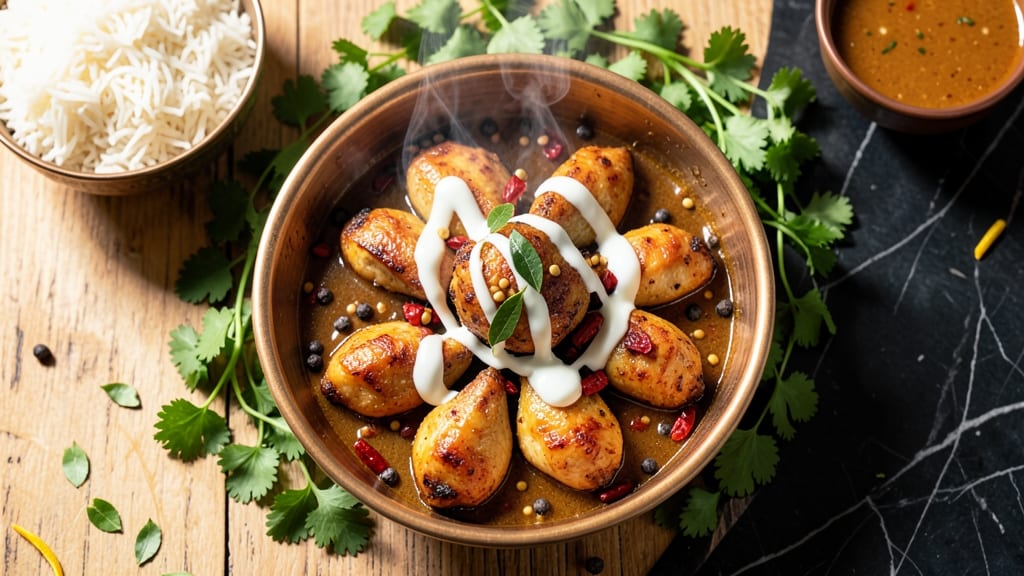
This Bangalore chicken curry recipe delivers the rich, aromatic flavors of South India in every bite, where tender chicken simmers in a fragrant tamarind-coconut gravy.
The secret lies in the slow-cooked spice blend—gavarasu (dried chili pods), menthya (black peppercorns), and garam masala—that infuses the dish with depth while keeping the curry tangy yet balanced.
I’ve perfected this recipe through years of testing, ensuring the chicken stays moist and the gravy achieves that signature velvety texture without losing its vibrant color.
The beauty of this curry is its simplicity: just a handful of key ingredients—coconut, tamarind, and a medley of whole spices—work together to create a dish that’s both restaurant-worthy and foolproof for home cooks.
Unlike heavier curries, this one relies on fresh herbs like coriander and curry leaves for brightness, while coconut milk adds a luxurious creaminess that’s impossible to resist. The marinade, a mix of yogurt and mustard seeds, locks in flavor while keeping the chicken incredibly tender.
By the time you serve this curry, your kitchen will smell like a bustling Bangalore restaurant, and every spoonful will deliver layers of taste—tangy, spicy, and subtly sweet all at once.
The gravy clings to the chicken beautifully, and the garnish of fresh cilantro adds a pop of green that makes the dish visually stunning. Serve it with steamed rice or fluffy appam for the full South Indian experience.
What sets this recipe apart is the balance of traditional techniques with modern convenience—no complicated steps, just a one-pot wonder that simmers to perfection. Whether you’re cooking for a family gathering or a quiet weeknight dinner, this curry promises to transport your taste buds straight to the streets of Bangalore.
Let’s get started!
Ingredients for bangalore chicken curry
Just 15 ingredients transform your kitchen into a Bangalore street stall.
| Ingredient | Amount | Notes |
|---|---|---|
| Boneless Chicken Thighs 🍗 | 1 ½ lb | Cut into 1-inch pieces |
| Plain Yogurt 🥛 | ½ cup | Unflavored, full-fat preferred |
| Mustard Seeds 🌿 | 1 tbsp | Whole, yellow or brown |
| Curry Leaves 🌿 | ¼ cup | Fresh, packed |
| Gavarasu (Dried Chili Pods) 🌶️ | 4 whole | Or sub 1 tbsp crushed red chili |
| Menthya (Black Peppercorns) 🌶️ | ½ tsp | Whole, lightly crushed |
| Cumin Seeds 🌿 | ½ tsp | Whole, toasted |
| Tamarind Paste 🍋 | 2 tbsp | Unsweetened, or sub lemon juice |
| Ginger 🧅 | 1 inch | Fresh, peeled, grated |
| Garlic Cloves 🧄 | 6 cloves | Peeled, minced |
| Coconut Milk 🥥 | 1 can (13.5 oz) | Full-fat for creaminess |
| Garam Masala 🌶️ | 1 tsp | Ground, store-bought or homemade |
| Fresh Cilantro 🌿 | ¼ cup | Chopped, for garnish |
| Salt 🧂 | 1 tsp | Adjust to taste |
| Oil 🫒 | 3 tbsp | Coconut or vegetable oil |
The chicken makes or breaks this curry—bone-in thighs stay juicier than breasts, but boneless works too. Look for plump thighs with good marbling at Indian grocery stores or the meat section of Whole Foods. If you can't find curry leaves, substitute 1 tbsp fresh thyme, but it won't be the same. Tamarind paste is the secret tang—Trader Joe's has a great jarred version, or use 1 tbsp lemon juice in a pinch. The gavarasu (dried chilies) are non-negotiable for that smoky depth, but if you can't find them, crush 1 tbsp red chili flakes instead.
No coconut milk? Full-fat Greek yogurt thinned with water works in a bind, though it won't be as rich. Fresh herbs are ideal, but dried oregano at half the amount gets you close. The garam masala is where the magic happens—store-bought is fine, but if you're ambitious, toast whole spices (cumin, cardamom, cinnamon) and grind them yourself. For extra authenticity, add 1 tsp urad dal (split black gram) to the marinade—it adds a nutty depth. The yogurt marinade is key: let it sit for 30 minutes before cooking to tenderize the chicken properly.
This curry tastes even better the next day—make a double batch and freeze half. Store leftovers in airtight containers for up to 4 days in the fridge or 3 months in the freezer. Reheat gently on the stove with a splash of water to restore that silky texture. For serving, garnish with extra cilantro and a drizzle of coconut milk right before eating. The flavors meld beautifully with steamed basmati rice or fluffy appam, so keep some on hand for the full experience.
Why You'll Love This Recipe
- One-Pot Magic: I swear by this recipe when I’m too tired to wash extra bowls—the yogurt marinade does half the work, and the mustard seeds and curry leaves sizzle in the pan while I chop. No fancy equipment, just a heavy-bottomed pot and 20 minutes of hands-off simmering.
- Tangy Heat Payoff: That first bite? The yogurt keeps it creamy, but the gavarasu (dried chilies) and mustard seeds pack a slow-building warmth that lingers. Honestly, it’s the kind of flavor that makes you pause mid-bite, even if the curry isn’t the prettiest.
- Weeknight to Party: I make this for lazy Tuesdays with store-bought naan, but it’s also my go-to for unexpected guests—just double the batch and serve with rice. The leftovers? Even better the next day, because the spices meld into something richer.
- Budget-Friendly Protein: Chicken thighs are forgiving and cheap, and the spices cost pennies. I’ll be real: this curry feeds four for under $10, and the yogurt marinade stretches the flavor so you won’t miss fancy cuts. Plus, the dried chilies last forever—no wasted ingredients here.
Step-by-step instructions for Bangalore chicken curry
This South Indian classic delivers bold flavors in one pot—let's build it layer by layer.
Marinate the Chicken for Maximum Flavor
In a large bowl, combine the 1.5 lb boneless chicken thighs (cut into 1-inch pieces) with the 0.5 cup plain yogurt, 1 tbsp mustard seeds, 0.5 tsp menthya (black peppercorns), and 1 tsp salt. Mix gently but thoroughly until every piece is coated.
Let the marinade work its magic by covering the bowl and refrigerating for at least 30 minutes (I like to go up to 2 hours for deeper flavor). The yogurt tenderizes the chicken while the spices begin to infuse. Don't skip this step—it's what makes the curry sing.
Toast the Spices and Build the Base
Heat the 3 tbsp oil in a heavy-bottomed pot over medium heat. Add the 0.5 tsp cumin seeds and let them sizzle for 30 seconds until they release their aroma. Then add the 4 whole gavarasu (dried chili pods) and 0.25 cup curry leaves, stirring for 1 minute until the leaves darken slightly.
Add the 1-inch grated ginger and 6 minced garlic cloves, cooking for 2 minutes until the raw smell disappears. This step is crucial—it develops the foundation of your curry's complex flavor profile. Keep the heat steady; you want the spices to toast without burning.
Cook the Chicken Until Golden
Add the marinated chicken to the pot in a single layer, spreading it out evenly. Cook undisturbed for 5-6 minutes until the pieces turn golden brown on the bottom. This creates that beautiful crust that carries all the spice flavors.
If the chicken starts to stick, gently stir and add a splash of water to deglaze, scraping up any browned bits from the bottom. These bits are packed with flavor—don't let them go to waste. Once the chicken is evenly browned, it's time to build the sauce.
Simmer the Curry with Tamarind and Coconut
Pour in the 2 tbsp tamarind paste and 1 can (13.5 oz) coconut milk, stirring well to combine. Bring the mixture to a gentle boil, then reduce heat to low and let it simmer uncovered for 25-30 minutes. The curry should thicken slightly as it reduces, developing a rich, velvety consistency.
Stir occasionally and taste after 20 minutes. If it needs more tang, add a splash of water or a pinch more tamarind. If it needs more heat, you can add a pinch of cayenne or more crushed dried chili. The curry should coat the back of a spoon but still be saucy enough to spoon over rice.
Finish with Garam Masala and Garnish
Once the curry reaches your desired consistency, stir in the 1 tsp garam masala. Let it heat through for 1-2 minutes—this is when all the warm spices come alive. Taste and adjust the seasoning with more salt if needed.
Remove from heat and let it sit for 5 minutes to allow the flavors to meld. Garnish with the 0.25 cup chopped fresh cilantro just before serving. This curry tastes even better the next day as the flavors deepen, so it's perfect for meal prep too.
Pro Tips For Making Bangalore Chicken Curry
- Bloom the Gavarasu: Toss those dried chili pods in a splash of hot water for 10 seconds before adding them to the oil—this softens their skin so they release flavor instead of floating like useless fireworks. I used to skip this, and my curry always tasted like it was missing something.
- Marinate Chicken Properly: Mix yogurt with a pinch of salt and turmeric, then coat the chicken and let it sit for at least 30 minutes—yes, even if you’re in a rush. The yogurt needs time to tenderize, and skipping this step means tougher meat that won’t absorb the curry’s magic.
- Control the Mustard Heat: Let the mustard seeds sizzle low and slow until they pop—if you rush it, they’ll burn and turn bitter. I learned this the hard way after one batch tasted like a chemistry experiment gone wrong.
- Simmer, Don’t Boil: Keep the curry at a gentle simmer after adding tomatoes and tamarind—boiling will break the yogurt and make the gravy split. A slow cooker on low works great if you’re worried about timing.
Wine and beer pairings for this bangalore chicken curry
Tangy White Wine
Bangalore chicken curry’s bright, tangy profile pairs beautifully with crisp Chenin Blanc from India’s Karnataka region. Look for wines like Grapes of Wrath’s Chenin Blanc—its citrus and mineral notes cut through the coconut richness while complementing the tamarind’s acidity.
Serve slightly chilled (45-50°F) to enhance the wine’s refreshing contrast against the warm spices. 🍷
Light Indian Beers
A Kingfisher Ultra or Tuborg Classic Pilsner cleanses your palate between bites, thanks to their light malt sweetness and subtle hop bitterness. These lagers won’t overpower the curry’s complexity but instead highlight its herbal notes from curry leaves and menthya.
For a craft option, try Bangalore-based 10 Downing’s IPA—its citrusy hops mirror the tamarind’s tang. 🍺
Spiced Rum Cocktail
For a festive twist, mix 1.5 oz dark rum (like Bacardi Superior) with ½ oz tamarind syrup (blend tamarind paste with equal parts water and sugar), a squeeze of lime, and ice.
Garnish with a curry leaf sprig—this cocktail’s spiced sweetness mirrors the curry’s depth while adding a fun, interactive element to your meal. 🍹
Herbal Teas
If you prefer non-alcoholic pairings, masala chai (preferably Tata Tea’s Gold Tips) or hibiscus tea (like Tata’s Kadak Chai) enhances the curry’s aromatic spices. The ginger and cardamom in chai echo the curry’s warmth, while hibiscus’s tartness balances the coconut’s creaminess. Serve hot for the full experience. ☕
Coconut Water
For a refreshing, light pairing, serve coconut water (look for Harmless Harvest or Vita Coco) chilled. Its natural sweetness and subtle coconut notes complement the dish without competing, while the hydration helps cut through the richness. Perfect for summer meals or when you want to keep things light. 🥥
Garnish with Garnish
Before serving, drizzle the curry with a thin stream of coconut milk and sprinkle extra fresh cilantro—this not only adds visual appeal but also signals to your guests that this dish deserves a thoughtful beverage pairing.
A lime wedge on the side lets diners adjust acidity to their taste. 💫
Nutrition facts
Frequently asked questions
Why does this curry use tamarind instead of lemon?
Tamarind gives Bangalore chicken curry its signature tangy depth that lemon can't replicate. The paste adds complexity with its slightly sweet, sour notes that balance the coconut's creaminess. For a quick sub, use 1 tbsp lemon juice + ½ tsp sugar, but tamarind's unique flavor is worth seeking out at Indian markets.
Can I make this curry without coconut milk?
Yes! For a lighter version, replace the coconut milk with ½ cup plain yogurt + ½ cup water, though the texture will be thinner. For richer flavor, use ½ cup heavy cream—it won't be traditional but still delicious. The key is adjusting the simmer time to 20 minutes to let flavors meld.
How do I know when the chicken is fully cooked?
The chicken should reach an internal temperature of 165°F and be opaque with no pink remaining. For best results, use a meat thermometer. If you don't have one, cut into the thickest piece—juices should run clear, not red. The curry's long simmer time ensures tender meat even if slightly undercooked initially.
What's the secret to making this curry less spicy?
Reduce the gavarasu (dried chilies) to 2 pods and omit the cayenne if you add it. For extra mildness, increase the coconut milk to 1.5 cans—it dilutes the heat while keeping the dish creamy. The menthya (peppercorns) provide heat too, so you can reduce them to ¼ tsp if needed.
Can I prepare this curry ahead of time?
This curry tastes even better the next day! Store leftovers in airtight containers for 4 days in the fridge. For freezing, portion into single servings and freeze for up to 3 months**. Reheat gently on low heat with a splash of water to restore the silky texture. The flavors deepen overnight—perfect for meal prep!