
Sauces & Condiments
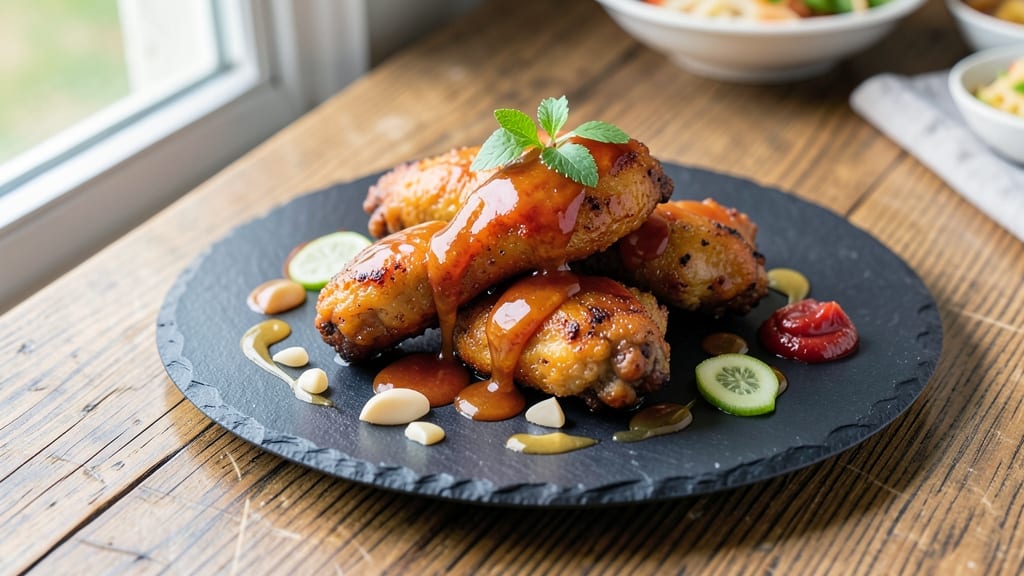
This Asian chicken wing sauce recipe delivers the perfect balance of sweet, spicy, and umami that transforms ordinary wings into restaurant-quality bites. 🔥 The secret lies in a carefully layered blend of soy sauce, honey, and chili paste, creating a sticky glaze that clings to every crispy bite while adding depth with garlic and ginger.
I developed this sauce after years of perfecting the art of wing glazes—it’s bold enough to stand up to heat but smooth enough to coat evenly.
The foundation of this sauce is simple: a mix of soy sauce for saltiness, honey for natural sweetness, and chili paste for heat, all simmered together until thick and glossy. Garlic and ginger infuse the sauce with aromatic warmth, while a splash of rice vinegar brightens the flavors.
What makes it special is how it adapts—use it as a glaze for wings, a dipping sauce for spring rolls, or even a marinade for tofu or beef.
The sauce keeps well in the fridge for up to a week, so you can make a big batch and enjoy it all week.
What you’ll end up with is a sauce that’s sticky, aromatic, and packed with layers of flavor—sweet from the honey, tangy from the vinegar, and spicy from the chili. It clings beautifully to wings, creating a caramelized crust that’s both crispy and tender.
The best part? It’s easy to customize—adjust the heat by adding more chili paste or balance the sweetness with a touch of lime juice. This sauce is a game-changer for any wing night or Asian-inspired meal.
Once you try this sauce, you’ll never go back to store-bought glazes. The ingredients are simple, but the results are anything but—deep, complex, and impossible to resist. Let’s get started on making a batch that’ll have everyone asking for seconds.
Ingredients for asian chicken wing sauce
Nine simple ingredients for sticky, restaurant-style wing sauce that’s bold and balanced.
| Ingredient | Amount | Notes |
|---|---|---|
| Soy Sauce 🥢 | ½ cup | Light or dark variety preferred |
| Honey 🍯 | ¼ cup | Pure, unprocessed honey |
| Red Chili Paste 🌶️ | ¼ cup | Like Maesri or Sambal Oelek |
| Garlic Cloves 🧄 | 6 cloves | Minced or finely chopped |
| Fresh Ginger 🌿 | 2 tbsp | Grated, not powdered |
| Rice Vinegar 🍶 | 1 tbsp | White or seasoned |
| Sesame Oil 🫒 | 1 tbsp | Toasted sesame oil preferred |
| Extra-Virgin Olive Oil 🫒 | 1 tbsp | For smoothness and balance |
| Lime Juice 🍋 | 1 tbsp | Freshly squeezed |
| Salt 🧂 | ½ tsp | Adjust to taste |
The sauce starts with soy sauce—I grab the Kikkoman light from the store, but any good brand works. Honey should be pure (skip the fake stuff)—local or raw works best. For chili paste, Maesri is my go-to, but Sambal Oelek is a solid backup. Fresh ginger and garlic are non-negotiable here—they’re the aromatic backbone. I always buy ginger root and grate it myself (peeling optional, but it’s easier). Garlic? Smash those cloves with the flat side of your knife first to make mincing faster. Rice vinegar adds that bright tang—don’t skip it, even if you’re not a fan of vinegar flavors.
No honey? Maple syrup works in a pinch (same amount), but it’ll taste slightly different. Short on chili paste? Red pepper flakes mixed with a little water can stand in, but you’ll lose some depth. The sesame oil is what gives it that authentic aroma—toasted sesame oil is best, but regular works if you toast it yourself in a dry pan for 30 seconds. Olive oil keeps the sauce from being too heavy. The lime juice is optional but worth it for that final brightness. Want it sweeter? Add a little more honey. Need more heat? Toss in an extra ½ tbsp chili paste or a pinch of cayenne.
This sauce keeps for up to 1 week in the fridge, sealed in a jar with a layer of olive oil on top to preserve freshness. Freeze for up to 3 months by portioning into ice cube trays—just thaw and stir. I always make a double batch because it disappears fast. Use it on wings, spring rolls, or even drizzle it over rice bowls. The flavor actually improves after sitting overnight, so let it rest if you can. Store leftovers in an airtight container, and trust me—you’ll reach for this sauce again and again.
Why You'll Love This Recipe
- Five-Ingredient Magic: I swear by this combo—soy sauce, honey, chili paste, and a quick minced garlic-ginger punch. No fancy techniques, just stir, simmer, and boom—flavor in a bowl.
- Sweet-Spicy Balance: That honey cuts through the heat like a cool breeze, while the chili paste brings the warmth. Honestly, it’s the kind of sauce where every bite feels like a little celebration.
- Game for Any Occasion: Slather it on wings for game day, toss it with noodles for a quick lunch, or drizzle it over rice bowls. My lazy Sundays? Always covered.
- Leftovers That Shine: This sauce keeps for days in the fridge—better than takeout, honestly. Just reheat and use it again; it doesn’t lose its magic, unlike my willpower when it’s gone.
Step-by-step instructions for Asian chicken wing sauce
Here's how to make a perfectly balanced sauce that delivers sticky-sweet heat with deep umami flavor.
🍳 Step 1: Bloom the Aromatics in Oil
Heat a small saucepan over medium-low heat and add the 1 tablespoon extra-virgin olive oil and 1 tablespoon sesame oil. Once the oils shimmer (about 30 seconds), add the 6 cloves minced garlic cloves and 2 tablespoons grated fresh ginger.
Cook for 1-2 minutes until the garlic turns golden and fragrant—not browned. This step builds the aromatic foundation. If it starts to smell too strong, reduce heat slightly. I like to stir constantly so nothing burns, especially the ginger which can scorch quickly.
🔥 Step 2: Combine Wet Ingredients
Pour in the 0.5 cup soy sauce, 0.25 cup honey, and 0.25 cup red chili paste. Stir vigorously to dissolve the honey completely and blend all ingredients smoothly. The mixture should bubble gently as it heats up.
Let it simmer for 3-4 minutes until slightly thickened but still pourable. You'll see the sauce darken slightly and develop a glossy sheen. This is where the flavors start melding together. If it gets too thick too quickly, add 1 tablespoon water to loosen it.
🥘 Step 3: Add Acid and Season
Remove the saucepan from heat and stir in the 1 tablespoon rice vinegar and 1 tablespoon lime juice. The acid brightens the flavors and balances the sweetness. Add the 0.5 teaspoon salt and taste—adjust with more salt if needed, especially if you used a low-sodium soy sauce.
Return to low heat and let it simmer for another 2 minutes to fully integrate all the flavors. The sauce should coat the back of a spoon and have a perfect balance of sweet, spicy, tangy, and umami notes. If you want extra richness, you could add 1 teaspoon butter now, but it's not required.
⏰ Step 4: Cool and Glaze
Transfer the sauce to a bowl and let it cool to room temperature. This resting period allows the flavors to develop fully and prevents the sauce from cooking the wings too quickly when you apply it. The sauce will thicken slightly as it cools—this is normal and actually improves the glaze.
Once cool, give it one final taste and adjust seasoning if needed. For best results, use the sauce immediately on freshly cooked wings. If storing, keep it refrigerated for up to 5 days in an airtight container. When ready to use, reheat gently over low heat with a splash of water to restore its glossy consistency.
Pro Tips For Making Asian Chicken Wing Sauce
- SIMMER LOW AND SLOW: This sauce isn’t a race—after combining all ingredients, drop the heat to a gentle simmer (not a rolling boil) and let it work for 8-10 minutes. I used to rush it, and the flavors stayed flat; patience lets the ginger and garlic mellow into the sauce instead of burning.
- GRATE THE GINGER FINE: Skip the mincer and use a microplane for ginger—you want it almost paste-like, not chunky. Too much texture means you’ll taste raw ginger bits, and that’s the fast track to a sauce that’s more distracting than delicious.
- TASTE BEFORE YOU SWEETEN: Add the honey after the sauce has simmered for 5 minutes, not at the start. This way, you can adjust the soy-chili base first—sometimes it needs more salt or acid before that sweetness comes in. I learned this after making a sauce that was cloyingly sweet before I even tasted it.
- USE SESAME OIL LAST: Toss in ½ teaspoon sesame oil off the heat—it adds depth without cooking off. Adding it earlier burns the aroma right out, and you’ll just be left with a bland, oily film. (Yes, even if you’re impatient like me.)
Troubleshooting great asian chicken wing sauce
Sauce Too Thin?
If your sauce ends up too thin after simmering, don’t panic—simmering longer will help thicken it naturally. Reduce heat to low and let it cook uncovered for 5-10 more minutes, stirring occasionally.
If it’s still too runny, mix 1 teaspoon cornstarch with 1 tablespoon cold water, stir into the sauce, and simmer for 1-2 minutes until it reaches your desired consistency. 🌡️
Sauce Too Thick?
A thick sauce happens when honey or chili paste over-reduces. Thin it out by adding 1 tablespoon water or rice vinegar at a time, stirring well after each addition. For a smoother texture, whisk in ½ teaspoon extra-virgin olive oil—it helps emulsify the sauce.
If you’re using it as a glaze, a slightly thicker consistency is ideal, but for dipping, a thinner sauce works better.
Grainy or Lumpy Texture?
Lumps usually mean the honey or chili paste didn’t dissolve fully. Next time, whisk vigorously while heating to break up clumps. If it happens, strain the sauce through a fine-mesh sieve for a silky finish.
For a quick fix, blend with an immersion blender for 10-15 seconds—this works wonders for smoothness. 💫
Not Enough Heat?
If your sauce lacks kick, boost the heat by adding ½ to 1 teaspoon extra red chili paste or a pinch of cayenne pepper. For smoky depth, stir in ½ teaspoon smoked paprika or a dash of liquid smoke.
Let it simmer for 1-2 minutes to meld the flavors. I like adding a fresh red chili slice while simmering—remove it before serving for a subtle heat infusion.
Sauce Separates?
Separation usually means the oils and liquids didn’t emulsify properly. Fix it by whisking in 1 teaspoon cornstarch or 1 tablespoon cold water to help bind the ingredients. For a smoother texture, blend briefly with an immersion blender or whisk vigorously for 1-2 minutes.
If it’s still separating, add ½ teaspoon Dijon mustard—it acts as a natural emulsifier. 🍶
Flavor Too One-Dimensional?
If your sauce tastes flat, balance the sweetness with ½ teaspoon fish sauce (for umami depth) or a splash of sesame paste (for nuttiness). For brightness, add ½ teaspoon lime zest or a pinch of white pepper.
Let it rest for 10 minutes before tasting again—flavors often meld better after cooling slightly. Trust me, a little tweak can make all the difference!
Nutrition facts
Frequently asked questions
Can I make this sauce without honey?
Yes! For a vegan option, substitute honey with 0.25 cup maple syrup or agave nectar. If you prefer a lower-sugar version, use 0.25 cup coconut sugar dissolved in 1 tbsp water first. The sauce will still caramelize beautifully, though the flavor profile will be slightly different.
How spicy should the sauce be?
The recipe balances heat with sweetness and umami, so it’s moderately spicy—think "kick without overwhelming." For milder heat, reduce chili paste to 2 tbsp or swap 1 tbsp sambal oelek for ½ tsp cayenne pepper. For extra heat, add ½ tsp crushed red pepper flakes or a dash of hot sauce at the end.
Can I use this sauce for other foods besides wings?
This versatile sauce works as a dipping sauce for spring rolls or dumplings, a marinade for tofu or beef skewers, or even a glaze for grilled pork or salmon. It’s also fantastic drizzled over rice bowls or noodles. The key is to adjust consistency—thinner for dipping, thicker for glazing.
Why does my sauce taste flat after simmering?
Flat flavors often mean the aromatics (garlic/ginger) weren’t cooked long enough or the sauce needs more acidity. Boost umami by adding ½ tsp fish sauce or ½ tsp soy sauce at the end. For brightness, stir in ½ tsp lime zest or a splash of rice vinegar. Let the sauce rest 10 minutes before tasting—flavors deepen as it cools.
How do I store leftover sauce?
Transfer to an airtight container and refrigerate for up to 5 days. For longer storage, freeze in ice cube trays (thaw and stir before use). To preserve freshness, add a thin layer of olive oil on top before sealing. Reheat gently over low heat with 1 tbsp water to restore glossiness.