
Soups & Stews
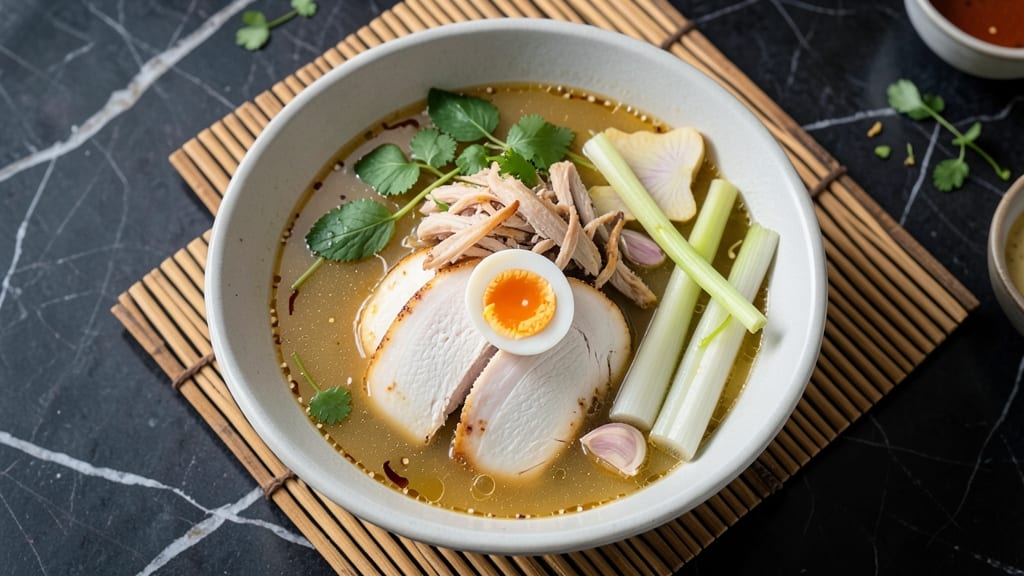
This Asian style chicken soup recipe transforms a simple pot of broth into a fragrant, aromatic masterpiece that feels like a warm embrace on chilly days. 🌟 The secret lies in the ginger-galangal base—a zesty, earthy combination that builds layers of flavor as it simmers, while silky rice noodles soak up every drop of that velvety broth.
The broth starts with chicken bones and aromatics like garlic, lemongrass, and star anise, simmered low and slow until the collagen melts into a rich, golden liquid. Chicken breast is poached directly in the broth, ensuring tender, juicy meat that absorbs all those complex flavors.
Fresh herbs like Thai basil or cilantro finish the dish, adding brightness and freshness.
What you'll end up with is a bowl of soup that's both comforting and sophisticated—creamy yet light, with the perfect balance of spice, sweetness, and umami. The noodles become tender and silky, while the broth remains rich enough to coat every spoonful.
It's the kind of meal that feels like a celebration, even on a weeknight.
This recipe draws inspiration from Southeast Asian traditions, where chicken soups are often the heart of family meals. The galangal (a root similar to ginger) adds a unique peppery kick, while the rice noodles—common in Thai and Vietnamese cuisine—give the dish its signature texture.
Serve with lime wedges and chili flakes for customizable heat.
Ingredients for asian style chicken soup
Aromatic roots, tender chicken, and silky noodles create this fragrant Asian-inspired soup masterpiece.
| Ingredient | Amount | Notes |
|---|---|---|
| Chicken Bones 🍗 | 2 lb | With meat attached for flavor |
| Chicken Breast 🍗 | 1 ½ lb | Boneless, skinless, cut into pieces |
| Fresh Galangal 🌿 | 1 piece | About 3 inches long, peeled |
| Fresh Ginger 🌶️ | 1 piece | About 2 inches, peeled and sliced |
| Lemongrass Stalks 🌿 | 3 whole | Bruised and cut into 2-inch pieces |
| Garlic Cloves 🧄 | 6 cloves | Peeled and smashed |
| Star Anise Pods 🌟 | 2 whole | Lightly crushed |
| Cinnamon Sticks 🌿 | 2 whole | 2-inch pieces |
| Rice Noodles 🍜 | 8 oz | Medium width, uncooked |
| Thai Basil Leaves 🌿 | ½ cup | Fresh, loosely packed |
| Cilantro Leaves 🌿 | ¼ cup | Fresh, loosely packed |
| Fish Sauce 🍶 | 1 tbsp | Red Boat preferred |
| Lime Juice 🍋 | 2 tbsp | Freshly squeezed |
| Soy Sauce 🍶 | 1 tbsp | Light or all-purpose |
| Vegetable Oil 🫒 | 2 tbsp | For initial searing |
| Salt 🧂 | 1 ½ tsp | Kosher or sea salt |
| White Peppercorns 🌶️ | ½ tsp | Freshly ground |
Galangal is the soul of this soup—look for fresh, firm pieces at Asian markets or well-stocked grocery stores like Whole Foods. If you can't find it, extra ginger with a pinch of black pepper works in a pinch. The chicken bones should have meat attached for maximum flavor—Costco or local butchers often sell them pre-packaged. For the lemongrass, bruise the stalks with the side of your knife to release their oils before cutting. Star anise and cinnamon are usually found in the spice aisle near whole spices; Penzeys or Spicewalla carry high-quality versions if you want to invest.
No galangal? Double the ginger and add 1/4 tsp of ground coriander for depth. Running short on fish sauce? Soy sauce at half the amount bridges the gap, though the umami won't be identical. The rice noodles should be medium-width—Thai Kitchen brand is widely available and reliable. For the herbs, Thai basil adds that signature anise-like note, but regular basil plus a pinch of anise seed mimics it. Fresh cilantro brightens the dish, but dried won't work here—its flavor is too muted. Lime juice should be freshly squeezed; bottled loses its punch.
This soup tastes even better the next day as flavors meld—make a double batch and store in airtight containers. Broth keeps 4-5 days in the fridge or 3 months frozen. The noodles can be cooked separately and added when reheating for a fresher texture. For serving, keep lime wedges and chili flakes on the table so everyone can adjust heat to taste. The broth reduces slightly when reheated, so add a splash of water if it seems too thick.
Why You'll Love This Recipe
- One-Pot Magic: I swear by this recipe—just toss the chicken bones, galangal, and lemongrass into a pot, add water, and let it simmer. No chopping, no fuss, and the broth builds flavor all on its own while you handle the rest of dinner.
- Umami Bomb: That first sip? The galangal and ginger team up with the chicken bones to create a depth you won’t find in store-bought broth. It’s the kind of taste that makes you pause mid-slurp—honestly, I’ve had people ask what I added.
- Leftovers That Shine: This soup only gets better the next day. I make a big batch on Sundays, and by Wednesday, the flavors have melded into something even richer. Perfect for lazy afternoons or when you need a quick, satisfying lunch.
- Budget-Friendly Powerhouse: Chicken bones are cheap, and a few stalks of lemongrass stretch across multiple meals. I’ve turned a $5 bag of bones into enough broth for four servings—plus, the leftovers freeze like a dream for future soups or stir-fries.
Step-by-step instructions for Asian style chicken soup
Transform simple ingredients into a fragrant, aromatic broth that balances heat, citrus, and umami perfectly.
🔥 Step 1: Sear the Chicken Bones and Breast for Deep Flavor
Heat a large Dutch oven over medium-high heat until hot. Add the 2 tablespoons vegetable oil and carefully arrange the 2 lb chicken bones in a single layer, meat-side down. Let them sear undisturbed for 5-6 minutes until deeply golden brown and crispy in spots.
Flip the bones and add the 1.5 lb chicken breast pieces, searing for 3-4 minutes per side until lightly browned. Remove the chicken from the pot and set aside. The caramelized crust on the bones will infuse the broth with rich, complex flavor—this step is non-negotiable for depth of taste.
🍳 Step 2: Build the Aromatic Broth Base
In the same Dutch oven, add the peeled 1 piece fresh galangal (cut into ¼-inch thick slices), peeled 1 piece fresh ginger (sliced), 3 bruised lemongrass stalks, 6 smashed garlic cloves, 2 lightly crushed star anise pods, and 2 cinnamon sticks. Toast these aromatics over medium heat for 2-3 minutes until fragrant and lightly golden.
Add 2 cups water (enough to cover the bones) and bring to a boil. Immediately reduce heat to low and skim off any foam that rises to the surface. The broth should simmer gently—if it boils vigorously, it will turn cloudy. This simmering process extracts the maximum flavor from the bones and aromatics.
⏰ Step 3: Simmer the Broth for Maximum Depth
Return the seared chicken bones and breast to the pot. Add the 1.5 teaspoons salt and 0.5 teaspoon freshly ground white peppercorns. Cover and simmer for 45-60 minutes until the broth develops a rich, golden color and the chicken is tender enough to pull apart easily with two forks.
Here's the thing—don't rush this step. The longer the broth simmers, the more collagen breaks down from the bones, creating a naturally thick, silky texture. Taste the broth periodically and adjust seasoning with fish sauce or soy sauce as needed, but remember these will be added later for balance.
🥘 Step 4: Prepare and Cook the Rice Noodles
While the broth simmers, prepare the 8 oz rice noodles according to package instructions. I like to use boiling water and cook them for 3-4 minutes until just tender—rice noodles should be al dente when served in soup. Drain and rinse briefly under cold water to stop the cooking process, then toss with 1 teaspoon vegetable oil to prevent sticking.
Don't overcook the noodles—they'll continue softening in the hot broth. The ideal texture is firm yet tender, able to hold its shape while still being silky. Keep them covered with a damp towel until ready to serve to maintain moisture.
🍽️ Step 5: Finish and Assemble the Soup
Strain the broth through a fine-mesh sieve into a clean pot, discarding the bones, aromatics, and chicken pieces (or reserve the chicken for garnish if desired). Return the broth to medium heat and stir in the 1 tablespoon fish sauce, 1 tablespoon soy sauce, and 2 tablespoons lime juice. Simmer for 2-3 minutes to meld the flavors.
Divide the cooked rice noodles among bowls, then ladle the hot broth over them. Garnish with 0.5 cup Thai basil leaves and 0.25 cup cilantro leaves. The balance of salty, sour, and aromatic elements should be evident in every spoonful—this is where the magic happens. Serve immediately while the noodles are hot and the broth is steaming.
Pro Tips For Making Asian Style Chicken Soup
- CHAR THE BONES FIRST: Skip the slow simmer with raw bones—char them first over high heat until deeply browned. This isn’t just for flavor; it’s the non-negotiable step that unlocks the depth of your broth, especially when using chicken bones that haven’t been pre-cooked. (Yes, even if you’re impatient like me, don’t rush this part.)
- SLICE GALANGAL THINLY: Galangal’s sharp, citrusy kick disappears if you chunk it. Use a knife to shave it into paper-thin slices—like ginger, but with more bite. I learned this the hard way: thick pieces turn to mush and leave you wondering why your soup tastes flat.
- DON’T BOIL THE BREAST: Chicken breast turns rubbery when it boils. Add it to the simmering broth only when the bones have released their collagen (about 45 minutes in). Then, poach it gently for 10-12 minutes—just until it hits 165°F. Overcooking here ruins the whole dish.
- USE LEMONGRASS STALKS WISELY: Split the stalks lengthwise and bruise them with the flat side of your knife before adding to the pot. This releases their oils without turning the broth bitter. (And no, you can’t just throw in whole stalks—your future self will notice the difference.)
Creative variations of this asian style chicken soup
Thai-Inspired Tom Kha
Transform this soup into a Thai-style Tom Kha Gaeng by swapping galangal for 2 tbsp fresh galangal juice (or 1 tbsp galangal paste) and adding 1 can (13.5 oz) coconut milk when straining the broth.
Stir in 1 tbsp palm sugar and 1 tsp tamarind paste for that signature tangy-sweet balance. Garnish with Thai basil and serve with lime wedges for extra zing. 🌶️
Vietnamese Pho Adaptation
For a Pho-inspired version, replace the ginger-galangal with 1 tbsp fresh ginger and 1 cinnamon stick (no star anise). Simmer the broth with 1 small onion (quartered) and 1 bunch cilantro (roots included) for depth.
Serve with rice noodles, thinly sliced chicken, and bean sprouts on top. Add hoisin sauce and sriracha for customizable heat. 🥗
Japanese Miso-Ginger Twist
Create a Japanese-inspired miso broth by reducing the simmering time to 30 minutes and adding 2 tbsp white miso paste at the end. Replace lemongrass with 1 tbsp grated fresh ginger and 1 tsp sesame oil for aroma.
Top with green onions and toasted sesame seeds for a nutty finish. Use udon noodles instead of rice noodles for a heartier texture. ✨
Spicy Korean Kimchi Broth
For a Korean-inspired kimchi broth, add ½ cup chopped kimchi (with juice) and 1 tbsp gochujang when finishing the broth. Swap rice noodles for dangmyeon (glass noodles) and garnish with fried egg and kimchi on top.
The fermented flavors add a tangy, umami punch that pairs perfectly with the chicken. 🍳
Light Summer Version
Make a refreshing summer version by reducing the broth to 3 cups and adding 1 cup coconut water for brightness. Skip the soy sauce and use 1 tbsp fish sauce plus 1 tbsp lime juice for seasoning.
Top with mint leaves and shredded cucumber for a crisp, cooling contrast. Perfect for hot days! 🌞
Protein Swaps
Need variety? Swap the chicken breast for shrimp (add in the last 5 minutes of cooking) or tofu (press and cube for a vegetarian option). For extra richness, add ½ cup mushrooms (shiitake or oyster) when simmering the broth.
Each protein brings a different texture and flavor profile to the soup. 💡
Nutrition facts
Frequently asked questions
Can I substitute galangal if I can't find it?
Use double the amount of fresh ginger (about 2 inches) plus ¼ teaspoon ground coriander for depth. Galangal has a peppery kick, so adding a pinch of black pepper helps mimic its complexity. The soup will still taste amazing—just slightly less exotic.
How do I make the broth less cloudy?
Simmer the broth at a gentle low heat—never let it boil vigorously after adding water. Skim off any foam that rises to the surface during the first 10 minutes of simmering. For extra clarity, strain the broth through a cheesecloth-lined sieve after cooking. The longer simmering time (up to 60 minutes) also helps clarify naturally.
Can I use chicken thighs instead of breast?
Yes! Chicken thighs add even more richness to the broth. Use 1.5 lb bone-in, skin-on thighs instead of breast. The skin will render fat for extra flavor, and the meat stays juicy. Just increase simmering time by 10-15 minutes to ensure tenderness. Remove the skin before serving if preferred.
Why does my soup taste bland? Blandness usually comes from insufficient seasoning or rushing the broth development.
How long can I store leftovers?
Store leftovers in an airtight container in the fridge for 4-5 days or freeze for 3 months. Reheat gently on the stove—never microwave directly from frozen. Add a splash of water if the broth seems too thick after reheating. The noodles can be cooked separately and added when reheating for best texture.