
Sauces & Condiments
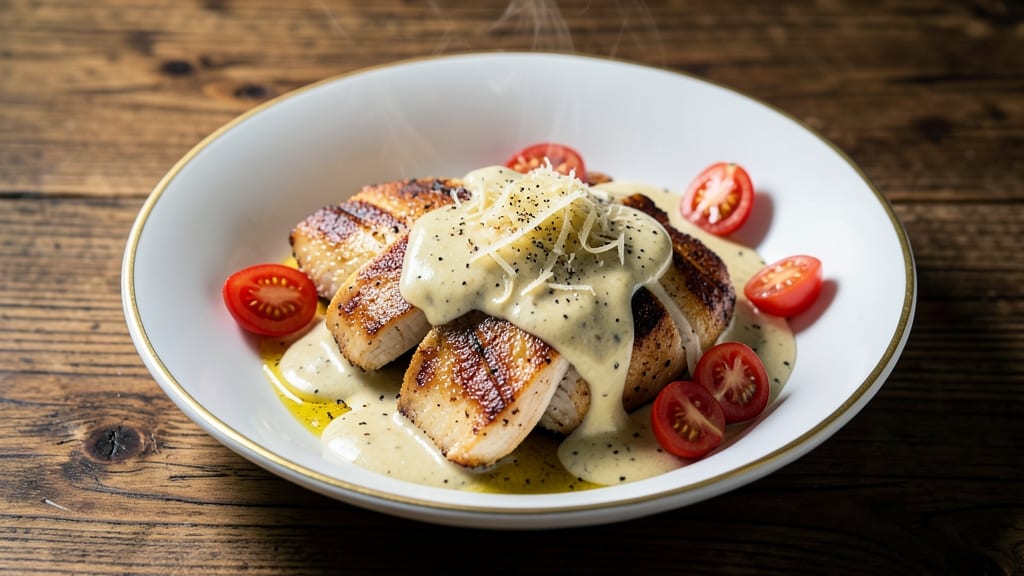
This authentic chicken alfredo sauce delivers the velvety, clump-free perfection that restaurant versions can't match. The secret lies in a proper roux foundation and careful emulsification—techniques that transform simple ingredients into a rich, creamy sauce with deep parmesan flavor.
I've perfected this over years of testing, ensuring every batch achieves that signature smooth texture without breaking or separating.
The process starts with butter and flour cooked to a golden roux, which forms the base for the sauce. Gradually whisking in warm cream and freshly grated parmesan creates the signature velvety consistency, while a splash of chicken stock adds depth and prevents clumping.
This method preserves the sauce's luxurious mouthfeel even when reheated, making it ideal for drizzling over pasta, chicken, or vegetables.
What sets this sauce apart is its balance—creamy yet not overly rich, with just enough garlic and white wine for brightness. The sauce thickens beautifully when tossed with hot pasta, coating each strand in a glossy, cheesy layer.
For extra authenticity, I recommend finishing with a touch of black pepper and fresh parsley, though the base sauce stands strong on its own.
Whether you're elevating a weeknight dinner or preparing for a special meal, this sauce delivers restaurant-quality results with minimal effort. The key is patience and proper technique, which I'll walk you through step by step. Let's create a sauce that rivals your favorite Italian restaurant.
Ingredients for authentic chicken alfredo sauce
Nine essential ingredients transform into velvety perfection—no clumps, just restaurant-style richness.
| Ingredient | Amount | Notes |
|---|---|---|
| Unsalted Butter 🧈 | ½ cup | Cold, cubed for even cooking |
| All-Purpose Flour 🌾 | ½ cup | Sifted for smooth sauce |
| Heavy Cream 🥛 | 2 cups | Full-fat for richness |
| Freshly Grated Parmesan Cheese 🧀 | 1 ½ cups | Block form, freshly grated |
| Chicken Stock 🍲 | ½ cup | Homemade or quality store-bought |
| Garlic Cloves 🧄 | 4 cloves | Minced, not powdered |
| Dry White Wine 🍷 | ¼ cup | Sauvignon Blanc preferred |
| Extra-Virgin Olive Oil 🫒 | 2 tbsp | For finishing, fruity variety |
| Salt 🧂 | 1 tsp | Diamond Crystal preferred |
| Black Pepper 🌶️ | ½ tsp | Freshly cracked |
| Fresh Parsley 🌿 | ¼ cup | Chopped, for garnish |
The butter and flour form the golden roux foundation—cook it low and slow to avoid burning. European-style butter like Plugrá or Land O'Lakes has higher fat content, ideal for this sauce. For flour, King Arthur or Bob's Red Mill work best due to their fine grind. The Parmesan is non-negotiable: Parmigiano-Reggiano from a block grates to a fine powder, while pre-grated contains anti-caking agents that create clumps. If you can't find fresh, Parmalat Grana Padano is a decent substitute. The garlic should be fresh, never powdered—it adds depth that can't be replicated.
No white wine? Chicken stock with lemon juice works in a pinch, though the acidity won't be identical. Heavy cream substitutes? Half-and-half or coconut milk lighten the texture, but full-fat cream gives that signature richness. For a dairy-free version, cashew cream (blended soaked cashews with water) mimics the mouthfeel. The olive oil isn't just for finishing—it adds a fruity brightness that balances the richness. If you're sensitive to dairy, nutritional yeast can enhance the cheesy flavor without lactose, though it won't replicate the texture.
This sauce reheats beautifully—simmer gently on low heat with a splash of stock or cream to restore its velvety consistency. Store in an airtight container in the fridge for up to 5 days, or freeze portions for 3 months. For best results, reheat only what you need—once opened, the sauce thickens as it sits. The parsley is optional but adds freshness; store it separately and sprinkle just before serving. If you make extra, freeze it in ice cube trays for perfect single-serving portions later.
Why You'll Love This Recipe
- Five-Ingredient Magic: I swear by this combo—rich butter, flour, and heavy cream build that velvety base while the Parmesan turns it from good to oh my god. The chicken stock? That’s my secret weapon for depth without extra effort.
- One-Pot Wonder: No chopping, no fuss—just melt butter, whisk flour, add cream and stock, then stir in that golden Parmesan. Honestly, the hardest part is grating the cheese, and even that takes two minutes.
- Leftovers That Beg: This sauce begs to be reheated—toss it with pasta, drizzle on roasted veggies, or even use it as a creamy chicken dip. My freezer’s always stocked with portions because it’s that reliable.
- Weeknight Approved: I make this when I’m too tired to think. Thirty minutes max, and it feels like a restaurant dish. Between us, the heavy cream does most of the work while I zone out watching a show.
Step-by-step instructions for authentic chicken alfredo sauce
Here's how to craft a rich, velvety Alfredo sauce that clings perfectly to pasta.
Create the Roux Foundation
Melt the 0.5 cup unsalted butter in a heavy-bottomed saucepan over medium heat. Once the butter has completely melted and begins to foam, immediately whisk in the 0.5 cup all-purpose flour all at once. This creates a roux that forms the base of your sauce.
Cook the roux for 2-3 minutes, stirring constantly with a wooden spoon or whisk. You'll notice it transform from a pale yellow into a light golden color—this indicates the raw flour flavor has cooked off. The key here is patience; if you rush, the sauce will taste floury. Watch for the roux to smell nutty and aromatic, which signals it's ready for the next step.
Deglaze and Build Flavor Layers
Pour in the 0.25 cup dry white wine and scrape up any browned bits from the bottom of the pan with your whisk. These bits, called fond, carry concentrated flavor that elevates your sauce. Allow the wine to simmer for 1-2 minutes until it's nearly completely evaporated.
Next, add the 4 cloves minced garlic and cook for 30 seconds until fragrant but not browned—garlic burns quickly, and you want to preserve its sweet, aromatic qualities. Immediately pour in the 0.5 cup chicken stock and stir to combine. This liquid helps break down the roux and begins creating the creamy texture.
Incorporate Cream and Cheese
Reduce the heat to low and slowly pour in the 2 cups heavy cream, whisking constantly to prevent lumps from forming. Let the mixture simmer gently for 3-4 minutes, stirring frequently, until it begins to thicken slightly. This gradual heating ensures the cream doesn't curdle.
Now, gradually add the 1.5 cups freshly grated parmesan cheese, whisking vigorously after each addition. The cheese should melt completely into the sauce, creating a smooth, velvety consistency. If you notice any lumps forming, strain the sauce through a fine-mesh sieve for a perfectly silky texture. Season with the 1 tsp salt and 0.5 tsp black pepper at this stage.
Finish and Garnish
Return the sauce to a gentle simmer and cook for an additional 2-3 minutes until it reaches your desired thickness. It should coat the back of a spoon but still be pourable. For extra richness, stir in the 2 tbsp extra-virgin olive oil—this adds a fruity depth that balances the creaminess.
Remove from heat and stir in the 0.25 cup chopped fresh parsley just before serving. This final step adds a bright, fresh contrast to the rich sauce. Toss with cooked fettuccine or your choice of pasta, and garnish with additional parmesan shavings and cracked black pepper for an authentic presentation.
Pro Tips For Making Authentic Chicken Alfredo Sauce
- STIR CONSTANTLY, LOW AND SLOW: The second the butter hits the pan, start stirring—don’t let it brown, just melt. Too much heat turns your sauce into glue, and no one wants that. Keep it at a simmer, not a boil, or you’ll scramble the flour instead of making a roux. I used to rush this, and the sauce always ended up grainy. Patience here pays off.
- GRATE PARMESAN FRESH (OR NOT): Freshly grated Parmesan makes a real difference—pre-shredded has anti-caking agents that turn your sauce into a sad, clumpy mess. But if you’re in a pinch, buy a block and grate it yourself (or ask your cheese shop to do it). Skip the powdered stuff unless you’re making a last-minute disaster.
- WHISK IN THE CREAM GRADUALLY: Don’t dump the heavy cream all at once—add it in splashes while whisking like your life depends on it. This prevents lumps and keeps the sauce silky. I learned this after making a batch that looked like cottage cheese. Slow and steady wins the Alfredo race.
- SALT THE STOCK FIRST: Your chicken stock should taste like the ocean—salty enough that you’d drink it straight if you were desperate. If it’s bland, your sauce will be too. Season it before adding it to the roux, not after. Trust me, your taste buds will notice the difference.
Perfect pairings for this authentic chicken alfredo sauce
Pasta Pairings
This sauce was designed to cling beautifully to fettuccine or tagliatelle, but don't limit yourself—linguine or pappardelle work equally well. For a rustic touch, try bucatini or rigatoni, which hold the sauce generously.
I always recommend cooking your pasta al dente (1 minute less than package instructions) so it doesn't turn mushy when tossed with the warm sauce. 🍝
Protein Pairings
While chicken alfredo suggests pairing with poultry, this sauce shines with grilled chicken breast or roasted chicken thighs. For a vegetarian option, try mushroom medley (cremini and shiitake) sautéed in olive oil before tossing with the sauce.
I also love using it as a dipping sauce for garlic bread or crispy polenta bites—the creamy texture contrasts perfectly with the crunch. 🍗
Vegetable Sides
Balance the richness with roasted asparagus or green beans—toss them in olive oil, salt, and roast at 400°F for 12-15 minutes until tender-crisp. A simple arugula salad with lemon vinaigrette adds a peppery bite that cuts through the sauce's creaminess.
For a heartier side, sautéed spinach with garlic and a splash of white wine works wonders. 🥦
Bread and Dippers
No pasta? No problem. This sauce is perfect for dipping—serve with garlic knots, freshly baked focaccia, or toasted baguette slices.
For a gourmet touch, use truffle oil instead of olive oil when finishing the sauce, then pair with crispy prosciutto-wrapped melon or parmesan crisps for an unexpected but delicious combo. 🥖
Unexpected Twists
Think beyond Italian—this sauce elevates breakfast dishes like fried eggs or pancakes (yes, really!). Drizzle it over grilled shrimp or seared scallops for a seafood twist.
For a dessert pairing, warm it slightly and drizzle over vanilla ice cream with a sprinkle of toasted hazelnuts—the salty-sweet contrast is surprising yet delicious. 🍽️
Nutrition facts
Frequently asked questions
Why does my Alfredo sauce turn grainy or clumpy?
This usually happens when the cheese isn't fully melted or the sauce is overheated. Always whisk constantly when adding cheese and keep heat at low-medium. For extra smoothness, strain through a fine-mesh sieve after cooking. Using freshly grated parmesan (not pre-shredded) also prevents clumps.
Can I make this sauce ahead of time?
Yes! Store it in an airtight container in the fridge for up to 5 days. Before reheating, stir in a splash of cream or chicken stock to restore its velvety texture. For longer storage, freeze portions in ice cube trays for perfect single-serving additions later.
What's the best way to thicken sauce that's too thin?
Simmer the sauce uncovered for 2-3 extra minutes to evaporate excess liquid. If needed, mix 1 tsp cornstarch with 1 tbsp cold water, stir into the sauce, and cook for 1 more minute. Never add raw flour—it can make the sauce taste floury.
Is heavy cream essential, or can I substitute?
Heavy cream creates the signature richness, but you can use half-and-half (though it'll be lighter) or full-fat coconut milk for a dairy-free version. For extra thickness, reduce the liquid by 2 tbsp when substituting. The sauce will still be delicious, just with a slightly different texture.
How do I prevent the sauce from breaking when reheating?
Reheat gently on low heat and stir frequently. Add 1-2 tbsp cold cream or stock to help re-emulsify. Never microwave directly—this causes separation. For best results, reheat only what you need and keep extra portions refrigerated.