
Main Courses
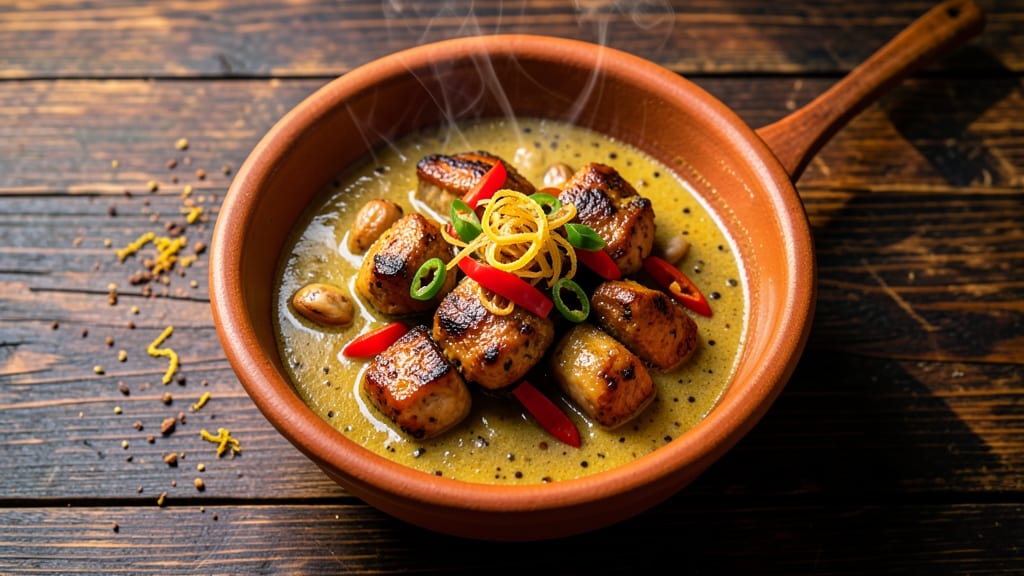
This authentic Kerala chicken curry brings the bold flavors of South India to your kitchen in one aromatic pot. The secret lies in balancing coconut milk's richness with tangy tamarind and a fragrant tempering of mustard seeds, curry leaves, and black pepper.
I've perfected this recipe after years of studying traditional Kerala cooking techniques, ensuring every bite delivers that signature depth of flavor.
The recipe begins with a dry roast of spices that awakens their natural oils, followed by a quick tempering that infuses the oil with complex aromas. Coconut milk creates a velvety base, while tamarind adds the necessary tang to cut through the richness.
The chicken cooks tender and flavorful, absorbing all the spices without becoming dry.
What sets this curry apart is its restaurant-quality balance—creamy yet tangy, spicy without being overpowering, and packed with authentic Kerala flavors. The slow simmering process ensures the chicken stays juicy while the spices meld together into a harmonious blend.
Serve it with steamed basmati rice, appam, or paratha for the complete Kerala dining experience.
This dish is more than just a recipe; it's a taste of Kerala's culinary heritage. The combination of traditional spices, coconut milk, and tamarind creates a curry that's both comforting and sophisticated.
Whether you're cooking for family or hosting a dinner party, this authentic Kerala chicken curry will impress everyone at the table.
Ingredients for authentic kerala chicken curry
Here's what you need to create this restaurant-quality Kerala chicken curry in one aromatic pot.
| Ingredient | Amount | Notes |
|---|---|---|
| Boneless Chicken Thighs 🍗 | 1 ½ lb | Cut into 1-inch pieces |
| Coconut Milk 🥥 | 1 can (13.5 oz) | Full-fat for creaminess |
| Tamarind Paste 🍋 | 2 tbsp | Adjust for tanginess |
| Yellow Onion 🧅 | 1 whole | Finely chopped |
| Garlic Cloves 🧄 | 6 cloves | Minced |
| Ginger 🌿 | 1 inch | Fresh, grated |
| Green Chili 🌶️ | 2 whole | Slit lengthwise |
| Curry Leaves 🌿 | ¼ cup | Fresh, lightly crushed |
| Mustard Seeds 🌱 | 1 tbsp | Lightly toasted |
| Black Peppercorns 🌶️ | 1 tsp | Crushed |
| Ground Cumin 🌿 | 1 tsp | Toasted |
| Ground Coriander 🌿 | 1 tsp | Freshly ground |
| Turmeric Powder 🌿 | ½ tsp | Freshly ground |
| Garam Masala 🌶️ | 1 tsp | Toasted blend |
| Salt 🧂 | 1 tsp | Adjust to taste |
| Vegetable Oil 🫒 | ¼ cup | For tempering |
The chicken thighs are key here—bone-in would work too, but thighs stay juicier during the long simmer. Look for free-range or organic if possible, but any good-quality chicken works. The coconut milk should be full-fat for that velvety texture; Thai Kitchen brand is my go-to for consistency. Tamarind paste can be tricky to find—Indian grocery stores usually carry it, or use tamarind pulp if you're feeling adventurous. Fresh curry leaves are non-negotiable for that authentic aroma, though dried will work in a pinch at half the amount. For the spices, M.P. Birla or MDH brands are reliable for quality.
No tamarind paste? Lemon juice with a pinch of salt mimics the tang, though it won't be identical. Running short on curry leaves? Bay leaves at double the amount add depth, but you'll need to remove them before serving. The green chilies can be adjusted—remove seeds for less heat. For the garam masala, if you can't find a pre-made blend, toast equal parts cinnamon, cardamom, cloves, and black peppercorns. The oil for tempering matters too—coconut oil adds another layer of flavor, but vegetable oil works perfectly fine.
This curry tastes even better the next day as flavors meld. Store in an airtight container in the fridge for up to 4 days. For freezing, portion into single servings—it reheats beautifully. The spices can be pre-toasted and stored in a jar for up to 2 weeks, keeping them fresh for future curries. I always make extra—it pairs perfectly with rice or naan, and the leftovers make great lunches.
Why You'll Love This Recipe
- One-Pot Magic: I swear by this recipe because it’s actually one-pot—no dirty dishes, no stress. Just brown the chicken, toss in the onions and garlic, then let the tamarind and coconut milk do their thing. Honestly, I’ve made it on nights when I didn’t even own a colander.
- Tamarind Tang Kick: That tamarind paste? It’s the secret weapon. It cuts through the richness of the coconut milk, giving you this perfect balance of sweet, sour, and umami. My husband always says it’s the only curry that makes him finish his rice twice—no exaggeration.
- Weeknight to Dinner Party: Between us, this curry works for everything. Too tired for a fuss? It’s ready in 40 minutes. Hosting friends? Serve it with appam or naan, and suddenly you’re the star. I’ve even packed it for lunches—just reheat with a splash of water.
- Budget-Friendly Luxury: Chicken thighs are forgiving and cheap, and coconut milk stretches far. I’ve fed six people for under $15 with leftovers that taste just as good the next day. Not the prettiest, but the taste makes up for it—and my wallet thanks me.
Step-by-step instructions for authentic Kerala chicken curry
Here's how to create this fragrant curry with its signature tamarind-coconut balance.
Prepare the Chicken and Temper the Spices
Cut the 1.5 lb boneless chicken thighs into 1-inch pieces and set aside. In a heavy-bottomed pot, heat the 0.25 cup vegetable oil over medium heat until shimmering. Add the 1 tbsp mustard seeds and let them sizzle for 30 seconds until they pop and turn golden.
Next, add the 0.25 cup curry leaves and 2 whole slit green chili. Cook for 1 minute until the curry leaves darken slightly and release their aroma. This initial tempering builds the foundation of the curry's complex flavor profile.
Cook the Aromatics and Spices
Add the 1 whole finely chopped yellow onion and cook for 4-5 minutes until soft and translucent. Stir in the 6 minced garlic cloves, 1 inch grated ginger, 1 tsp ground cumin, 1 tsp ground coriander, 0.5 tsp turmeric powder, and 1 tsp crushed black peppercorns. Cook for 2 minutes until the raw aroma disappears and the spices release their oils.
This step develops the curry's depth. The onions should caramelize slightly at the edges, creating a sweet contrast to the spices. If they brown too quickly, reduce the heat to maintain even cooking.
Add Tamarind and Chicken
Stir in the 2 tbsp tamarind paste and cook for 1 minute until it dissolves completely into the oil. Add the chicken pieces and toss to coat evenly in the spiced oil. Cook for 3-4 minutes, stirring occasionally, until the chicken turns opaque and begins to absorb the flavors.
The tamarind is crucial here—it balances the richness of the coconut milk with its tangy brightness. If you notice the paste clumping, add 1-2 tablespoons of water to help it integrate smoothly.
Simmer with Coconut Milk
Pour in the 1 can (13.5 oz) full-fat coconut milk and bring the mixture to a gentle simmer. Reduce heat to low and let it cook uncovered for 20-25 minutes, stirring occasionally, until the chicken is tender and the sauce thickens slightly. The curry should reduce enough to coat the back of a spoon but remain saucy.
During this time, the coconut milk will infuse with the spices, creating a velvety texture. If the sauce reduces too quickly, add 2-3 tablespoons of water to maintain the proper consistency. The chicken should be fork-tender but not falling apart.
Finish with Garam Masala and Salt
Stir in the 1 tsp garam masala and 1 tsp salt, adjusting to taste. Simmer for an additional 5 minutes to allow the flavors to meld together. Taste and make any final adjustments—Kerala curry should balance sweet, sour, spicy, and savory notes.
Remove from heat and let the curry rest for 5 minutes before serving. This resting period allows the flavors to fully develop. Serve hot with steamed rice or appam for an authentic Kerala dining experience.
Pro Tips For Making Authentic Kerala Chicken Curry
- Bloom the Tamarind: Soak that tamarind paste in warm water for 10 minutes first—it turns into a smooth, vibrant pulp instead of clumpy bits. I learned this the hard way after scraping dried chunks off my teeth for days. Use about 2 tablespoons of water per tablespoon of paste, then strain through a fine sieve for the cleanest base.
- Brown the Chicken First: Don’t skip the initial sear—cook the chicken thighs in batches over medium-high heat until deep golden, about 4 minutes per side. The crust locks in flavor and prevents the curry from turning greasy later. (Yes, even if you’re impatient like me.)
- Simmer, Don’t Boil: Once the coconut milk hits the pot, drop the heat to a gentle simmer—no rolling bubbles. High heat curdles the milk faster than you can say “disaster.” Let it cook uncovered for 20 minutes so the flavors meld without turning gluey.
- Toast the Onions Low: Sauté the onions on low heat for 10–12 minutes until they’re caramelized but not burnt—this builds the curry’s sweet depth. I used to rush this and wondered why my dish tasted flat. Add a pinch of salt halfway to draw out moisture and speed up the process.
Common mistakes when making great authentic kerala chicken curry
Skipping the Tempering
One of the biggest mistakes I see is skipping the mustard seed tempering—this is where the magic happens! Those tiny seeds pop and release their nutty aroma, which forms the flavor base.
If you rush this step or use low heat, the mustard won't toast properly, leaving your curry flat. I always use medium heat and watch closely for that golden pop—it takes just 30 seconds, but it's non-negotiable for authenticity. 🔥
Overcooking the Chicken
Kerala chicken curry relies on tender, juicy chicken—not dry, shredded pieces. The moment the chicken reaches 165°F internal temperature, it's done. If you simmer too long after that, the meat will turn rubbery.
I pull mine from heat when it's just fork-tender, then let it rest in the sauce for 5 minutes off the heat. This resting time keeps it moist while flavors meld. 🍗
Ignoring Tamarind's Tang
The tamarind paste is what balances the coconut milk's richness, but many home cooks either skip it or use too little. 2 tbsp is your sweet spot—enough to brighten the curry without overpowering. If your tamarind paste is thick, dissolve it in 1 tbsp warm water first.
Pro tip: If you can't find tamarind, lemon juice + pinch of salt works in a pinch, but it won't be identical. The tang is essential for that authentic Kerala bite! 🍋
Using Low-Quality Spices
Freshly toasted spices make all the difference, but many recipes call for pre-ground powders straight from the jar. Toast your cumin, coriander, and turmeric in a dry pan for 30 seconds until fragrant—this amplifies their flavors exponentially.
I swear by M.P. Birla or MDH brands for their consistent quality. If you must use jarred spices, toast them lightly before adding to the curry. 🌶️
Rushing the Simmer
Low-and-slow cooking is key for tender chicken and a well-balanced sauce. If you crank the heat too high, the coconut milk will curdle or separate. Keep it at a gentle simmer (small bubbles) for 20-25 minutes, stirring occasionally.
The sauce should reduce just enough to coat the back of a spoon—if it gets too thick, add 2 tbsp water. Patience here ensures a creamy, cohesive curry. ⏳
Forgetting to Rest
Serving curry immediately after cooking is a cardinal sin! The flavors need 5-10 minutes to meld together. During this time, the chicken reabsorbs juices, and the spices bloom.
I always let my curry sit off the heat before serving—this simple step transforms a good curry into a restaurant-quality one. Trust the process! 💫
Nutrition facts
Frequently asked questions
Can I substitute chicken breast for thighs in this recipe?
Chicken thighs work best because they stay juicy during the long simmer. If you must use breast, cut them into ½-inch pieces and add them only 10 minutes before the curry is done to prevent drying out. For extra moisture, add 2 tbsp coconut milk at the end.
What makes this curry different from other Kerala curries?
This recipe captures Kerala's signature balance of tamarind's tang and coconut milk's creaminess, plus the essential mustard seed tempering that gives it that nutty aroma. Many regional versions use yogurt or tomato, but this stays true to Kerala's coconut-forward tradition. The slow simmer also keeps the chicken tender while developing deep flavors.
How spicy should this curry be?
The recipe includes 2 slit green chilies for mild heat, but you can adjust to taste. Remove seeds for less spice or add ½ tsp red chili powder at the end for extra kick. Kerala curries often balance heat with cooling coconut milk—this version leans toward mild-medium heat with room for customization.
Can I make this curry in an Instant Pot?
Sauté the mustard seeds, curry leaves, and aromatics first. Then add chicken, tamarind, and spices. Pour in coconut milk, seal the pot, and cook on high pressure for 8 minutes. Release pressure naturally, then finish with garam masala. The Instant Pot cuts cooking time to 25 minutes total while keeping flavors intact.
What's the best way to store leftovers?
Store in an airtight container in the fridge for up to 4 days. The flavors actually improve overnight! For freezing, portion into single servings—it reheats beautifully. Thaw overnight in the fridge, then gently reheat on low heat with 1 tbsp water to restore creaminess.