
Soups & Stews
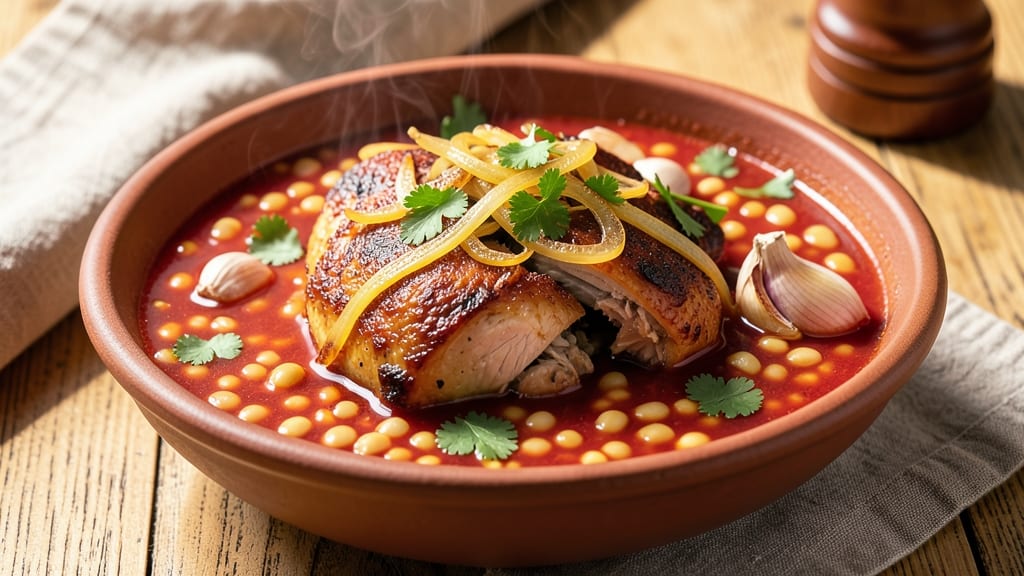
This authentic Mexican red chicken pozole recipe delivers the smoky, spiced comfort of Mexico’s most beloved homestyle soup—where tender chicken, hearty hominy, and deep-chile broth come together in one flavorful pot. 🌟 The secret lies in toasting dried guajillo and ancho chiles to unlock their natural sweetness, then simmering them with garlic, onions, and spices until the broth develops that signature depth.
What sets this apart is the balance: enough heat to warm you up, but never overpowering the natural richness of the chicken and hominy.
Unlike quick versions, this recipe follows traditional techniques—slow-cooking the chicken until fall-apart tender, simmering the broth for hours to meld flavors, and using fresh garnishes like crisp radishes, cool avocado, and bright lime to cut through the richness.
The result? A bowl of pozole that tastes like a home-cooked meal from a Mexican abuela’s kitchen, with every spoonful packed with smoky, earthy, and slightly spicy layers. No shortcuts here—just the real deal.
The beauty of pozole is in the assembly: each person customizes their bowl with toppings like shredded lettuce, cilantro, and crumbled queso fresco, making it as interactive as it is delicious.
The broth, infused with hominy’s nutty flavor and the warmth of chiles, is the star, while the chicken and hominy provide hearty substance. This isn’t just a soup—it’s a celebration of Mexican comfort food, brought to your table with authenticity and care.
Perfect for gatherings, family dinners, or when you crave a meal that’s both nourishing and full of soul. Let’s get cooking—this pozole is worth every minute of simmering.
Ingredients for authentic mexican red chicken pozole
Sixteen ingredients to bring Mexico's smoky, spiced comfort bowl to your table.
| Ingredient | Amount | Notes |
|---|---|---|
| Chicken Thighs 🍗 | 3 lb | Bone-in, skin-on for flavor |
| Dried Guajillo Chiles 🌶️ | 6 whole | Stems and seeds removed |
| Dried Ancho Chiles 🌶️ | 4 whole | Stems and seeds removed |
| Yellow Hominy 🌽 | 2 cans | 15 oz each, drained |
| Yellow Onions 🧅 | 2 whole | Medium size, chopped |
| Garlic Cloves 🧄 | 8 cloves | Peeled, smashed |
| Fresh Cilantro 🌿 | ½ cup | Chopped, for garnish |
| Avocados 🥑 | 2 whole | Ripe, sliced for serving |
| Limes 🍋 | 4 whole | Juiced, for serving |
| Radishes 🥕 | 1 cup | Thinly sliced, for garnish |
| Queso Fresco 🧀 | 1 cup | Crumbled, for serving |
| Olive Oil 🫒 | ¼ cup | For toasting chiles |
| Salt 🧂 | 2 tsp | Kosher or sea salt |
| Ground Cumin 🌿 | 1 tbsp | Toasted for depth |
| Dried Oregano 🍃 | 1 tbsp | Mexican oregano preferred |
The chiles are the soul of this pozole—guajillo and ancho give that signature smoky-sweet depth. Grab them at a Mexican market or the Latin foods aisle at Whole Foods, where they're usually sold in small bags. Toast them in a dry skillet until fragrant—about 30 seconds per side. Penzeys also carries them if you can't find them locally. The hominy? La Costeña brand is my go-to, but any yellow hominy works. Look for cans with no added salt, or rinse well if they are. Chicken thighs are non-negotiable here—they stay juicy while the broth simmers, unlike breasts that dry out.
No guajillo chiles? Ancho chiles alone work at double the amount, but the flavor will be less complex. Fresh cilantro is ideal, but dried works at one-third the amount if you're in a pinch. The avocados should be ripe but firm—Hass variety is perfect, and they'll keep for a few days at room temperature. For the onions, yellow or white both work, but yellow adds a touch of sweetness. The queso fresco can be swapped for cotija cheese if that's what you've got, but it won't be quite as mild. Toast your cumin and oregano in the same skillet as the chiles—they'll release their aromas and deepen the broth's flavor.
The hominy cans keep for up to 2 years unopened, but once opened, transfer to a sealed container and refrigerate for 5 days. The chiles? Store them in a cool, dark place for 6-12 months—they'll last longer than most spices. I always make a double batch of broth and freeze half in portions. The chicken can be cooked ahead and stored in the fridge for 3 days or frozen for 3 months. The garnishes like avocado and radishes add freshness, so keep them separate until serving. This pozole tastes even better the next day as the flavors meld—perfect for meal prep!
Why You'll Love This Recipe
- I’ll be real: the second day is often the best. The flavors meld even deeper, and reheating a bowl of this? It’s like a warm hug in soup form. Plus, it stretches across three meals without feeling like a chore—my wallet thanks me, and so does my freezer.
- One-Pot Magic: I swear by this recipe—just toss everything into one pot, and the hominy and chicken thighs melt into tender perfection while the chiles simmer into a deep, smoky broth. No fussy layers, no separate pans; it’s the kind of meal where you can walk away and come back to something that tastes like it simmered all day.
- Smoky Depth Bomb: Those dried guajillo and ancho chiles? They’re the stars here. Toast them just until fragrant, then soak and blend—they turn into a rich, slightly sweet, smoky base that coats every bite. Honestly, the first time I tasted it, I thought, "This is why people cook."
- Weeknight Crowd-Pleaser: Between us, this is my go-to for game day, family dinners, or when my college-aged kids show up hungry. The hominy adds hearty texture, the onions caramelize into sweetness, and everyone—even the picky eaters—go back for seconds. (Yes, even on a Tuesday night.)
Step-by-step instructions for authentic Mexican red chicken pozole
Here's how to build this smoky, homestyle classic with deep chile flavor and tender chicken.
🔥 Step 1: Toast and Rehydrate the Dried Chiles
Heat a dry skillet over medium heat and toast the 6 whole dried guajillo chiles and 4 whole dried ancho chiles for 30-45 seconds per side until fragrant and slightly darkened. This step deepens their smoky flavor—don't let them burn. Transfer the toasted chiles to a bowl and cover with 4 cups hot water (from the kettle). Let them soak for 15 minutes while you prep the rest.
After soaking, drain the chiles and transfer them to a blender along with 2 cups of the soaking liquid. Blend until smooth, then strain through a fine-mesh sieve to remove any skins or seeds. You'll use this vibrant red chile puree as the base for your pozole. The puree should be deep red and slightly thick—this is the soul of your dish.
🍳 Step 2: Sear the Chicken and Build the Broth
In a large Dutch oven, heat the 0.25 cup olive oil over medium-high heat. Add the 3 lb chicken thighs skin-side down and sear for 5-6 minutes until golden brown. Flip the thighs and sear the other side for another 5 minutes. Remove the chicken and set it aside.
In the same pot, add the 2 chopped yellow onions and cook for 5 minutes until softened. Add the 8 smashed garlic cloves, 1 tbsp toasted ground cumin, and 1 tbsp dried oregano, stirring for 30 seconds until fragrant. Pour in the chile puree and scrape up any browned bits from the bottom of the pot—this releases all the flavor. Add 8 cups water and bring to a boil.
🥘 Step 3: Simmer the Chicken and Season the Broth
Return the chicken to the pot, skin-side up. Reduce heat to low and simmer uncovered for 45-50 minutes until the chicken is fork-tender and the bones slide out easily. Remove the chicken and let it cool slightly before shredding it into bite-sized pieces.
Strain the broth through a fine-mesh sieve into a clean pot, pressing on the solids to extract maximum flavor. Return the broth to the Dutch oven and add the 2 cans drained yellow hominy and 2 tsp salt. Simmer for another 10 minutes to let the flavors meld. The broth should be deep red and slightly thickened—this is your pozole base. Taste and adjust seasoning if needed.
🍽️ Step 4: Assemble and Serve with Traditional Toppings
Return the shredded chicken to the pot and stir to combine. Keep the pozole warm over low heat while you prepare the toppings. Slice the 2 whole avocados and arrange them on a platter. Thinly slice the 1 cup radishes and separate them into piles. Juice the 4 whole limes and pour into small bowls. Crumble the 1 cup queso fresco and chop the 0.5 cup fresh cilantro.
To serve, ladle the pozole into bowls and let everyone assemble their own bowls with the toppings. The traditional combination includes avocado for creaminess, radishes for crunch, lime for brightness, and queso fresco for saltiness. Each bite should deliver a perfect balance of smoky chile, tender chicken, and hominy with fresh, vibrant toppings.
Pro Tips For Making Authentic Mexican Red Chicken Pozole
- Simmer Chiles Slowly: After burning three batches, I finally figured out—soak guajillo and ancho chiles in hot (not boiling) water for 15 minutes first, then simmer them in the broth for at least 20 minutes. The longer they cook, the deeper the smoky, fruity flavor without bitterness. I know, I know, but trust the process—don’t rush this.
- Use Bone-In Thighs: Skip the boneless thighs unless you’re in a hurry. The bones add richness and collagen that turns the broth velvety, even with just 2 pounds of meat. If you’re using boneless, add a chicken carcass or extra chicken bouillon—it makes a real difference.
- Toast Onions Until Caramelized: Slice those yellow onions thin and cook them over medium-low heat until they’re golden brown, not just soft. This isn’t the prettiest method, but it’s the tastiest—it builds a sweet, jammy base for the chile sauce. (Yes, even if you’re impatient like me.)
- Drain Hominy Twice: Rinse the hominy under cold water after draining the can, then drain it again in a colander. The extra step removes excess starch, so it absorbs the broth instead of turning it gluey. I skip this when I’m lazy, but the dish is noticeably better when I don’t.
Essential equipment for perfect results
Dutch Oven
A 5-7 quart Dutch oven is your best friend for this recipe—it distributes heat evenly and handles the long simmer beautifully. I use a Le Creuset signature (enamel-coated) because it retains heat well and won’t warp.
For budget-friendly options, Lodge cast iron works just as well, but season it well to prevent rust. The deep sides prevent spills when adding toppings, and the heavy base keeps temperatures stable during the 45-50 minute chicken simmer. 🔥
Immersion Blender
An immersion blender saves you from transferring hot liquids and makes blending the chile puree effortless. I prefer the Ninja immersion blender for its powerful motor—it handles the fibrous chile skins without clogging.
If you don’t have one, a regular blender works, but strain the puree through a fine-mesh sieve to remove any seeds or skins. This step is critical for a smooth, vibrant broth without grit. 💫
Fine-Mesh Sieve
A stainless steel fine-mesh sieve (like the OXO Good Grips) is essential for straining the chile puree and broth. The tight weave catches even the smallest seeds and skins, ensuring your pozole is silky smooth.
I avoid plastic sieves—they can melt under high heat. For extra insurance, line the sieve with a cheesecloth to catch any lingering particles. This step elevates the texture of your broth from rustic to restaurant-quality. ✨
Instant-Read Thermometer
An instant-read thermometer (I use the Thermoworks ThermoPop) helps you monitor the chicken’s internal temperature—aim for 165°F to ensure it’s safe to eat. It’s also useful for checking the broth’s consistency: a deep red color and 205°F (just before serving) indicate perfect seasoning.
Without one, you risk overcooking the chicken or under-seasoning the broth. Pro tip: Insert the probe into the thickest part of the thigh, avoiding bones. 🌡️
Skillet for Toasting Chiles
A 10-inch cast iron skillet (like Mauviel M’Cook) is ideal for toasting the chiles—its flat surface ensures even heat distribution. Heat it over medium heat and toast the chiles for 30-45 seconds per side until fragrant.
Avoid non-stick pans; they can’t handle the high heat needed to develop the chiles’ smoky depth. A dry skillet is key—any moisture will steam the chiles instead of toasting them. 🌶️
Nutrition facts
Frequently asked questions
Why does authentic pozole use dried chiles instead of fresh?
Dried chiles like guajillo and ancho develop deeper, smokier flavors when toasted and rehydrated. Fresh chiles lack this complexity and can make the broth too watery. The toasting process also removes stems/seeds, creating a smoother texture. Plus, dried chiles last months in your pantry—perfect for recreating restaurant-quality flavor at home.
Can I make pozole in a slow cooker?
Yes, but with adjustments! Brown the chicken first, then transfer everything to the slow cooker and cook on low for 6-7 hours instead of simmering. The broth may need extra seasoning since slow cookers can dilute flavors. For best results, finish with a quick stovetop simmer to reduce the broth slightly before adding hominy.
What if I can't find guajillo chiles?
Use ancho chiles doubled (8 total) for similar depth, or substitute pasilla chiles (6 total) for a slightly earthier taste. Avoid cayenne or jalapeño—they'll make the pozole too spicy. Toast them the same way and blend with extra water if needed to reach the same consistency.
How do I store leftovers?
Store pozole in an airtight container in the fridge for up to 4 days or freeze for 3 months. The broth actually improves overnight! Reheat gently on the stove, adding a splash of water if it thickens too much. Save toppings separately and add fresh ones when reheating for maximum crunch and brightness.
Is pozole traditionally served with tortillas?
Not in the classic preparation! Authentic pozole is meant to be eaten with a spoon and customizable toppings. Tortillas are sometimes served as an accompaniment for soaking up broth, but they're not part of the traditional bowl. The focus is on building your perfect combination of textures and flavors with each bite.