
Main Courses
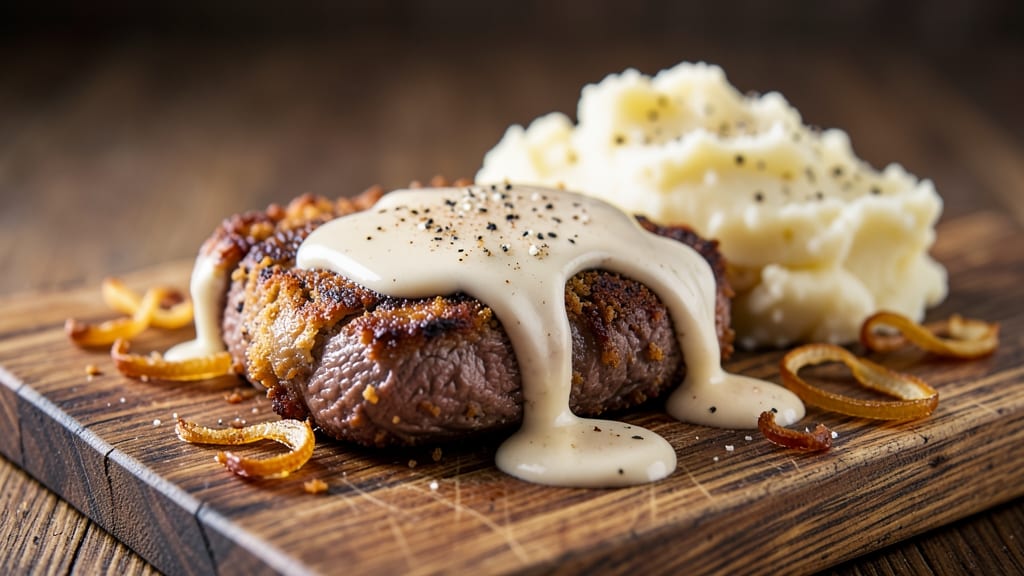
This Babe's chicken fried steak recipe delivers the ultimate comfort food experience with its signature triple-crusted crunch and velvety homemade gravy. 🔥 The secret lies in the layered breading technique—flour, milk-soaked flour, and crushed crackers—that creates a crispy, golden exterior while keeping the beef tender inside.
I've perfected this Southern classic through years of trial and error, ensuring every bite delivers that satisfying crunch and rich, savory flavor.
The recipe begins with cubed beef that's breaded to perfection, then pan-fried until golden brown and cooked through. What sets this apart is the homemade gravy made from the pan drippings, transformed into a rich, creamy sauce with a simple roux.
This isn't your average fried steak—it's a restaurant-quality dish that feels like a warm hug on a chilly evening.
By the time you're done, you'll have a dish that's crispy on the outside, tender on the inside, and smothered in a luscious gravy that makes every bite worth it.
The combination of textures and flavors is what makes this recipe so special—crunchy breading, juicy beef, and that perfect gravy that ties it all together.
Serve it with classic sides like creamy mashed potatoes, buttery biscuits, or steamed green beans for the full Southern experience. This recipe is designed to impress, whether you're feeding a family or treating yourself to a homemade comfort food feast. Let's get started!
Ingredients for babe's chicken fried steak
Fourteen ingredients transform simple beef into restaurant-style comfort food magic.
| Ingredient | Amount | Notes |
|---|---|---|
| Beef Chuck Roast 🥩 | 1 ½ lb | Cubed into 1-inch pieces |
| All-Purpose Flour 🌾 | 1 ½ cups | For first breading layer |
| Whole Milk 🥛 | 1 cup | Room temperature preferred |
| Salt 🧂 | 1 ½ tsp | Kosher or sea salt |
| Ground Black Pepper 🌶️ | ½ tsp | Freshly ground preferred |
| Garlic Powder 🧄 | 1 tsp | For seasoning |
| Onion Powder 🧅 | 1 tsp | For seasoning |
| Ritz Crackers 🍞 | 2 cups | Crushed into fine crumbs |
| Unsalted Butter 🧈 | 4 tbsp | For frying |
| Vegetable Oil 🫒 | ½ cup | For frying |
| All-Purpose Flour 🌾 | ½ cup | For gravy roux |
| Beef Broth 💧 | 1 ½ cups | Low-sodium preferred |
| Whole Milk 🥛 | ½ cup | For gravy creaminess |
| Fresh Parsley 🌿 | ¼ cup | Chopped, for garnish |
The beef is everything—chuck roast delivers that melt-in-your-mouth texture when cubed properly. Butcher shops often cut it for you, but if buying whole, ask for pre-cubed or do it yourself with a sharp knife. Season it generously with salt, pepper, garlic powder, and onion powder before the first breading. The milk-soaked flour layer is non-negotiable—it creates that signature crispy texture. For the crackers, Ritz is the gold standard (the buttery kind, not salted), but any sturdy cracker works in a pinch. If you're worried about gluten, you can substitute gluten-free crackers, but the texture won't be identical.
No Ritz crackers? Saltines or gluten-free crackers work, though the crunch won't be as rich. Running low on milk? Heavy cream or half-and-half adds extra richness to the breading. For the gravy, low-sodium beef broth keeps it from tasting bland—homemade is ideal, but store-bought works. The roux needs patience: cook the flour and butter until it's a deep golden brown (about 5 minutes) to avoid a raw flour taste. Fresh parsley brightens the gravy, but dried parsley at half the amount is fine if you're in a hurry. Pro tip: save the pan drippings—they're gravy gold, packed with flavor.
The beef stays crispy best when fried fresh, but you can prep the breading mixture ahead and store it in the fridge for 24 hours. Gravy reheats beautifully—just add a splash of milk or broth to loosen it up. For leftovers, store the steak and gravy separately. The steak reheats best in a skillet with a splash of milk to revive the crunch, while the gravy can be warmed gently on the stove. Freezes for 3 months if portioned properly—individual servings reheat perfectly for quick meals. And if you're making this for a crowd, double the gravy recipe—it disappears fast!
Why You'll Love This Recipe
- Same recipe, different vibes: throw it together for a lazy Tuesday or dress it up with mashed potatoes and gravy for company. My husband’s coworkers think I’m a short-order cook.
- Pantry Magic: I swear by this recipe when I forget to meal prep—just chuck roast, flour, and milk. No fancy ingredients, no last-minute grocery runs. That tender, buttery crust happens with zero effort.
- Crispy-Creamy Bliss: The milk dip makes all the difference—crunchy outside, melt-in-your-mouth inside. Honestly, the first time I tried it, I nearly licked the pan.
- Weeknight to Dinner Party: Same recipe, different vibes: throw it together for a lazy Tuesday or dress it up with mashed potatoes and gravy for company. My husband’s coworkers think I’m a short-order cook.
Step-by-step instructions for triple-crusted chicken fried steak
Here's how to create that legendary crispy triple crust and rich homemade gravy.
🔪 Step 1: Cube and Season the Beef Chuck Roast
Cut the 1.5 lb beef chuck roast into 1-inch cubes using a sharp knife. I like to work in batches to keep my cutting board organized. Place the cubes in a large bowl and season immediately with 1.5 tsp salt, 0.5 tsp ground black pepper, 1 tsp garlic powder, and 1 tsp onion powder. Use your hands to massage the seasoning into every surface of the beef cubes—this ensures even flavor distribution.
Let the seasoned beef sit at room temperature for 15-20 minutes before cooking. This step is crucial because cold meat releases moisture when it hits the hot pan, which can steam instead of sear. The beef should feel slightly tacky to the touch when ready. While you're waiting, crush the 2 cups Ritz crackers into fine crumbs using a food processor or rolling pin—you want them powdery for maximum crispiness.
🍳 Step 2: Create the Triple-Crust Breading
In a shallow dish, combine the 1.5 cups all-purpose flour with 1 cup room-temperature whole milk. Stir until just combined—you should have a thick, paste-like consistency. This is your first breading layer. In another shallow dish, place the crushed Ritz cracker crumbs. The third layer will be the 0.5 cup all-purpose flour you'll use for dredging after frying.
Working with one piece at a time, press each beef cube into the flour-milk mixture, coating it completely. Let any excess drip off, then transfer to the Ritz cracker crumbs, pressing gently to adhere. This triple-layer technique creates that signature crispy texture that makes this dish special. Don't rush this step—proper coating ensures even crispiness when fried.
🔥 Step 3: Fry to Golden Perfection
Heat 4 tbsp unsalted butter and 0.5 cup vegetable oil in a large skillet over medium-high heat until the butter foams and the oil shimmers—about 3-4 minutes. The temperature should be around 350-375°F. Working in batches to avoid overcrowding, add the breaded beef cubes and fry for 3-4 minutes per side until deep golden brown and crispy. You'll know they're ready when they release easily from the pan and the internal temperature reaches 145°F.
Transfer the fried steak to a paper towel-lined plate to drain excess oil. Keep the fried steak warm in a 200°F oven while you prepare the gravy. Here's the thing—if you see the breading darkening too quickly, reduce the heat slightly to prevent burning. The goal is crispy, not burnt. Each batch should maintain that perfect golden color throughout the cooking process.
🥘 Step 4: Make the Homemade Gravy
Return the skillet to medium heat and add the 0.5 cup all-purpose flour, stirring constantly to create a roux. Cook for 1-2 minutes until the flour turns a light golden color and smells nutty. Slowly whisk in the 1.5 cups beef broth and 0.5 cup whole milk, scraping up any browned bits from the bottom of the pan—this adds incredible depth of flavor to your gravy.
Bring the mixture to a gentle simmer and cook for 5-7 minutes until it thickens enough to coat the back of a spoon. Taste and adjust seasoning with additional salt and pepper if needed. The gravy should be rich and velvety, not gluey. If it's too thick, whisk in 1-2 tablespoons of hot water to reach your desired consistency. Keep the gravy warm until serving.
🍽️ Step 5: Serve with Gravy and Garnish
Transfer the crispy fried steak to serving plates and immediately spoon the warm gravy over the top. The contrast of the crispy exterior with the creamy gravy is what makes this dish so satisfying. Garnish each serving with 0.25 cup chopped fresh parsley for a pop of color and freshness.
Serve immediately while everything is hot and crispy. The steak should be tender inside with that perfect crunch from the triple-layer breading. Real talk: if you let it sit too long, the breading will lose its crispiness. That's why I always keep the finished steak warm in the oven while I make the gravy—it maintains that perfect texture until serving time.
Pro Tips For Making Babe'S Chicken Fried Steak
- Trim the Fat First: Chuck roast has layers of fat that’ll make your milk gravy greasy if you don’t handle it. Use a sharp knife to slice off the thickest fat cap—about ¼-inch thick—before pounding. I learned this the hard way when my gravy looked like soup after the first bite.
- Pound Evenly or Regret It: Uneven pounding = uneven cooking. Lay the roast between two sheets of plastic wrap (yes, it’s messy but worth it) and pound to ½-inch thickness with a meat mallet. Press hard in the center first, then work outward—skipping this step means some pieces stay tough while others turn to mush.
- Don’t Rush the Milk Dip: The milk-soaked flour crust is what makes this dish special. After dredging in flour, let the steak sit in the milk mixture for at least 10 minutes—flip it once halfway. I used to dip and fry immediately, and the crust never stuck right. Patience here makes all the difference.
- Fry in Batches or Burn Them: A crowded pan = greasy, unevenly cooked steaks. Fry one or two pieces at a time in 2 tablespoons of oil (enough to coat the bottom) over medium-high heat. Overloading drops the temp, and you’ll end up with soggy, greasy steaks instead of crispy ones. Trust me, your future self will curse you if you skip this.
Pro cooking tips for this dish
Perfect Pan Prep
Use a 12-inch cast-iron skillet (like Lodge) for even heat distribution—it retains heat better than stainless steel. Heat your butter and oil until the butter stops foaming and the oil shimmers at 350-375°F.
Test with a bread cube: if it sizzles immediately, your pan is ready. I swear by this method to avoid greasy breading—overheated oil burns the coating before the beef cooks through. 🔥
Breading Consistency
The milk-soaked flour layer is where the magic happens—it should be thick enough to coat a spoon but still flow smoothly. If it's too runny, add 1-2 tbsp more flour; if too stiff, thin with 1 tsp milk.
Press each beef cube firmly into the cracker crumbs to create an even, sturdy crust. I like to use a wire rack to drain excess oil after frying—it keeps the breading crispy instead of soggy.
Gravy Mastery
Your roux is the foundation—cook it until it smells nutty and reaches 160-170°F (use a candy thermometer). Whisk in the broth and milk slowly to prevent lumps. For extra richness, I add 1 tbsp cold butter at the end.
If the gravy breaks, whisk in 1 tsp cornstarch mixed with cold water to fix it instantly. 💫
Heat Control
Medium-high heat is key for frying—too low and the breading absorbs oil; too high and it burns. Watch for color changes: the breading should turn golden brown in 3-4 minutes per side.
If you see dark spots, reduce heat immediately. I use a meat thermometer to check internal temp at 145°F—this ensures tender beef without overcooking.
Make-Ahead Tips
Prep the breading mixture ahead and store it in the fridge for up to 24 hours. For gravy, make it fresh, but you can reheat leftovers by whisking in 1-2 tbsp milk or broth.
To revive crispiness, sprinkle fried steak with 1 tbsp flour before reheating in a skillet. Freeze gravy in ice cube trays for easy portioning—just thaw and warm on the stove. ⏰
Nutrition facts
Frequently asked questions
Why does the breading need three layers?
The triple-layer breading creates that signature crispy texture that makes this dish special. The first flour layer provides structure, the milk-soaked flour adds moisture for a better seal, and the crushed crackers create the ultimate crunch. Without all three, you miss that satisfying contrast between crispy exterior and tender beef.
Can I use a different type of beef?
While chuck roast is ideal for its marbling and tenderness, you can substitute with sirloin tip roast or round roast in a pinch. Avoid lean cuts like flank steak—they won't stay tender. For best results, choose beef with some fat content (at least 15% fat) to keep it juicy during frying.
How do I fix gravy that's too thin or too thick?
For thin gravy, simmer it longer to reduce, or whisk in 1 tsp cornstarch mixed with cold water. For thick gravy, whisk in 1-2 tbsp hot milk or broth to loosen it up. If it breaks completely, make a quick slurry with 1 tbsp flour + 1 tbsp cold water and stir it back in. The key is gradual adjustments—don't dump all the fixers at once!
Can I make this recipe ahead of time?
Prep the breading mixture and store it in the fridge for up to 24 hours. For the steak itself, fry it fresh for best texture, but you can reheat leftovers by sprinkling with 1 tbsp flour and warming in a skillet. Gravy reheats beautifully—just add a splash of milk or broth to loosen it. Freeze gravy in ice cube trays for easy portioning later.
What's the best way to keep the breading crispy?
Fry the steak in batches to avoid overcrowding, and drain on a wire rack instead of paper towels. Keep finished steak warm in a 200°F oven while making gravy—this prevents sogginess. For reheating, use a skillet with a splash of milk to revive the crunch. Never microwave fried foods—they turn rubbery!