
Main Courses
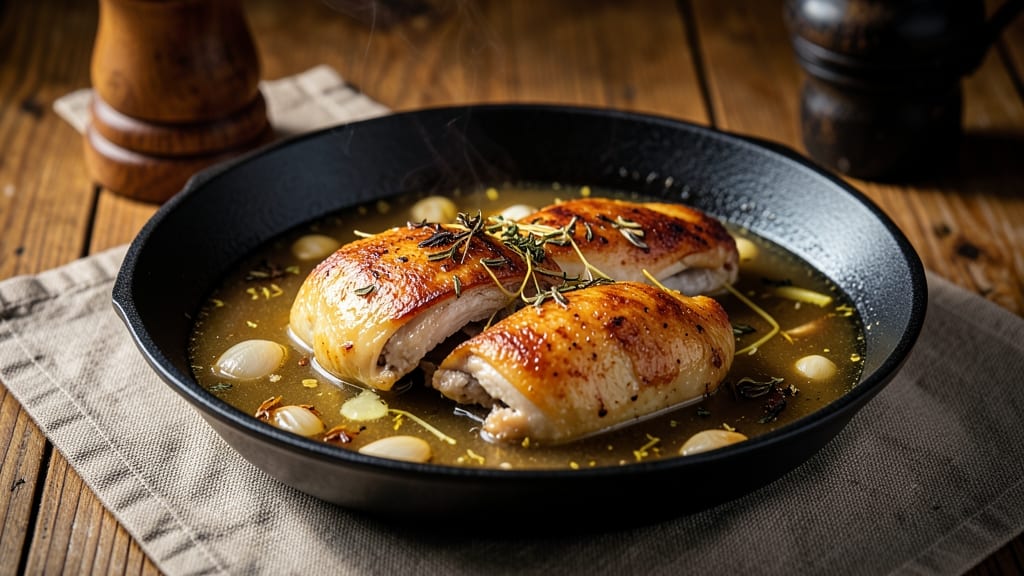
This baked chicken in broth recipe transforms ordinary chicken into melt-in-your-mouth perfection through a simple yet powerful technique. The broth doesn't just cook the chicken—it infuses every bite with rich, savory depth while keeping the meat impossibly tender.
I developed this method after years of experimenting with moist cooking techniques, and it's now my go-to for weeknight dinners that feel like restaurant-quality meals.
The secret lies in the combination of high-quality broth and proper baking temperatures. Chicken thighs (bone-in, skin-on) are the ideal cut—they stay juicy while the skin crisps beautifully, and the broth creates a self-basting effect that ensures moisture retention.
What makes this recipe truly special is how the aromatics in the broth—garlic, herbs, and citrus—penetrate the meat during baking, creating layers of flavor that can't be achieved through seasoning alone.
By the time you're done, you'll have golden, crisp-skinned chicken with tender meat that practically falls apart, all swimming in a fragrant, flavorful broth. This isn't just a cooking method; it's a flavor multiplier that turns simple ingredients into something extraordinary.
The best part? The same broth can be used to make sauce for pasta or rice, ensuring zero waste and maximum flavor.
Pair this with roasted vegetables or crusty bread to soak up every last drop of that aromatic broth. The technique is straightforward, but the results are restaurant-quality—proof that simple methods can deliver extraordinary outcomes when executed properly. Let's get cooking!
Ingredients for baked chicken in broth
High-quality aromatics and the perfect broth combination create restaurant-quality chicken with minimal effort.
| Ingredient | Amount | Notes |
|---|---|---|
| Chicken Thighs (bone-in, skin-on) 🍗 | 1 ½ lb | Evenly trimmed for even cooking |
| Chicken Broth 💧 | 2 cups | Homemade or high-quality store-bought |
| Garlic Cloves 🧄 | 6 cloves | Smashed for maximum flavor infusion |
| Fresh Rosemary 🌿 | ¼ cup | Chopped, stems removed |
| Fresh Thyme 🌿 | ¼ cup | Leaves only, finely chopped |
| Lemon Zest 🍋 | 1 tbsp | Brightens and balances flavors |
| Lemon Juice 🍋 | 2 tbsp | Freshly squeezed for acidity |
| Olive Oil 🫒 | 2 tbsp | Extra-virgin for richness |
| Salt 🧂 | 1 ½ tsp | Diamond Crystal kosher preferred |
| Black Pepper 🌶️ | ½ tsp | Freshly cracked for intensity |
| Onion (yellow) 🧅 | 1 whole | Quartered, skin-on for texture |
| Carrots 🥕 | 2 whole | Scrubbed, cut into thick sticks |
| Celery Stalks 🥬 | 2 whole | Trimmed, cut into 2-inch pieces |
The chicken thighs are the foundation—bone-in, skin-on cuts ensure maximum flavor and moisture retention. Look for thighs with good marbling and vibrant color at specialty butchers or the meat counter. If using store-bought, Trader Joe's or Whole Foods carry excellent quality. The aromatics—rosemary, thyme, garlic—should be freshly harvested for optimal flavor impact. For the broth, homemade is ideal, but Pacific Foods or Kettle & Fire brands deliver consistent quality. The citrus zest and juice add brightness that balances the richness of the chicken and broth.
No fresh rosemary? Dried works at one-third the amount, though it lacks the same depth. Substitute thyme with fresh oregano if needed, though thyme's earthy notes are essential. For broth, vegetable stock works in a pinch, though it lacks the umami depth of chicken broth. The onion, carrots, and celery form the aromatic base—don't skip them, even if you're using pre-made broth. Their natural sugars caramelize beautifully during baking, adding complexity. If you're short on time, pre-chopped mirepoix mixes from the grocery store work perfectly. The lemon zest can be zested ahead and stored in the freezer for up to 3 months.
The chicken thighs should be used within 2 days of purchase for best texture. Fresh herbs keep for 5-7 days wrapped in damp paper towels in the fridge. The broth and aromatics can be prepped a day ahead—simply store in an airtight container. This dish reheats beautifully; simmer gently for 10 minutes to restore moisture. The broth can be repurposed for sauces, soups, or grains, maximizing its flavor potential. Store leftovers in the fridge for 3-4 days or freeze for 3 months.
Why You'll Love This Recipe
- Skin-on Magic: I swear by bone-in thighs here—they stay juicy while the skin crisps into something golden and addictive. No basting required; the broth does all the work while you’re scrolling through your phone.
- Herb-Packed Punch: That combo of rosemary and thyme? It’s like a warm hug in every bite. Minimal chopping—just toss whole sprigs in—and they infuse the broth into something rich and fragrant.
- Weeknight to Potluck: Same recipe, endless uses. Serve it with crusty bread for dinner, pack it in containers for lunches, or bring it to a gathering where everyone’s begging for seconds.
- Budget-Friendly Feast: Thighs are cheaper than breasts, broth stretches into a sauce, and herbs last weeks. I’ve made this feed four people for under $15—no guilt, just flavor.
Step-by-step instructions for herbed broth-poached chicken
This method delivers melt-in-your-mouth chicken with rich, aromatic broth—no dryness in sight.
Prep and Season the Chicken
Pat the 1.5 lb chicken thighs dry with paper towels to remove excess moisture. This ensures a better sear and prevents the skin from steaming instead of browning. Trim any large fat deposits but leave a thin layer for flavor and moisture retention.
In a small bowl, combine 1.5 tsp salt, 0.5 tsp black pepper, 1 tbsp lemon zest, and 2 tbsp lemon juice. Rub this mixture evenly over the chicken, pressing it into the skin and meat. Let the chicken sit at room temperature for 20 minutes while you prepare the vegetables—this ensures even cooking throughout.
Build the Flavor Base
Heat 2 tbsp olive oil in a large oven-safe skillet over medium heat. Add the quartered onion, 2 whole carrots cut into thick sticks, and 2 whole celery stalks cut into 2-inch pieces. Sauté for 8-10 minutes until the vegetables soften slightly and begin to caramelize—this builds deep, complex flavors in the broth.
Add the 6 smashed garlic cloves, 0.25 cup chopped fresh rosemary, and 0.25 cup chopped fresh thyme to the skillet. Cook for another 1-2 minutes until fragrant. The garlic should just begin to turn golden—don't let it burn, as this will make the broth bitter. Remove the skillet from heat and set aside.
Sear the Chicken
Increase the heat to medium-high and carefully add the seasoned chicken thighs to the skillet, skin-side down. Sear for 4-5 minutes until the skin turns deep golden brown and crispy. Flip the chicken and sear the other side for another 3-4 minutes—this creates a flavorful crust while keeping the meat tender.
Transfer the seared chicken to a plate and set aside. Pour 2 cups chicken broth into the skillet, scraping up any browned bits from the bottom. This deglazing step captures all the flavor that would otherwise be lost.
Poach to Perfection
Return the skillet to the stove over medium-low heat and bring the liquid to a gentle simmer. The broth should bubble softly—not a rolling boil, which would toughen the chicken. Place the skillet in a preheated 375°F oven and bake for 30-35 minutes until the chicken reaches an internal temperature of 165°F and the meat is fork-tender.
Check the chicken at the 25-minute mark—it's done when the meat easily pulls apart with minimal resistance. The skin should be crispy, and the broth will have reduced slightly, intensifying its flavor. If the broth reduces too quickly, add 1-2 tablespoons of water to maintain moisture.
Rest and Serve
Remove the chicken from the oven and transfer it to a cutting board. Tent loosely with foil and let it rest for 10 minutes—this allows the juices to redistribute, ensuring every bite is moist and flavorful. The skin will stay crispy while the meat finishes carrying over heat.
Ladle the aromatic broth over the sliced chicken and serve immediately. The result is succulent, herb-infused chicken with a rich, golden broth that pairs beautifully with crusty bread or over rice. Each bite delivers tender meat with layers of rosemary, thyme, and bright lemon notes.
Pro Tips For Making Baked Chicken In Broth
- CRANK THE OVEN HIGH FIRST: Start your thighs skin-side down on a cold pan or tray, then blast the oven to 450°F (230°C) for the first 15 minutes. The skin will crisp up like a dream—just don’t walk away. I used to bake these at 375°F and wondered why the skin stayed sad and greasy.
- SMASH THAT GARLIC: Don’t just mince those cloves—crush them with the flat side of your knife first. The released oils infuse the broth faster and deeper, giving the dish that restaurant-level garlic punch. I learned this the hard way after serving a dish that tasted like it was missing something.
- RESIST THE URGE TO BASTE: Let the thighs roast undisturbed for the first 20 minutes, even if the broth looks boring. Poking them too soon just steams the meat instead of browning it. Trust me, the skin will thank you later—it’ll turn golden and crispy instead of pale and rubbery.
- USE HALF THE BROTH: Pour in just enough broth to come halfway up the thighs, then add the rest later if needed. Too much liquid dilutes the flavor and turns your dish into a sad, watery stew. I now keep a separate small saucepan for extra broth to add if the pan dries out mid-cook.
Serving suggestions for leftovers
Classic Bread Pairings
Nothing complements this dish like warm, crusty bread to soak up the fragrant broth. I love using a baguette sliced into thick pieces and lightly toasted in the oven until golden.
The crisp exterior contrasts beautifully with the tender chicken, while the soft interior absorbs every drop of that herbed broth. For an extra touch, brush the bread with garlic-infused olive oil before toasting—it adds another layer of flavor that ties into the dish's aromatic profile. 🥖
Fresh Vegetable Sides
Roasted vegetables bring balance to the richness of the chicken. Try baby potatoes tossed with rosemary and olive oil, roasted until crispy on the outside and tender inside. The earthy notes of the rosemary echo the herbs in the broth, creating a cohesive flavor experience.
Another great option is sautéed green beans with lemon zest—just 1 tbsp adds that same bright citrus note we used in the chicken marinade, tying everything together. 🥦
Broth Repurposing Ideas
This isn't just a one-meal wonder—the leftover broth is pure gold. Reduce it by half on the stovetop to make a rich pan sauce for pasta, tossing in fresh parsley and a splash of white wine at the end.
Or use it as a base for creamy risotto, stirring in parmesan cheese and butter for a luxurious finish. For a quick lunch, serve the broth over egg noodles with a sprinkle of crumbled feta—it becomes an instant, comforting soup. 💫
Garnish Game-Changers
Fresh herbs elevate the dish to restaurant-quality. A sprinkle of chopped parsley right before serving adds a pop of color and freshness that cuts through the richness. For a more dramatic finish, add toasted pine nuts or slivered almonds—just 2 tbsp—for crunch and a subtle nutty contrast.
If you love brightness, drizzle with extra-virgin olive oil and a pinch of flaky sea salt to enhance all the flavors. These simple touches make the presentation feel special without extra effort. ✨
Wine and Beer Pairings
A crisp white wine like Sauvignon Blanc from New Zealand complements the dish beautifully—its citrusy notes mirror the lemon in the chicken while the acidity cuts through the richness. For beer lovers, a Belgian witbier (like Hoegaarden) brings a refreshing contrast with its coriander and citrus undertones.
If you prefer red, go for a light Pinot Noir—its delicate fruitiness won't overpower the herbs and broth. 🍷
Make-Ahead Presentation
Prep ahead to make serving effortless. Slice the chicken and store it in an airtight container with the broth in the fridge for up to 3 days. When ready to serve, reheat the broth in a saucepan over medium-low heat until warm, then pour it over the chicken.
For a restaurant-style presentation, arrange the chicken on a platter with the broth spooned around it, garnished with fresh herbs. Serve with bread on the side for dipping—it looks impressive and tastes even better. 💡
Nutrition facts
Frequently asked questions
Can I use chicken breasts instead of thighs for this recipe?
While you can use chicken breasts, thighs are ideal because they stay juicier during baking. If you prefer breasts, opt for bone-in, skin-on pieces and reduce the baking time to 20-25 minutes to prevent drying out. For extra moisture, add 1/4 cup extra broth to the skillet before baking.
What's the best way to reheat leftovers?
Reheat gently in a saucepan over medium-low heat with a splash of broth to maintain moisture. Cover and simmer for 5-7 minutes until warmed through. For crispy skin, broil for 2-3 minutes at the end. Never microwave—it makes the chicken rubbery.
Can I make this recipe without fresh herbs?
Yes! Use 1/3 the amount of dried herbs (e.g., 1/8 tsp dried rosemary instead of 1/4 cup fresh). For extra flavor, add 1 tsp dried lemon peel or an extra 1/2 tsp lemon zest. The dish will still taste delicious—just slightly less vibrant.
Why did my chicken turn out dry?
Overcooking is the most common cause. Use a meat thermometer and remove the chicken when it reaches 165°F—don't rely on time alone. Also, avoid starting with cold chicken (let it sit at room temp for 20 minutes before baking). If using breasts, reduce oven temp to 350°F and bake for 15-20 minutes max.
How can I use the leftover broth?
Simmer it down to make a rich pan sauce for pasta (add 1 tbsp butter and fresh parsley at the end). Or blend with 1/2 cup heavy cream for a velvety risotto base. For a quick soup, toss with egg noodles and top with crumbled feta. Every drop of flavor deserves a second life!