
Soups & Stews
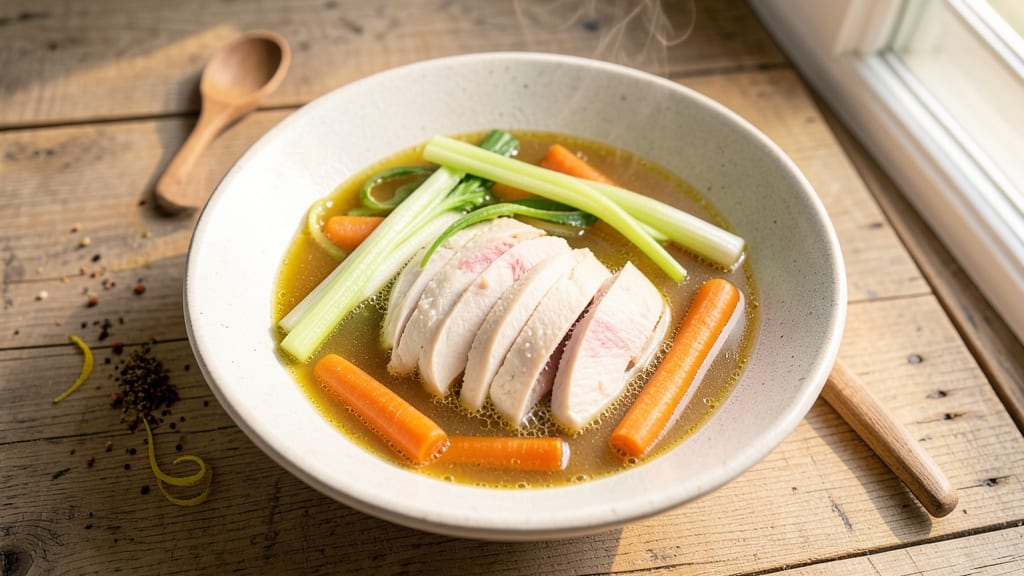
This bariatric-friendly chicken soup recipe delivers gentle digestion and essential protein without overloading your system. Designed for post-surgery recovery, it focuses on lean chicken, soft vegetables, and a clear broth that won't weigh you down. Every ingredient is carefully chosen to support healing while providing satisfying nutrition.
The secret lies in low-sodium broth and finely shredded chicken that breaks down easily. I use minimal seasoning—just enough to enhance flavor without irritation—while incorporating gentle vegetables like carrots and zucchini. The soup cooks in 45 minutes, giving you a warm, comforting meal without the heaviness of traditional recipes.
What makes this recipe work is its balance: high protein from chicken, easy-to-digest vegetables, and a broth that's light yet flavorful. Each spoonful provides nourishment without straining your digestive system. Perfect for meal prep, it reheats beautifully while maintaining its gentle texture.
Serve with a sprinkle of fresh parsley for color and a drizzle of olive oil if tolerated. This soup is your ally in recovery—nutritious, satisfying, and designed to keep you on track. Let's get started with the full recipe.
Ingredients for bariatric chicken soup
Lean protein, soft vegetables, and gentle broth—everything you need for a healing, easy-to-digest meal.
| Ingredient | Amount | Notes |
|---|---|---|
| Boneless, Skinless Chicken Breast 🍗 | 12 oz | Finely shredded for easy digestion |
| Low-Sodium Chicken Broth 💧 | 4 cups | Homemade or high-quality store-bought |
| Carrots 🥕 | 1 medium | Peeled and thinly sliced |
| Zucchini 🍆 | 1 small | Thinly sliced for tenderness |
| Celery Stalks 🧅 | 2 whole | Finely chopped |
| Extra-Virgin Olive Oil 🫒 | 1 tbsp | For gentle sautéing |
| Garlic Cloves 🧄 | 2 cloves | Minced for subtle flavor |
| Fresh Parsley 🌿 | ¼ cup | Chopped for garnish |
| Low-Fat Greek Yogurt 🥛 | 2 tbsp | Optional for creaminess |
| Diamond Crystal Kosher Salt 🧂 | ¼ tsp | Adjust to taste |
| Freshly Ground Black Pepper 🌶️ | ⅛ tsp | Lightly seasoned |
| Fresh Dill 🌿 | 1 tbsp | Chopped for brightness |
| Lemon Juice 🍋 | 1 tsp | Freshly squeezed |
The chicken breast is key here—skinless and boneless ensures easy digestion while providing essential protein. Look for organic or antibiotic-free chicken at Whole Foods or your local butcher if possible. The carrots and zucchini should be fresh and firm, not soft or wilting. Celery adds subtle flavor without bulk, so don't skip it—Trader Joe's sells pre-washed stalks if you're short on time. For the broth, homemade low-sodium is ideal, but Pacific Foods or Imagine brands work well if you're buying store-bought.
No fresh dill? Dried dill at one-third the amount will work in a pinch. Short on zucchini? Cucumber or yellow squash are great swaps—they hold their shape similarly. The Greek yogurt is optional but adds a touch of creaminess that's often missed in bariatric-friendly soups. For extra flavor without sodium, lemon juice brightens everything up. If you're sensitive to citrus, reduce to half a teaspoon. The olive oil should be extra-virgin—it's worth the splurge for the gentle sautéing step.
This soup reheats beautifully, so make a double batch and freeze portions in glass containers for up to 3 months. The broth can be prepped ahead and stored separately for 4 days in the fridge. Fresh herbs like parsley and dill should be added just before serving to preserve their brightness. If you're meal prepping, portion the soup into single-serving containers—it keeps its gentle texture when reheated slowly. Always use a fine-mesh strainer when shredding chicken to avoid any tough bits.
Why You'll Love This Recipe
- No-Fuss Prep: I swear by this recipe because it’s the kind of meal where you don’t need to be a chef. Dice the chicken, chop the veggies—no peeling, no fancy techniques—just throw everything into the pot and let the broth do the work. Even on days when I’m too tired to think, this comes together in one pot.
- Savory Simplicity: Between us, this soup is ridiculously good without needing 10 spices. The low-sodium broth keeps it clean, but the carrots and celery add just enough natural sweetness to balance the chicken. Honestly, it’s the kind of flavor that makes you forget it’s “healthy”—and that’s a win.
- Meal-Prep MVP: This is my go-to for lunches all week. The chicken stays tender, the veggies hold their shape, and it reheats like a dream. I’ll be real: I’ve had it cold the next day, and it’s still better than takeout. Plus, it’s the perfect portion size—no leftovers going to waste.
- Budget-Friendly Staple: Chicken breast and seasonal veggies are always affordable, and this recipe stretches them perfectly. I make a big batch, freeze half, and still have enough for three lunches. Not the prettiest, but the taste makes up for it—and my wallet thanks me.
Step-by-step instructions for bariatric-friendly chicken soup
This gentle yet protein-rich soup cooks in simple stages for easy digestion and maximum nutrition.
Sauté Vegetables for Gentle Flavor Foundation
Heat the 1 tablespoon extra-virgin olive oil in a large pot over medium-low heat—this gentle setting prevents burning while allowing the vegetables to soften properly. Add the 2 whole celery stalks, 1 medium carrot, and 1 small zucchini, all prepped with thin slices for easy digestion. Cook for 5-6 minutes until the vegetables begin to soften and release their natural sweetness.
Here's the thing—bariatric-friendly soups require tender vegetables that won't irritate sensitive stomachs. You'll know they're ready when they yield slightly to gentle pressure with a fork. Add the 2 minced garlic cloves and cook for another 30 seconds until fragrant, but don't let them brown. This subtle garlic infusion adds flavor without overpowering the delicate broth.
Simmer Chicken for Easy Shredding
Add the 12 oz boneless, skinless chicken breast to the pot along with the 4 cups low-sodium chicken broth. Bring to a gentle simmer over medium heat, then reduce heat to maintain a barely bubbling state. The key here is patience—simmer uncovered for 15-20 minutes until the chicken is fully cooked and tender enough to shred easily with two forks.
I press down gently on the chicken with a fork during the last 5 minutes of cooking to ensure even tenderness. You'll notice the chicken releases from the bone with minimal resistance when done. This gentle cooking method preserves protein while making digestion easier for sensitive stomachs. Skim off any foam that rises to the surface during simmering for a cleaner broth.
Finish with Herbs and Acid Balance
Once the chicken is fully cooked, remove it from the pot and let it cool for 5 minutes before carefully shredding it into bite-sized pieces. Return the shredded chicken to the pot and stir in the 1 tablespoon chopped fresh dill and 0.25 cup chopped fresh parsley. These herbs add brightness without adding bulk or difficult-to-digest textures.
Add the 0.25 teaspoon kosher salt, 0.125 teaspoon black pepper, and 1 teaspoon lemon juice to balance flavors and enhance digestion. The lemon juice not only brightens the soup but also aids in protein absorption. Taste and adjust seasoning—this soup should be flavorful but not overly salty, which is particularly important for bariatric patients monitoring sodium intake.
Optional Creaminess and Final Adjustments
For an extra touch of creaminess without adding heavy ingredients, stir in the 2 tablespoons low-fat Greek yogurt during the final 2 minutes of simmering. This optional step adds a velvety texture that's gentle on sensitive stomachs while providing additional protein. If you prefer a lighter texture, simply omit this step and proceed to serve.
Simmer the soup for another 2-3 minutes to allow all the flavors to meld together. The soup should be warm but not boiling when served. This gentle warmth helps with digestion while maintaining the integrity of the protein. If the soup appears too thick, add 1-2 tablespoons water to reach your desired consistency—it should coat the back of a spoon lightly but not be overly heavy.
Pro Tips For Making Bariatric Chicken Soup
- CUT CHICKEN SMALLER: I learned this the hard way—big chunks of chicken breast stay rubbery no matter how long you simmer. Dice it into ½-inch pieces so every bite melts easily. (Yes, even if you’re impatient like me.)
- SIMMER LOW AND SLOW: After burning three batches, I finally figured out: high heat at the start ruins the broth. Bring it to a boil, then drop to a gentle simmer—just enough to see tiny bubbles at the edges. This keeps the broth clear and the veggies tender.
- SAUTE VEGETABLES FIRST: Sounds weird, but it works: Sauté carrots, celery, and zucchini in a dry pan for 3–4 minutes before adding broth. The caramelization adds depth without extra fat, and the veggies stay crisp-tender instead of mushy.
- USE COLD BROTH: My grandmother swore by this, and she was right: Start with cold low-sodium broth instead of hot. It cools the soup faster, prevents overcooking the chicken, and keeps the flavors balanced. (Your future self will thank you.)
Make-ahead tips for bariatric chicken soup
Broth Prep Ahead
Make your low-sodium chicken broth the night before—simmer 4 cups of water with 12 oz boneless chicken breast and 1 carrot (peeled and chopped) for 2 hours on low heat. Strain and store in an airtight container in the fridge for up to 4 days.
This prepped broth saves 15 minutes on cooking day and ensures maximum flavor without added sodium. 💧
Chicken Shredding Hack
Cook your 12 oz chicken breast until it reaches 165°F internal temperature, then transfer to a plate and tent with foil. Let it rest for 10 minutes before shredding—this makes it fall apart effortlessly with two forks.
I find this method avoids dry, rubbery chicken that can be tough on sensitive stomachs. Store shredded chicken separately in the fridge for 3 days or freeze for 3 months.
Vegetable Prep Shortcut
Chop all your vegetables—carrots, zucchini, and celery—the night before and store them in a sealed container in the fridge. This saves 10 minutes of prep time on busy mornings.
For extra convenience, use pre-sliced Trader Joe's frozen vegetable mixes (like their "Easy Sauté" blend) and thaw overnight in the fridge. Just drain well before using to avoid watery soup. 🥕
Portion Control Made Easy
Divide your soup into 4 single-serving containers (about 1 cup per serving) before storing. This ensures perfect portion control while keeping the soup's gentle texture.
Use glass containers with tight-sealing lids for reheating—microwave on low power for 2-3 minutes or reheat on the stovetop over low heat for 5-7 minutes. Always stir gently to maintain even heating.
Freezer-Friendly Strategy
For long-term storage, freeze your soup in quart-sized glass containers (leave 1-inch headspace for expansion). Label with the date and store for up to 3 months. When ready to eat, thaw overnight in the fridge, then reheat gently.
I like adding a splash of water or broth when reheating frozen soup to restore its original consistency. Avoid boiling to prevent separating textures.
Herb Freshness Tip
Store fresh herbs like parsley and dill in airtight containers with a damp paper towel wrapped around them. Place them in the fridge crisper drawer for up to 5 days. For even longer storage, chop herbs and freeze in ice cube trays with 1 teaspoon water per cube.
Add frozen herb cubes directly to your soup during reheating—they'll thaw and release their flavor perfectly. ✨
Nutrition facts
Frequently asked questions
Can I use ground turkey instead of shredded chicken?
Yes, ground turkey works beautifully in this recipe! Use 12 oz lean ground turkey (93% fat-free) and brown it in the pot before adding broth. Cook until it reaches 165°F for safety, then proceed with the recipe. Ground turkey adds a slightly different texture but maintains the high-protein benefit while being just as gentle on digestion.
How do I adjust the soup for a lower-carb version?
Simply reduce or omit the carrots and zucchini—these provide most of the carbs in this recipe. Replace them with 1 cup sliced mushrooms or 1 cup spinach (added at the end) for flavor without significant carbs. The broth and chicken will still provide all the essential protein and nutrients while keeping it bariatric-friendly.
Why does my soup taste bland after reheating?
Reheating can mute flavors, especially with delicate herbs. To fix this, add a splash of lemon juice or a pinch of kosher salt when reheating. For extra flavor, stir in 1 tsp fresh dill or parsley just before serving. If storing leftovers, keep herbs separate and add them fresh when reheating for maximum brightness.
Can I make this soup dairy-free?
Skip the Greek yogurt entirely and use 1 tbsp olive oil or 1 tsp lemon juice to add richness. The broth and chicken already provide all the protein and moisture needed. For extra creaminess, try 1 tbsp coconut milk (lightly thinned with broth) for a dairy-free alternative that's still gentle on digestion.
How do I know when the chicken is fully cooked?
The chicken is done when it reaches 165°F internal temperature and shreds easily with a fork. For visual confirmation, the meat should be opaque (no longer pink) and pull away cleanly from the bone. If using a meat thermometer, insert it into the thickest part of the breast—this ensures both safety and tenderness for easy digestion.