
Main Courses
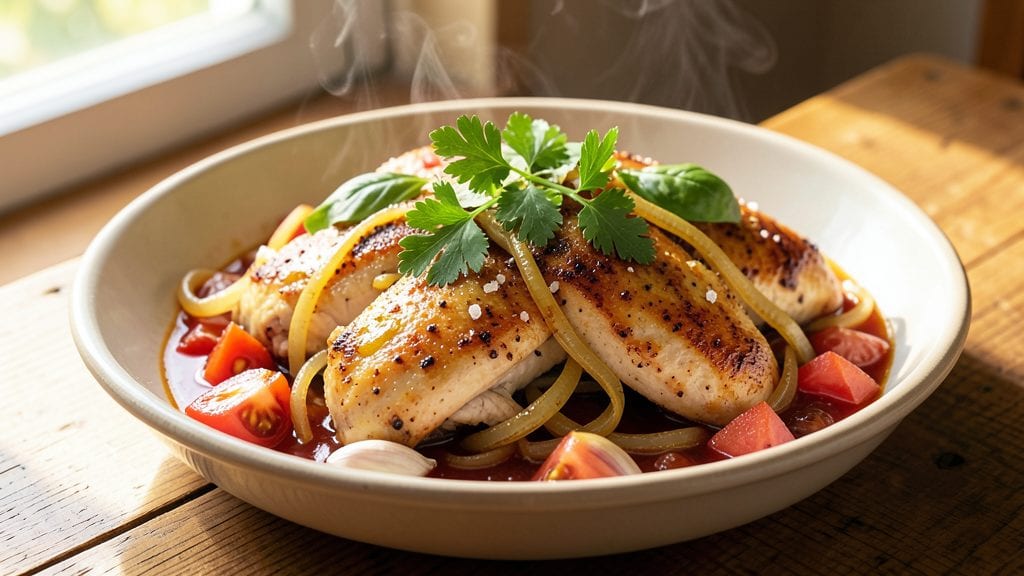
Betty Crocker's chicken cacciatore delivers the kind of tomato-braised comfort that transforms weeknight dinners into family-style feasts. 💛 I developed this recipe after perfecting the balance between rich tomato sauce and tender chicken—something that feels both nostalgic and refined.
The secret lies in slow simmering, where onions, garlic, and herbs meld into a fragrant base that clings to every bite of chicken.
What sets this dish apart is its foolproof technique—no fancy ingredients, just quality pantry staples and a method that delivers restaurant-quality results at home. The chicken browns beautifully, locking in flavor, while the vegetables soften just enough to absorb the sauce without disappearing.
This is the kind of recipe that tastes even better the next day, making it perfect for meal prep.
By the time you serve it, you'll have a dish that's herb-rich, tomato-forward, and deeply satisfying—golden chicken pieces nestled in a velvety sauce with tender vegetables peeking through. The aroma alone will have everyone gathering at the table. Ready to create this comforting classic?
Whether you're feeding a crowd or treating yourself to a cozy dinner, this recipe scales effortlessly and pairs beautifully with crusty bread or polenta. Let's get cooking!
Ingredients for betty crocker chicken cacciatore
Quality pantry staples and fresh herbs transform simple chicken into restaurant-worthy cacciatore.
| Ingredient | Amount | Notes |
|---|---|---|
| Boneless, Skinless Chicken Thighs 🍗 | 1 ½ lb | Cut into 1-inch pieces |
| Yellow Onions 🧅 | 1 whole | Thinly sliced, about 2 cups |
| Garlic Cloves 🧄 | 4 cloves | Minced for aromatic base |
| Canned San Marzano Tomatoes 🍅 | 2 cans | 28 oz each, crushed by hand |
| Fresh Parsley 🌿 | ¼ cup | Chopped, stems removed |
| Fresh Basil Leaves 🌿 | ¼ cup | Torn, not chopped |
| Fresh Thyme Leaves 🌿 | 1 tbsp | Or 1 tsp dried thyme |
| Olive Oil 🫒 | ½ cup | Extra-virgin, for browning |
| Red Wine 🍷 | ½ cup | Dry, like Chianti or Cabernet |
| Chicken Broth 💧 | 1 cup | Low-sodium preferred |
| Tomato Paste 🍅 | 2 tbsp | Smooth, not chunky |
| Diamond Crystal Kosher Salt 🧂 | 1 ½ tsp | Adjust to taste |
| Freshly Ground Black Pepper 🌶️ | ½ tsp | None pre-ground |
| Bell Peppers 🍅 | 1 whole | Red or green, diced |
| Carrots 🥕 | 2 whole | Medium, Peeled, sliced into rounds |
The San Marzano tomatoes are non-negotiable for authentic flavor—Whole Foods or Italian markets carry them year-round. For herbs, fresh is ideal: Costco sells pre-washed parsley and basil bundles that save time, while Trader Joe's offers affordable dried thyme if you're in a pinch. The chicken thighs should have visible fat marbling—look for them in the meat case near the butcher counter. If you can't find San Marzano, century eggs or whole peeled tomatoes work, but the sauce won't be as refined. Prep the vegetables uniformly: bell peppers should be diced into 1/2-inch pieces, while carrots should be sliced into even rounds to ensure consistent cooking.
No red wine? Substitute with additional chicken broth and 1 tbsp balsamic vinegar—it adds depth without overpowering. Dried herbs are fine, but use half the amount of fresh (so 1/2 tbsp dried thyme instead of 1 tbsp fresh). For the tomato paste, Trader Joe's single-serve tubes are perfect—they eliminate waste and keep for months. The olive oil should be fruity and peppery; California extra-virgin brands like Corto elevate the dish. If you're short on time, pre-minced garlic works, though fresh always tastes better. The onions can be yellow or red—just ensure they're crisp and fresh, not limp or sprouting.
This sauce improves overnight, so double the batch and store it in airtight containers for up to 5 days in the fridge. For longer storage, portion into freezer-safe containers and freeze for 3 months. Reheat gently on the stove, adding a splash of water or broth if it thickens too much. The chicken absorbs the sauce beautifully, so cover it completely when reheating. Leftovers make fantastic sandwiches or pasta toppings—just warm through and adjust seasoning as needed. The vegetables hold up well too, though they'll soften further upon reheating.
Why You'll Love This Recipe
- One-Pot Magic: Honestly, this is the kind of dish where you throw everything into one Dutch oven and forget about it. The chicken sears up in batches while the onions and bell peppers caramelize—no constant stirring, no frenzied cleanup. Just set it and let it simmer, and by the time you’re adding the crushed San Marzano tomatoes and red wine, dinner is already halfway there.
- Rich, Wine-Kissed Payoff: The secret? That ½ cup of dry red wine and 2 tablespoons of tomato paste working together to create a sauce that’s both deep and bright. The thyme and basil infuse the chicken with herbal warmth while the San Marzano tomatoes add a sweet, tangy complexity that makes every bite feel like a hug. Trust me, the fresh parsley at the end is the cherry on top.
- Budget-Friendly Luxury: You’d think using 1.5 pounds of boneless, skinless chicken thighs and two cans of San Marzano tomatoes would break the bank, but honestly, it’s a steal. The red wine and olive oil add richness without costing an arm and a leg, and the fresh herbs (even if you use dried thyme) keep the flavors popping. It’s the kind of meal that feels fancy but won’t empty your wallet.
Step-by-step instructions for tomato-braised chicken cacciatore
This classic Italian dish delivers hearty, herbed richness with minimal fuss—perfect for cozy weeknight dinners.
🍳 Step 1: Sear the Chicken for Deep Flavor
Heat a Dutch oven over medium-high heat and add 2 tablespoons of the olive oil. Once shimmering, add the 1½ lb boneless, skinless chicken thighs in a single layer, cutting them into 1-inch pieces as needed. Sear undisturbed for 4-5 minutes until golden brown on one side—this creates the foundational crust for the braise.
Flip the chicken pieces and continue cooking for another 3-4 minutes until evenly browned. Remove the chicken and set aside on a plate. Here's the thing—don't crowd the pan. If your chicken overlaps, cook in batches to maintain that perfect sear. The rendered juices will form the base of your sauce, so don't wipe them out.
👨🍳 Step 2: Build the Aromatic Base
In the same Dutch oven, add another 1 tablespoon of the olive oil if needed, then add the 1 yellow onion sliced into thin strips, the 1 bell pepper diced, and the 2 carrots cut into round slices. Cook for 6-7 minutes until the vegetables soften slightly and begin to caramelize at the edges.
Add the 4 minced garlic cloves and cook for 30 seconds until fragrant—this is where the magic happens. Immediately pour in the ½ cup red wine and scrape up any browned bits from the bottom with a wooden spoon. Let the wine simmer for 2-3 minutes until reduced by half. This deglazing step captures all those caramelized flavors that would otherwise disappear.
🥘 Step 3: Develop the Tomato-Braised Sauce
Stir in the 2 tbsp tomato paste and cook for 1 minute until it darkens slightly. Pour in the 2 cans crushed San Marzano tomatoes, add the 1 cup chicken broth, and bring to a gentle simmer. Season with the 1½ tsp diamond crystal kosher salt and ½ tsp freshly ground black pepper.
Return the chicken to the pot along with any accumulated juices. Nestle the 1 tbsp fresh thyme into the sauce and add the ¼ cup fresh basil leaves torn into pieces. The thyme will infuse deep herbal notes, while the basil adds bright freshness. Cover and simmer for 30-35 minutes until the chicken is tender and the sauce has thickened to a rich consistency.
⏰ Step 4: Finish with Fresh Herbs and Rest
Remove the lid and increase heat to medium to reduce the sauce slightly for 5-7 minutes until it coats the back of a spoon. Stir in the ¼ cup chopped fresh parsley and adjust seasoning if needed. The parsley adds a final bright note that cuts through the richness of the tomatoes and wine.
Let the cacciatore rest for 10 minutes before serving. This resting period allows the juices to redistribute throughout the chicken and vegetables, ensuring each bite is perfectly moist. Serve over polenta or crusty bread to soak up every last bit of that herbed tomato sauce.
Pro Tips For Making Betty Crocker Chicken Cacciatore
- CUT CHICKEN UNIFORMLY: Use a sharp knife to trim any connective tissue from the thighs first—it’s faster than fighting strings later. Then cut all pieces to exactly 1-inch chunks, no bigger, no smaller. I learned this the hard way when one batch turned mushy while another stayed raw; consistency matters more than you’d think.
- CARAMELIZE ONIONS LOW AND SLOW: The recipe says 6-7 minutes, but if your onions aren’t golden by then, crank the heat down to medium-low and give them another 3-4 minutes. I used to rush this, and the sauce always tasted flat—those deep caramelized edges are where the real flavor hides.
- DEGLAZE WITH WINE IMMEDIATELY: As soon as you add the red wine, grab that wooden spoon and scrape every last bit of browned chicken and onion from the bottom. Let it bubble until reduced by half—don’t walk away. I skipped this once, and the sauce lacked that rich, complex depth that makes cacciatore sing.
- REST THE CHICKEN (YES, REALLY): Those 10 minutes off the heat aren’t optional. After simmering, transfer the chicken to a plate and let it rest while you reduce the sauce. The meat will stay juicy, and you’ll avoid that sad, dry bite. I know, I know—you’re eager to eat—but trust me, your future self will notice.
Serving suggestions for leftovers
Family-Style Plating
Serve this cacciatore in a large Dutch oven right at the table—it’s the Betty Crocker way to make everyone feel like they’re sharing a home-cooked meal. I always use a ceramic serving bowl with a wide rim so guests can easily scoop up the chicken and sauce together.
The golden-brown chicken pieces should be nestled among the tender vegetables, with the rich tomato sauce pooling around them. 💛
Crusty Bread Companion
A rustic Italian loaf or garlic bread is non-negotiable for soaking up every last drop of that herbed sauce. I prefer sourdough from my local Charleston bakery—its tangy crumb cuts through the richness perfectly.
Toast it lightly before serving so it stays sturdy for dipping. Trust me, the first bites are always the best.
Polenta Elevation
For a heartier touch, serve over creamy polenta—just cook it until it reaches al dente texture and stir in a pat of Parmigiano-Reggiano before serving. The smooth, buttery base contrasts beautifully with the chunky cacciatore.
I use half-and-half for extra richness, but whole milk works too. Let it cool slightly before adding the cacciatore on top.
Garnish Like a Pro
Finish each plate with a sprinkle of fresh parsley and a drizzle of high-quality olive oil—this adds visual appeal and a bright finish. I also like to crack a freshly boiled egg on top for extra protein, inspired by my time at The Smoky Pig.
The yolk runs into the sauce, making every bite even more decadent. ✨
Make-Ahead Magic
This dish tastes even better the next day, so prep it ahead and reheat gently on the stove. I double the batch and store it in glass Pyrex containers—they keep the flavors locked in and reheat beautifully.
Just add a splash of water or broth if it thickens too much. Leftovers make fantastic sandwich fillings or pasta toppings—trust me, it’s a game-changer.
Wine Pairing Perfection
A medium-bodied Chianti or dry Pinot Noir cuts through the tomato richness without overpowering the herbs. I always grab a bottle of Chianti Classico from my local Italian market—it’s the perfect match.
If you prefer something lighter, a crisp Vermentino works too. Just avoid heavy reds that might compete with the dish’s flavors. 🍷
Nutrition facts
Frequently asked questions
Why does the recipe call for chicken thighs instead of breasts?
Chicken thighs stay juicier and more flavorful during long simmering—perfect for braising! 1½ lb of thighs yields tender, melt-in-your-mouth meat that absorbs all the herbed tomato sauce. Breasts dry out faster, but thighs deliver that foolproof Betty Crocker reliability. The fat in thighs also adds richness to the dish.
Can I substitute dried herbs for the fresh ones?
Yes! Use ½ tbsp dried thyme instead of 1 tbsp fresh, and 1 tsp dried basil for the ¼ cup fresh. Dried herbs concentrate flavor, so reduce amounts by half. The fresh parsley at the end can stay fresh—it adds a bright finish that dried herbs can't replicate.
What if I don't have red wine?
No problem! Mix ½ cup chicken broth with 1 tbsp balsamic vinegar to mimic the wine's acidity. The dish will still be rich and flavorful—just skip the wine reduction step and add the vinegar mixture directly after sautéing the garlic. The tomatoes will balance any subtle vinegar taste.
How do I know when the chicken is fully cooked?
Use a meat thermometer to check—165°F in the thickest part of the thigh confirms doneness. If you don't have one, cut into a piece: the juices should run clear, and the meat should easily pull apart. The 30-35 minutes simmer time ensures it's cooked through, but checking early prevents overcooking.
Can I make this dish ahead of time?
The sauce improves overnight—just double the batch and store in airtight containers for up to 5 days in the fridge. For longer storage, freeze portions for 3 months. Reheat gently on the stove, adding a splash of broth if the sauce thickens too much. Leftovers work beautifully in sandwiches or pasta dishes.