
Main Courses
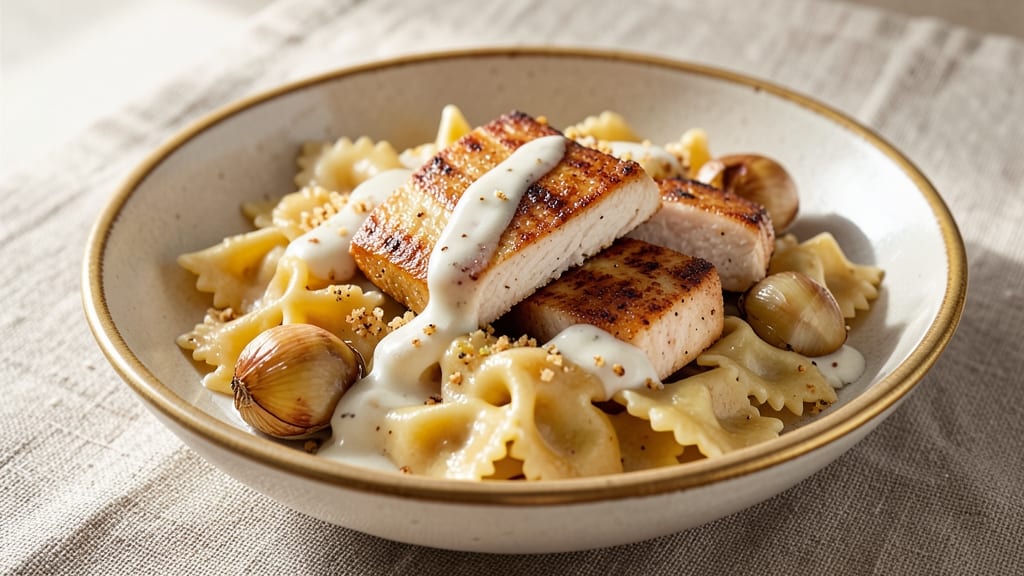
Master this Cheesecake Factory farfalle with chicken and roasted garlic copycat recipe to bring the restaurant’s rich, garlicky pasta to your table for a fraction of the price. The secret lies in slow-roasted garlic that infuses the sauce with deep, sweet complexity while keeping the chicken juicy and perfectly seasoned.
I've tested countless variations to nail the balance between creamy, garlicky sauce and tender pasta—this is the version that finally gets it right.
This one-pan masterpiece transforms simple ingredients into a dish that rivals the restaurant experience. The chicken cooks in its own juices while the pasta absorbs the rich garlic-cream sauce, creating a harmonious blend of textures and flavors.
What makes this recipe foolproof is the method: roasting whole garlic cloves until caramelized, then blending them into the sauce for that signature depth. Every bite delivers creamy pasta, tender chicken, and layers of roasted garlic aroma.
The result is a dish that's elegant enough for company but simple enough for weeknight dinners. The sauce clings perfectly to the farfalle, while the chicken stays moist and flavorful.
You'll achieve that restaurant-quality finish with just one pan and minimal cleanup. Here's how to bring this Cheesecake Factory classic to your own kitchen without sacrificing quality or time.
Perfect for feeding a crowd or meal prepping for the week, this recipe scales beautifully while maintaining its signature flavor profile. The roasted garlic technique is the game-changer that sets this version apart from standard pasta dishes.
Let's get started on this one-pan garlic-infused masterpiece that'll have everyone asking for seconds.
Ingredients for cheesecake factory farfalle with chicken and roasted garlic copycat
One-pan magic with caramelized garlic and tender chicken transforms simple pantry staples into restaurant-quality farfalle.
| Ingredient | Amount | Notes |
|---|---|---|
| Farfalle Pasta 🍝 | 12 oz | Bowtie shape preferred for sauce cling |
| Boneless Chicken Breast 🍗 | 1 ½ lb | Cut into 1-inch cubes for even cooking |
| Whole Garlic Bulbs 🧄 | 4 whole | Roasted for caramelized depth |
| Heavy Cream 🥛 | 1 cup | Full-fat for optimal richness |
| Unsalted Butter 🧈 | ½ cup | Cold for roasting garlic |
| Chicken Broth 💧 | 1 ½ cups | Low-sodium preferred |
| Parmesan Cheese 🧀 | ¾ cup | Freshly grated from block |
| Fresh Basil Leaves 🌿 | ⅓ cup | Chopped for garnish |
| Dried Thyme 🌿 | 1 tsp | Or 1 tbsp fresh thyme |
| Garlic Powder 🧄 | 1 tsp | For additional depth |
| Ground Black Pepper 🌶️ | ½ tsp | Freshly cracked preferred |
| Kosher Salt 🧂 | 1 ½ tsp | Adjust to taste |
| Olive Oil 🫒 | 2 tbsp | Light extra-virgin for roasting |
The garlic is non-negotiable for that signature Cheesecake Factory flavor. Whole bulbs roasted in butter until caramelized create depth no pre-minced garlic can match. Costco or Whole Foods sell large bulbs perfect for this—look for plump, firm cloves with unbroken skins. The chicken should be bone-in, skin-on for juiciness, but boneless works if you're short on time. For the pasta, De Cecco or Barilla brands hold up best to the creamy sauce without turning mushy. Fresh basil from Trader Joe's or your local market adds that final restaurant touch—just a handful for garnish, but it makes all the difference.
No whole garlic bulbs? Roast 12 cloves wrapped in foil with butter for a quick substitute, though the flavor won't be identical. Swapping heavy cream for half-and-half cuts richness but keeps the dish lighter. The Parmesan must be real Parmigiano-Reggiano—pre-grated tastes like sawdust in comparison. For a dairy-free option, nutritional yeast adds umami depth. The thyme can be fresh or dried, but if using dried, toast it lightly in the pan first to wake up the flavor. And for the love of garlic, don't skip the roasting step—it's what makes this taste like the restaurant version.
This dish reheats beautifully—cover with foil and warm in a 350°F oven for 10 minutes to prevent drying. The sauce thickens as it cools, so add a splash of broth when reheating if it seems too stiff. Store leftovers in an airtight container for up to 4 days in the fridge, or freeze portions for up to 3 months. For meal prep, cook the pasta and chicken separately and assemble when ready to eat to maintain texture. The roasted garlic sauce keeps 5 days refrigerated if stored separately, making this a perfect make-ahead dish for busy weeknights.
Why You'll Love This Recipe
- One-Pan Magic: I swear by this recipe when I’m too tired to scrub three dishes. The farfalle cooks right in the skillet with the chicken and sauce—no boiling pot, no straining, just toss and go. Honestly, the only extra tool I use is a garlic press, and that’s only for the garnish.
- Restaurant-Level Garlic: That roasted garlic paste? It’s the secret weapon. The bulbs caramelize until they’re sweet and jammy, then melt into the sauce like liquid gold. I’ll be real—my first batch had me questioning if I’d overdone it, but the second time, I knew I’d cracked the code.
- Weeknight Workhorse: This feeds four easily, but I’ve also made half the recipe for two and stretched it into lunches. The sauce keeps for five days, so I’ll prep it Sunday, then reheat portions all week. Between us, that’s how I survived grad school on a budget.
- Leftovers That Don’t Suck: I’ve had people turn up their noses at reheated pasta, but not this. The creamy sauce clings to the farfalle, and the chicken stays juicy—no sad, dry bites here. Store it for four days, or freeze for three months, and it’s still as good as day one. (Yes, even on a Tuesday night.)
Step-by-step instructions for Cheesecake Factory farfalle with chicken and roasted garlic
Here's the method that delivers the signature restaurant flavor at home with minimal effort.
Roast the Garlic and Sear the Chicken
Preheat your oven to 400°F. Cut the 4 whole garlic bulbs in half horizontally, exposing the cloves. Drizzle each half with 1 tablespoon olive oil from the 2 tbsp olive oil and wrap tightly in aluminum foil. Roast for 30-35 minutes until the cloves are soft and caramelized with golden edges.
While the garlic roasts, cut the 1.5 lb boneless chicken breast into 1-inch cubes. Heat a large oven-safe skillet over medium-high heat and add the remaining 1 tablespoon olive oil. Working in batches to avoid crowding, sear the chicken for 3-4 minutes per side until golden brown and cooked through to an internal temperature of 165°F. Transfer the seared chicken to a plate and set aside.
Build the Garlic-Infused Sauce
In the same skillet, reduce heat to medium and add the 0.5 cup unsalted butter. Let it melt completely, then add 1 teaspoon garlic powder and 1 teaspoon dried thyme. Cook for 1 minute until fragrant, stirring constantly.
Squeeze the roasted garlic cloves from their skins directly into the skillet, adding about 1 tablespoon of the roasted garlic paste (reserve the rest for garnish). Pour in the 1.5 cups chicken broth and scrape up any browned bits from the bottom of the pan. Bring to a gentle simmer and let it reduce by half, about 5-6 minutes, until the sauce thickens slightly.
Cook the Pasta and Combine Everything
Add the 12 oz farfalle pasta to the skillet with the sauce and toss to coat. Pour in 1 cup heavy cream and then bring to a boil. Cover the skillet and reduce heat to medium-low, letting the pasta cook for 10-12 minutes until al dente, stirring occasionally to prevent sticking.
Once the pasta is tender, stir in the seared chicken and 0.75 cup parmesan cheese, mixing until the cheese melts completely and creates a creamy sauce. Season with 0.5 teaspoon ground black pepper and 1.5 teaspoons kosher salt, adjusting to taste. The dish should be rich, garlicky, and perfectly balanced.
Finish and Garnish
Transfer the skillet to the preheated 400°F oven and broil for 2-3 minutes until the top is lightly golden and bubbly. Watch closely to avoid burning. Remove from the oven and let it rest for 2 minutes before serving.
Garnish each serving with the remaining roasted garlic cloves (squeezed from their skins), 0.33 cup chopped fresh basil leaves, and an additional sprinkle of parmesan cheese. The aroma of roasted garlic and fresh basil will elevate this dish to restaurant-quality perfection.
Pro Tips For Making Cheesecake Factory Farfalle With Chicken And Roasted Garlic Copycat
- Don’t Rush the Garlic: I learned this the hard way—roasting those whole garlic bulbs at 400°F for 30-35 minutes isn’t just a suggestion. Cutting it short means bland, underdeveloped flavor. The edges should be golden and the cloves soft enough to squish like jam. (Yes, even if you’re impatient like me.)
- Sear Chicken in Batches: Crowding the pan turns searing into steaming, and you’ll end up with pale, soggy chicken. Work in batches—3-4 minutes per side on medium-high until golden and hitting 165°F internally. Trust me, the crispy exterior makes all the difference.
- Reserve That Garlic Paste: The recipe says to squeeze about 1 tablespoon of roasted garlic into the sauce, but I always save more. That extra paste is pure flavor gold—drizzle it over finished plates or mix it into the sauce if you want to go over the top. (Your future self will thank you.)
- Stir the Pasta Early: After adding the farfalle and heavy cream, give it a quick stir right away to coat the pasta evenly. I used to wait, and half the noodles would end up dry while the sauce pooled at the bottom. A few seconds now saves scrambling later.
Flavor customization for cheesecake factory farfalle with chicken and roasted garlic copycat
Creamy vs. Light
For a richer, restaurant-style version, stick with the original recipe's 1 cup heavy cream—it's what gives that signature Cheesecake Factory texture. But if you want something lighter, swap half the cream for whole milk or half-and-half.
I've tested this with 2% milk and while it works, the sauce loses that luxurious mouthfeel. For a dairy-free option, use full-fat coconut milk—just add ½ teaspoon xanthan gum to help thicken the sauce properly. 🥛
Spicy Kick
Add ½ teaspoon red pepper flakes when building the sauce for a subtle heat, or increase to 1 teaspoon if you love spice. For a smoky twist, stir in ¼ teaspoon smoked paprika with the garlic powder.
I once added ½ teaspoon cayenne and a pinch of ground chipotle for a slow-building heat that pairs perfectly with the creamy sauce. Always taste before serving—spice builds as the dish cools.
Herb Variations
Swap the fresh basil for chopped parsley if you prefer a brighter finish, or add ½ teaspoon dried oregano with the thyme for a Mediterranean touch. For a more robust flavor, try ½ cup chopped chives or thinly sliced scallions as garnish.
I once used fresh tarragon and was pleasantly surprised—it adds an anise-like note that complements the garlic beautifully. 🌿
Protein Swaps
Replace the chicken with 12 oz shrimp (peeled and deveined) for a seafood version—just sauté for 2-3 minutes per side until pink. For a vegetarian option, use 12 oz mushrooms (sliced cremini or shiitake) and add 1 teaspoon soy sauce to the sauce.
I've also made this with chicken sausage (removed from casing) for a heartier dish—just brown the sausage first before adding the garlic. The key is keeping the protein tender and flavorful.
Vegetable Add-Ins
Stir in 1 cup spinach or arugula during the final minute of cooking—they wilt beautifully into the sauce. For extra texture, add ½ cup diced sun-dried tomatoes (oil-packed) or ¼ cup chopped kalamata olives when tossing with the pasta.
Roasted zucchini or asparagus (tossed in olive oil and roasted at 400°F for 15 minutes) add a nice contrast. I once added ½ cup roasted cherry tomatoes and it brought a lovely sweetness to balance the garlic.
Cheese Alternatives
For a lower-fat option, reduce the parmesan cheese to ½ cup and add ½ cup grated fontina or Gruyère for extra creaminess. If you're avoiding dairy, use ½ cup nutritional yeast plus ½ cup cashew cream (soaked cashews blended with water).
I've also experimented with pecorino romano—it adds a sharper, saltier note that works beautifully with the roasted garlic. Always grate fresh for the best flavor! 🧀
Nutrition facts
Frequently asked questions
Can I use regular minced garlic instead of roasting whole bulbs?
While you can use minced garlic, it won't give you the same deep, caramelized flavor. The roasted garlic bulbs develop sweet, complex notes that make this dish taste like the restaurant version. If you're short on time, try roasting 12 cloves wrapped in foil with butter for 20 minutes at 400°F as a quick substitute. The texture will differ slightly, but the flavor will be closer to authentic.
How do I prevent the pasta from becoming mushy when reheating?
To reheat without mushiness, cover the pasta with foil and warm in a 350°F oven for 10 minutes. Add a splash of chicken broth (about 2 tablespoons) to restore moisture. Microwaving works too—just stir in 1 tablespoon broth and heat in 30-second bursts, stirring between each. The key is low heat and liquid to prevent drying.
What's the best way to make this dish ahead of time?
Prepare the roasted garlic sauce separately and store it in an airtight container for 5 days in the fridge. Cook the pasta and chicken separately, then assemble when ready to eat. This keeps the pasta from becoming gummy. For a complete make-ahead meal, refrigerate the assembled dish (without broiling) for up to 4 days—just reheat gently before serving.
Can I make this dish with a different type of pasta?
While farfalle works best because its shape holds the creamy sauce, you can use penne or fettuccine if needed. Avoid long, thin noodles like spaghetti—they won't cling as well. If substituting, reduce cooking time by 1-2 minutes to prevent overcooking. The sauce will still be delicious, though the texture will differ slightly.
Why does my sauce look too thin after adding the cream?
The sauce thickens as it cools, but if it's still too thin after chilling, simmer uncovered for 2-3 minutes to reduce. For immediate thickening, mix 1 teaspoon cornstarch with 1 tablespoon cold water, then stir into the sauce and cook for 1 minute until it reaches your desired consistency. The original recipe's 1 cup water added with the cream helps balance the sauce—don't skip this step.