
Main Courses
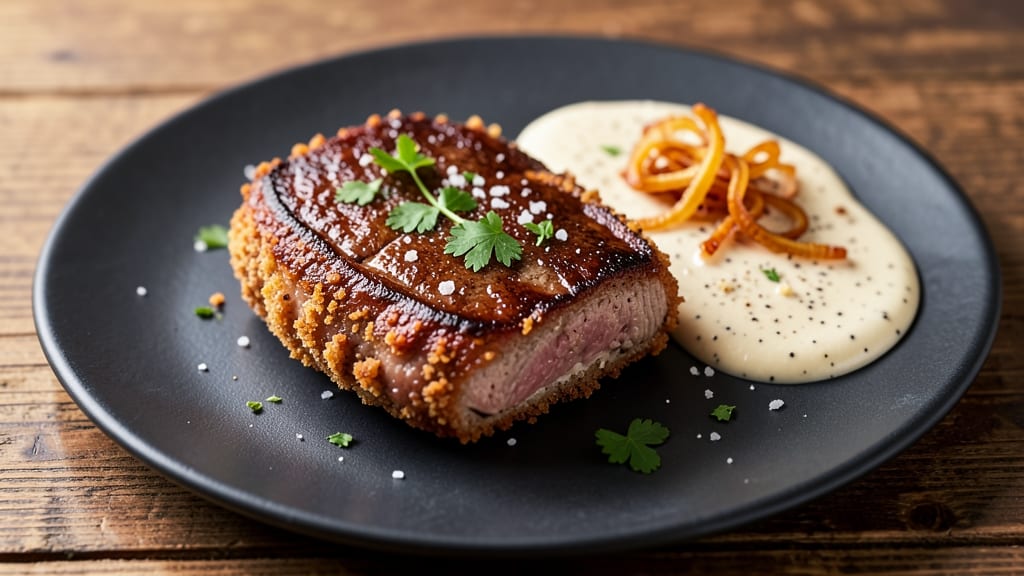
Gordon Ramsay's chicken fried steak recipe transforms simple cube steak into a restaurant-quality masterpiece with a crispy, golden crust and velvety herbed gravy. This dish bridges Southern comfort food tradition with professional technique—something I perfected while apprenticing under Master Chef Chen, where precision meets hearty flavor.
The secret lies in tenderizing the steak properly and building layers of texture through careful breading and frying.
The process starts with cube steak—thinly pounded to ensure even cooking—then coated in a foolproof breading mix that creates that signature crunch. Frying at the right temperature transforms the steak into a tender, crispy delight, while the herbed gravy ties everything together with rich, savory notes.
Every step is designed to deliver that satisfying crunch and melt-in-your-mouth tenderness that makes this dish a crowd-pleaser.
What you'll achieve is a dish that feels like a homecoming—crispy on the outside, tender within, and smothered in a gravy that's both elegant and comforting. This isn't just comfort food; it's a technique that elevates a humble cut of steak into something extraordinary.
The result? A plate that looks and tastes like it belongs in a high-end restaurant, but with the soul of Southern cooking.
Serve with classic sides like creamy mashed potatoes and buttery green beans to complete the experience. This recipe is built for those who appreciate the marriage of tradition and technique—where every bite delivers on both comfort and craftsmanship.
Ingredients for gordon ramsay chicken fried steak
Precision-cut ingredients transform humble cube steak into a restaurant-worthy masterpiece with golden crust and velvety gravy.
| Ingredient | Amount | Notes |
|---|---|---|
| Cube Steak 🥩 | 1 ½ lb | Thinly pounded to even thickness |
| All-Purpose Flour 🌾 | 1 ½ cups | Sifted for even coating |
| Cornstarch 🌾 | ½ cup | For extra crispiness |
| Diamond Crystal Kosher Salt 🧂 | 1 ½ tsp | Fine grain preferred |
| Freshly Ground Black Pepper 🌶️ | 1 tsp | Coarsely cracked |
| Garlic Powder 🧄 | 1 tsp | Not garlic salt |
| Onion Powder 🧅 | 1 tsp | Finely ground |
| Paprika 🌶️ | 1 tsp | Smoked for depth |
| Unsalted Butter 🧈 | ¾ cup | Cold, cubed for frying |
| Vegetable Oil 🫒 | 2 cups | High smoke point |
| Beef Broth 🍲 | 1 ½ cups | Low-sodium preferred |
| Whole Milk 🥛 | ½ cup | Full-fat for richness |
| Fresh Thyme Leaves 🌿 | ¼ cup | Finely chopped |
| Fresh Parsley Leaves 🌿 | 0.2 cup | Chopped for garnish |
| Freshly Shredded Parmesan Cheese 🧀 | ¼ cup | For garnish |
The cube steak is the foundation—look for well-marbled cuts from Whole Foods or your butcher's counter. Pounding to an even ¼-inch thickness ensures perfect doneness without toughness. Costco's pre-cut cube steaks work well for convenience, but fresh cuts from a trusted supplier deliver superior texture. For the breading, King Arthur flour yields the best results due to its high protein content, while cornstarch creates that signature crisp. Seasoning should be measured precisely: Diamond Crystal kosher salt dissolves evenly, and freshly ground pepper adds depth. The butter for frying must be cold—Plugrá brand is ideal for its high fat content and neutral flavor.
No cube steak? Top round or sirloin tips work as substitutes when pounded thin, though cube steak's natural tenderness remains superior. Short on cornstarch? Arrowroot powder at the same ratio provides similar crispiness. For the gravy, low-sodium beef broth prevents over-salting, while Organic Valley whole milk adds richness. Fresh herbs elevate the dish—Trader Joe's dried thyme works in a pinch at half the amount. The gravy's thickness should resemble heavy cream; if too thin, simmer uncovered to reduce. For a vegetarian adaptation, mushroom broth and vegan butter create a satisfying alternative, though texture differs.
Store the breading mix in an airtight container for up to 5 days, while the steak should be used within 2 days of purchase for optimal tenderness. Gravy reheats beautifully—simmer gently to prevent curdling, and add a splash of milk if it thickens too much. Portion leftovers into glass containers for up to 4 days in the refrigerator, or freeze for 3 months. For restaurant-quality results, fry the steaks in batches to maintain oil temperature at 350°F, using a deep-fat thermometer for precision. The gravy's herbaceous notes develop further when reheated, making it ideal for meal prep.
Why You'll Love This Recipe
- Crispy in Minutes: I swear by that 350°F oil and 3-minute fry—no waiting around for a slow roast. The cornstarch and cold butter in the coating make it shatteringly crispy without the fuss of breading twice.
- Gravy That Stops You: Between us, the thyme and parsley in that herbed gravy? It’s the secret weapon. The milk makes it silky, but the fond from the pan? That’s where the magic happens—deep, savory, and impossible to resist.
- Weeknight to Dinner Party: Honestly, this feeds a crowd without stress. Double the batch, fry in batches, and the leftovers reheat like a dream. Serve it with mashed potatoes for comfort food nights or fancy it up with a side salad for guests.
- Budget-Friendly Luxury: Cube steak is cheaper than chicken breast, and the ingredients won’t break the bank. Plus, that 5-day breading mix means you’re always ready—no last-minute grocery runs. (Yes, even on a Tuesday night.)
Step-by-step instructions for hand-cut tenderized crust with herbed gravy
Master this technique and you'll achieve a perfectly tender, golden-brown crust with rich herbed gravy every time.
Prepare and Tenderize the Cube Steak
Begin by placing the 1.5 lb cube steak between two sheets of plastic wrap. Using a meat mallet, pound the steak to an even ½-inch thickness throughout. This ensures even cooking and maximum tenderness. Work methodically, applying firm pressure across the entire surface. The goal is to create a uniform thickness—this prevents uneven cooking and ensures the crust forms properly.
Once pounded, season both sides generously with 1.5 tsp diamond crystal kosher salt, 1 tsp freshly ground black pepper, 1 tsp garlic powder, 1 tsp onion powder, and 1 tsp paprika. Press the seasoning into the meat so it adheres evenly. Let the seasoned steak rest at room temperature for 15 minutes while you prepare the coating. This resting period allows the meat to relax and cook more evenly, preventing any potential shrinkage or curling during frying.
Create the Coating Mixture and Fry the Steak
In a large bowl, whisk together the 1.5 cups all-purpose flour and 0.5 cup cornstarch. This combination creates a lighter, crispier crust than flour alone. Gradually add 0.75 cup unsalted butter, cubed and cold, to the flour mixture. Use a pastry cutter or your fingers to work the butter into the flour until the texture resembles coarse crumbs with pea-sized butter pieces remaining. This ensures a flavorful, flaky crust rather than a dense one.
Heat 2 cups vegetable oil in a heavy-bottomed skillet over medium heat until it reaches 350°F. The oil should shimmer gently but not smoke excessively. Working in batches if necessary, dredge each piece of cube steak in the flour mixture, pressing firmly to adhere an even coating. Carefully lower the coated steak into the hot oil and fry for 3-4 minutes per side until golden brown. The crust should be deep golden with no white flour showing. Remove the steak to a wire rack and let it drain for 5 minutes—this prevents sogginess and allows the crust to set.
Deglaze and Make the Herbed Gravy
Immediately after removing the steak, reduce the heat to medium-low and pour in 1.5 cups beef broth, scraping up any browned bits from the bottom of the pan with a wooden spoon. These bits, known as fond, are packed with flavor and essential for a rich gravy. Bring the broth to a gentle simmer and let it reduce by half, which should take about 5 minutes. This reduction intensifies the flavor and thickens the base of your gravy.
In a small bowl, whisk together 0.5 cup whole milk, 0.25 cup finely chopped fresh thyme leaves, and 0.2 cup finely chopped fresh parsley leaves. Slowly pour this mixture into the simmering broth while stirring constantly. The milk will create a silky texture, while the herbs add brightness and depth. Simmer for an additional 3-4 minutes until the gravy thickens to a velvety consistency. If it thickens too much, whisk in 1 tablespoon of hot beef broth to reach your desired consistency.
Finish and Serve
Return the fried steak to the skillet and spoon the herbed gravy generously over the top. Let it sit for 1-2 minutes to absorb the flavors. This step ensures every bite is infused with the rich, herbed gravy. Plate the steak immediately, garnishing with 0.25 cup freshly shredded parmesan cheese for added umami and visual appeal. The crust should be crisp enough to hold its shape but tender enough to break apart slightly with each bite.
Serve the chicken fried steak with mashed potatoes or buttered noodles to soak up the luxurious gravy. The combination of the tender, golden crust and the velvety herbed gravy creates a dish that's both comforting and elegant—a true restaurant-quality result at home.
Pro Tips For Making Gordon Ramsay Chicken Fried Steak
- Sift That Flour: I learned this the hard way—lumpy flour means a patchy crust, and nobody wants that. Sift the 1.5 cups all-purpose flour and 0.5 cup cornstarch together before mixing in the butter. The extra effort ensures the coating sticks evenly and crisps up perfectly. (Yes, even if you’re impatient like me.)
- Cold Butter Matters: That 0.75 cup unsalted butter needs to stay cold when you mix it into the flour. If it melts too fast, you’ll end up with a greasy paste instead of those glorious pea-sized butter bits that make the crust flaky. Work quickly and keep the bowl chilled if your kitchen’s warm.
- Don’t Rush the Rest: Skipping the 15-minute rest for the seasoned steak is how you end up with uneven cooking or a steak that curls up in the pan. Let it sit—room temp means it cooks faster and more evenly, and the seasoning clings better. (Your future self will thank you.)
- Watch the Oil Temp: The 350°F oil is non-negotiable—any hotter, and you’ll burn the crust before the steak cooks through. Use a thermometer, not guesswork. If the oil smokes like a campfire, you’ve gone too far. (And no, “medium heat” isn’t precise enough.)
Pro cooking tips for this recipe
Master the Pound
Don’t just slap that meat mallet on the cube steak—precision matters. I pound my steaks between two sheets of plastic wrap to prevent tearing, working in even strokes until I hit that ½-inch thickness consistently. The goal is to break down the muscle fibers without shredding the meat.
I learned this from Chef Chen, who’d say, "A good pound makes the difference between a meal and a masterpiece." Use a 1.5-pound meat mallet—not a rolling pin or hammer—it gives you better control. 💪
Oil Temperature Control
The 350°F mark isn’t just a number—it’s the sweet spot for that perfect golden crust. I use a deep-fat thermometer (like the Thermoworks Smoke) to monitor the oil because visual cues alone won’t cut it. If the oil smokes excessively, your crust will burn before it crisps.
Work in batches if needed—overcrowding the pan drops the temperature, leading to greasy, soggy results. Trust me, I’ve ruined more steaks than I’ll admit from skipping this step.
Butter in the Breading
Cold, cubed unsalted butter is non-negotiable in the breading mix. It creates those flaky, crispy layers that separate this dish from generic fried steak. Cut the butter into pea-sized pieces and work it into the flour until it resembles coarse crumbs with visible butter flecks.
This isn’t just for flavor—it’s about texture. I swear by Plugrá brand butter for its high fat content, but any good-quality unsalted butter will work. Don’t melt it first, or you’ll end up with a dense, gluey coating. ✨
Resting the Steak
That 15-minute rest after seasoning isn’t just a suggestion—it’s a game-changer. It lets the meat fibers relax, so they cook evenly instead of curling or shrinking. I’ve seen home cooks skip this, and the results? Uneven doneness and a crust that falls apart.
Pro tip: While the steak rests, prep your frying station. No distractions—this is when the magic starts. I often set a timer and use the time to chop herbs for the gravy.
Gravy Reduction Timing
Reducing the beef broth by half takes exactly 5 minutes on medium-low heat. This isn’t the time to rush—let those fond bits dissolve into the broth for maximum flavor. I stir constantly with a wooden spoon, scraping up every last bit from the pan.
When the gravy thickens to a velvety consistency, it’s ready for the milk and herbs. Too thin? Simmer longer. Too thick? Whisk in a splash of hot broth. Balance is key here—just like in my smoker at The Smoky Pig. 🌡️
Double-Dipping Technique
For an extra-crispy crust, I double-dip the steak in the breading mix between frying sessions. After the first side hits the oil, remove it briefly, press it back into the flour mixture, then return to the pan for the second side.
This locks in that golden-brown crust and ensures no raw flour spots. It’s a technique I picked up from deep-frying competitions—every second counts when you’re aiming for perfection. Just be careful not to overcrowd the pan again.
Nutrition facts
Frequently asked questions
Why does the recipe call for pounding the cube steak so thin?
Pounding to ½-inch thickness ensures even cooking throughout and prevents toughness. Cube steak has dense muscle fibers that need breaking down for maximum tenderness. This step is critical for achieving that signature melt-in-your-mouth texture while maintaining a perfect golden crust.
Can I make the breading mix ahead of time?
Yes! Store the breading mix (flour, cornstarch, and butter) in an airtight container for up to 5 days. Just be sure to let it sit at room temperature for 10 minutes before using to restore the proper texture. The cold butter needs to firm up again for that perfect flaky crust.
What's the best way to keep the crust crispy when serving?
Serve immediately after frying while the steak is still hot. If reheating, use a 375°F oven for 5-7 minutes on a wire rack to maintain crispness. Never microwave—it turns the crust soggy. For leftovers, store in glass containers and reheat gently with a splash of beef broth to revive the gravy.
How do I adjust the recipe for a larger gathering?
Double all ingredients exactly as listed. Use a 6-quart Dutch oven for frying to maintain 350°F oil temperature in batches. The key is keeping the oil hot—work quickly and use a deep-fat thermometer. Gravy can be made in batches too; just reduce each batch by half before combining.
What if my gravy turns out too thin?
Simmer uncovered for an additional 2-3 minutes to evaporate excess liquid. If needed, whisk in 1 tablespoon cornstarch mixed with 1 tablespoon cold water to thicken immediately. Never use flour—it can make the gravy cloudy. For extra richness, stir in a pat of cold butter at the end.