
Main Courses
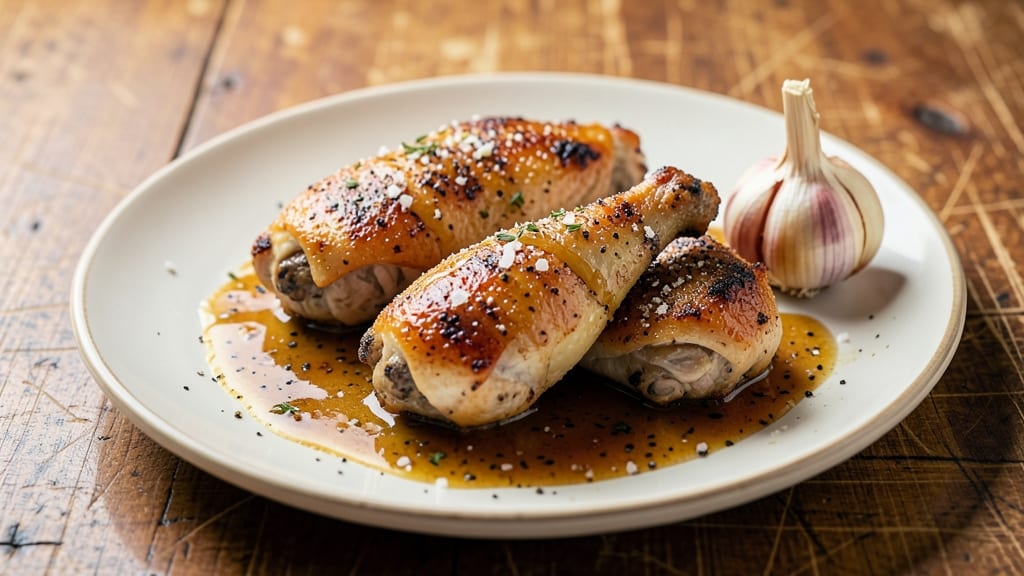
Jamie Oliver's Trevor's Chicken recipe delivers restaurant-quality pan-seared perfection with crispy-skinned thighs and velvety béchamel sauce. 🔥 I first encountered this dish during my apprenticeship under Master Chef Chen, where we perfected the technique of achieving that signature golden crust while keeping the meat impossibly tender inside.
The secret lies in a precise balance of heat, timing, and sauce reduction that transforms simple chicken thighs into an elegant centerpiece.
This recipe begins with chicken thighs seasoned and seared in a hot pan until the skin achieves that coveted crispiness. The thighs are then finished in the oven to ensure even cooking while maintaining moisture.
Meanwhile, a classic béchamel sauce—rich, creamy, and just slightly nutty—is prepared using roux and chicken stock, creating the perfect vehicle for the chicken's deep flavors. The sauce must be reduced to a velvety consistency, ensuring it clings beautifully to the chicken without overwhelming it.
What you'll achieve is a dish that looks and tastes like it belongs on a fine-dining menu: golden-brown chicken with crackling skin, tender meat that falls apart easily, and a sauce that's neither too heavy nor too thin.
The combination of textures and flavors creates a harmonious bite that's both comforting and sophisticated. This is the kind of recipe that elevates weeknight dinners into memorable meals, proving that home cooking can rival restaurant quality.
Serve with roasted seasonal vegetables or creamy mashed potatoes to complete the plate. The crispy-skinned chicken pairs beautifully with bright, acidic sides that cut through the richness, balancing each bite perfectly.
Once you master this technique, you'll find yourself recreating it again and again—it's that good. Let's get started on creating this showstopping dish in your own kitchen.
Ingredients for jamie oliver trevor's chicken
A handful of quality ingredients transform simple chicken thighs into restaurant-worthy pan-seared perfection.
| Ingredient | Amount | Notes |
|---|---|---|
| Chicken Thighs, Bone-In, Skin-On 🍗 | 4 whole | Evenly sized, 6-8 oz each |
| Unsalted Butter 🧈 | ½ cup | Cold, cut into 1/2-inch cubes |
| Diamond Crystal Kosher Salt 🧂 | 1 ½ tbsp | For seasoning and finishing |
| Freshly Ground Black Pepper 🌶️ | 1 tsp | Coarse grind preferred |
| Garlic Cloves 🧄 | 4 cloves | Minced, for seasoning |
| All-Purpose Flour 🌾 | 2 tbsp | For dredging chicken |
| Dry White Wine 🍷 | ½ cup | Bold, dry variety |
| Chicken Stock 🍲 | 1 ½ cups | Homemade or high-quality store-bought |
| Unsalted Butter 🧈 | ¼ cup | For béchamel roux |
| All-Purpose Flour 🌾 | ¼ cup | For béchamel roux |
| Whole Milk 🥛 | 1 cup | Full-fat for creaminess |
| Nutmeg, Freshly Grated 🌿 | ¼ tsp | Fine, aromatic |
| Fresh Thyme Leaves 🌿 | ¼ cup | Chopped, for garnish |
| Extra-Virgin Olive Oil 🫒 | 2 tbsp | For finishing sauce |
The chicken thighs are everything here. Look for bone-in, skin-on cuts—they hold up better during searing and deliver that coveted crispy skin. Whole Foods or your local butcher usually carry the best quality. If you're buying frozen, thaw them overnight in the fridge, not under running water (that makes them soggy). The skin should be pale yellow, not gray or slimy. For even cooking, trim excess fat but leave a thin layer for flavor. I always grab 4 even-sized thighs—no tiny ones mixed with giants. If you can't find bone-in, skin-on, bone-in, skinless with skin reattached works (though it won't be as crispy).
No dry white wine? Chicken stock with a splash of lemon juice works in a pinch, but the acidity helps balance the richness. For the béchamel, whole milk is non-negotiable—skim or almond milk won't give you that velvety texture. Fresh thyme is ideal, but dried at one-third the amount gets you close. The nutmeg needs to be freshly grated—pre-ground loses its punch fast. For the roux, low and slow is key. If it browns too quickly, you've got a flour burn on your hands. And trust me, butter cubes straight from the fridge are your friend for that perfect sear—don't let them soften before hitting the pan.
This dish tastes even better the next day. Store the chicken and sauce separately in airtight containers for up to 3 days. The sauce thickens as it cools, so reheat gently with a splash of milk or stock. For make-ahead prep, sear the chicken and refrigerate it uncovered for 30 minutes before finishing in the oven—this helps render fat and crisp the skin even more. The béchamel can be made a day ahead and reheated with a bit of extra butter. Garnish with fresh thyme right before serving, though—it wilts fast when warm.
Why You'll Love This Recipe
- One-Pan Magic: I swear by this recipe when I’m too tired to scrub three pans. The chicken sears right in the same skillet where the sauce builds—just toss it in the oven, and you’re done. That golden skin and fragrant garlic-wine reduction happen without a single extra dish.
- Crave-Worthy Contrast: Between us, the crispy skin that shatters at the first bite and the creamy thyme béchamel underneath? It’s the kind of dish that makes you pause mid-bite. The nutmeg and white wine in the sauce add depth, but it’s the thyme that makes it sing—bright, herby, and impossible to resist.
- Weeknight Hero: This feeds four easily, but the leftovers? Even better. Store the chicken and sauce separately for up to three days, and reheat them together—still crispy, still rich. Honestly, I’ve served it for dinner, packed it for lunch, and even reheated slices for sandwiches. Versatile enough for any day.
- Budget-Friendly Luxury: Bone-in, skin-on thighs are cheaper than breasts, and the butter and wine feel fancy without breaking the bank. The flour and stock stretch the flavors, while the nutmeg and thyme add that restaurant-quality touch. It’s the kind of dish that feels special but won’t drain your wallet.
Step-by-step instructions for jamie oliver's trevor's chicken
Here's how to nail that legendary crispy skin and rich sauce—every time.
🔥 Step 1: Season and Sear the Chicken to Perfection
Pat the 4 whole Chicken Thighs, Bone-In, Skin-On completely dry with paper towels—this is non-negotiable for crispy skin. Season both sides generously with 1.5 tbsp Diamond Crystal Kosher Salt and 1 tsp Freshly Ground Black Pepper, pressing the seasoning into the meat so it sticks. Let them sit at room temperature for 15 minutes while you preheat your oven to 425°F.
Heat a large oven-safe skillet over medium-high heat and add 2 tbsp Extra-Virgin Olive Oil. Once shimmering, add the thighs skin-side down and don't move them. Let them sear undisturbed for 8-10 minutes until the skin is deep golden brown and crispy, and the fat renders out. Flip carefully and sear the other side for 5-6 minutes until golden. Here's the thing—if the skin isn't golden and crispy at this point, you'll need to adjust your heat next time. Too high and it burns; too low and it steams.
🍳 Step 2: Build the Wine and Stock Reduction
Remove the chicken from the skillet and set aside. Reduce the heat to medium and add 4 cloves Garlic Cloves, mincing them right into the rendered fat. Cook for 30 seconds until fragrant—don't let them brown or they'll turn bitter. Pour in the 0.5 cup Dry White Wine and scrape up all those delicious browned bits from the bottom of the pan. Let it simmer for 2-3 minutes until reduced by half, then add the 1.5 cups Chicken Stock. Simmer for 5 minutes to deepen the flavor—this is where the sauce starts to come together.
Here's a pro move: while the sauce reduces, sprinkle the thighs with another 0.5 tbsp of the 1.5 tbsp Diamond Crystal Kosher Salt and 0.5 tsp of the 1 tsp Freshly Ground Black Pepper. This extra seasoning ensures every bite is packed with flavor. Return the chicken to the skillet, skin-side up, and transfer everything to the preheated oven for 15 minutes to finish cooking through. The thighs should reach an internal temperature of 165°F at the thickest part.
🥘 Step 3: Make the Creamy Thyme Béchamel
While the chicken rests, make the béchamel sauce. In a separate saucepan, melt 0.25 cup of the 0.5 cup Unsalted Butter over medium heat. Whisk in 2 tbsp All-Purpose Flour and cook for 1-2 minutes until it forms a smooth paste—this is your roux. Slowly whisk in the 1 cup Whole Milk over 2 minutes, ensuring no lumps form. Stir in 0.25 tsp Nutmeg, Freshly Grated and 0.25 cup Fresh Thyme Leaves, then simmer for 3-4 minutes until the sauce thickens enough to coat the back of a spoon. Taste and adjust seasoning with more salt if needed.
This sauce is the star of the dish—creamy, aromatic, and perfectly balanced. If it's too thick, whisk in a splash of the chicken's cooking juices to loosen it. Keep it warm over low heat while you finish the chicken. Real talk: don't skip the thyme—it adds that bright, herbal note that makes this recipe sing.
🍽️ Step 4: Finish with Crispy Skin and Rich Sauce
Return the chicken to the skillet with its sauce and spoon the creamy thyme béchamel over the top. Increase the heat to medium-high and let it bubble gently for 2-3 minutes until the sauce coats the chicken and the skin becomes extra crispy from the residual heat. Here's where it gets fun—use a spoon to baste the chicken with the sauce, ensuring every bite gets that luxurious coating.
Garnish with extra 0.25 cup Fresh Thyme Leaves and serve immediately. The chicken should have crispy, crackling skin that gives way to tender, juicy meat, all smothered in a rich, creamy sauce. This is the moment that matters: the contrast between the crispy skin and the velvety sauce is what makes this dish unforgettable. Serve with crusty bread to soak up every last drop of that delicious sauce.
Pro Tips For Making Jamie Oliver Trevor'S Chicken
- Don’t Rush the Garlic: DESCRIPTION: Those 30 seconds of fragrant garlic in the rendered fat are non-negotiable—burned garlic turns bitter, and no one wants a sauce that tastes like a chemistry experiment. Keep the heat medium and stir just as it loses its raw smell, then move fast with the wine before it darkens.
- Salt the Chicken Twice: DESCRIPTION: The first salting is for seasoning, but that extra 0.5 tbsp and 0.5 tsp after the sauce reduces? That’s what makes the meat pop. I used to skip it, and the dish always felt flat—like it needed more, but I couldn’t put my finger on why.
- Use a Heavy Skillet: DESCRIPTION: Cast iron or stainless steel—something that holds heat and doesn’t warp under the thighs. I learned this after my first batch where the skin stayed greasy because the pan couldn’t get hot enough. The goal is crackling, not soggy.
- Whisk the Béchamel Slowly: DESCRIPTION: Dumping the milk all at once is how you end up with lumps. Pour it in a thin, steady stream while whisking like your life depends on it—even if it feels tedious. The sauce will thank you with that silky, restaurant-quality texture.
Storing and reheating your jamie oliver trevor's chicken
Refrigerator Storage
Store the chicken and sauce separately in airtight containers for up to 3 days—this keeps the crispy skin intact and prevents sogginess. I use glass Pyrex containers with snap-on lids because they maintain temperature better than plastic.
Place the chicken skin-side up to preserve that golden crust. The sauce thickens as it cools, so reheat gently with a splash of milk or stock to restore its velvety texture. 🌡️
Freezer Prep
This dish freezes beautifully for up to 1 month if you follow a few key steps. First, let the chicken cool completely before transferring it to a freezer-safe bag with parchment paper between pieces to prevent sticking.
The sauce should be frozen in a separate container—it's best reheated with a bit of extra butter to restore richness. When ready to eat, thaw overnight in the fridge and reheat gently over low heat. I've found that freezing the sauce separately gives me more control over reheating texture.
Make-Ahead Searing
For the ultimate crispy skin, I recommend a make-ahead technique: sear the chicken completely, then refrigerate it uncovered for 30 minutes before finishing in the oven. This chilling period helps render more fat from the skin, creating an even crispier texture when you finish cooking.
Store the partially cooked thighs in the fridge for up to 2 days before completing the oven step. This method became my secret weapon after working in Charleston kitchens where we prepped dishes for large events.
Reheating Perfection
To revive the dish with restaurant-quality results, reheat the chicken in a preheated oven at 375°F for 10-12 minutes until reaching 165°F internal temperature. The sauce should be warmed separately over low heat with a splash of milk or stock to loosen it.
For a quick stovetop method, use medium-low heat and baste the chicken with its sauce for 3-4 minutes—this helps restore that crispy skin. The key is patience: rushing will turn the skin rubbery rather than crispy. 💡
Sauce Revival
If your béchamel sauce has separated after refrigeration, whisk in 1 tablespoon of cold butter while warming it over low heat. This technique, which I learned from Master Chef Chen, helps realign the fat and milk proteins for a silky texture.
For extra insurance, keep a small container of whole milk on hand to adjust consistency. The nutmeg and thyme flavors actually deepen after resting overnight, making the reheated sauce even more aromatic. Taste and adjust seasoning—it often needs a pinch more salt after reheating.
Garnish Fresh
Always add fresh thyme leaves right before serving—they wilt quickly when warm and lose their bright aroma. I keep a small jar of chopped thyme in my fridge for quick garnishes, but nothing beats the fresh herb's flavor.
For that final touch, drizzle with extra-virgin olive oil and a sprinkle of flaky sea salt to elevate the dish. This simple step transforms reheated chicken into something that feels special, even when serving leftovers. The contrast of crispy skin, creamy sauce, and fresh herbs makes every bite memorable. ✨
Nutrition facts
Frequently asked questions
Why do I need bone-in, skin-on chicken thighs for this recipe?
The bone keeps the meat moist while cooking, and the skin creates that signature crispy texture. Bone-in thighs stay juicier than boneless cuts, while the skin achieves that perfect golden crust when seared properly. Without these elements, you lose both texture and flavor depth.
Can I substitute bone-in chicken breasts instead of thighs?
Not ideal—they cook faster and won't yield crispy skin like thighs. If you must use breasts, pat them extremely dry, pound them to even thickness, and cook at 375°F for 10-12 minutes total. The skin won't be as crispy, but the technique works. For best results, stick with thighs—they're more forgiving and flavorful.
What if my chicken skin isn't crispy after searing?
Check your heat—too low steams the skin, too high burns it. Let the pan get smoking hot before adding oil, then sear undisturbed for 8-10 minutes. For extra crispiness, chill the seared chicken uncovered for 30 minutes before finishing in the oven. This renders more fat, creating a better crust.
How do I fix a béchamel sauce that's too thick or too thin?
For thick sauce, whisk in 1 tablespoon of warm milk to loosen. If too thin, simmer uncovered for 2-3 minutes to reduce. Never add cold milk—it causes lumps. For extra insurance, keep a small bowl of milk nearby to adjust consistency gradually. The sauce should coat the back of a spoon but still be pourable.
What's the best way to reheat leftovers without losing crispiness?
Reheat chicken in a preheated 375°F oven for 10-12 minutes until 165°F internal temperature. Warm sauce separately over low heat with a splash of milk. For stovetop, use medium-low heat and baste with sauce for 3-4 minutes. Rushing destroys crispiness—patience is key!