
Main Courses
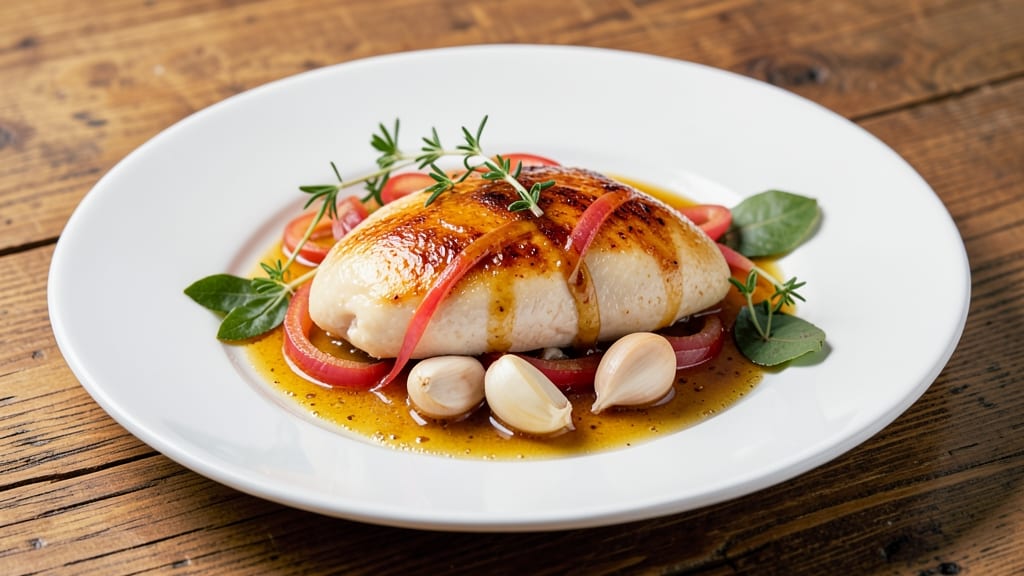
This poached chicken recipe reveals how to turn ordinary weeknights into elegant dinners with tender, silky-skinned perfection. After years of perfecting this gentle cooking method, I’ve developed a foolproof technique that delivers tender, flavorful chicken every time—no dry spice blends or complicated sauces required.
The secret lies in the simmering process, where aromatics and herbs infuse the broth for subtle, layered flavor without overpowering the chicken’s natural taste.
This recipe relies on a precise balance of water and aromatics—garlic, onions, and herbs—to create a fragrant cooking liquid that keeps the chicken moist and tender.
Unlike roasting or frying, poaching requires patience: the chicken simmers gently until fully cooked, resulting in a texture that’s impossibly tender with a delicate, almost translucent skin. The method is versatile too, working equally well for salads, sandwiches, or as a centerpiece for family meals.
By the end, you’ll have perfectly poached chicken that’s juicy, flavorful, and ready to be sliced for tacos, salads, or served with lemon wedges and fresh herbs. The broth can even be reduced into a light sauce for extra depth.
This is the kind of technique that elevates everyday cooking—simple, reliable, and full of potential.
Whether you’re prepping for a crowd or a quiet dinner for two, this method ensures consistent, professional results. Let’s get started with a technique that’s as rewarding as it is delicious.
Ingredients for poached chicken
Aromatics and aromas create the perfect poaching broth for silky chicken every time.
| Ingredient | Amount | Notes |
|---|---|---|
| Boneless, Skinless Chicken Breast 🍗 | 1 ½ lb | Cut into even 6-8 oz pieces |
| Yellow Onion 🧅 | 1 whole | Quartered, skin on for color |
| Garlic Cloves 🧄 | 6 cloves | Smashed lightly for infusion |
| Fresh Thyme Sprigs 🌿 | 4 whole | Stems intact for easy removal |
| Fresh Bay Leaves 🍃 | 2 whole | Dried works in pinch |
| Salt 🧂 | 1 ½ tsp | Diamond Crystal preferred |
| Black Peppercorns 🌶️ | ½ tsp | Freshly cracked preferred |
| White Wine Vinegar 🍶 | 2 tbsp | Or apple cider vinegar |
| Water 💧 | 4 cups | Filtered preferred for clarity |
| Unsalted Butter 🧈 | 2 tbsp | Full-fat for richness |
| Fresh Lemon 🍋 | 1 whole | For finishing, zest optional |
| Fresh Parsley 🌿 | ¼ cup | Chopped, for garnish |
The chicken pieces should be uniform—6-8 ounces each ensures even cooking. Whole Foods or your butcher will cut them precisely; otherwise, use a kitchen scale. For aromatics, look for fresh thyme with vibrant green leaves—wilted sprigs lose their potency quickly. Bay leaves should be pliable, not brittle. The butter adds richness without overpowering; European-style unsalted like Plugrá melts beautifully. Store all herbs in the fridge, wrapped in damp paper towels for 5-7 days of maximum freshness.
No white wine vinegar? Apple cider vinegar or lemon juice works equally well—just reduce the amount to 1.5 tablespoons to avoid acidity. Dried thyme or bay leaves? Use one-third the amount of fresh, but toast them lightly in a dry pan first for deeper flavor. The water should be room temperature—cold water creates uneven cooking. For extra depth, add 1 teaspoon fish sauce to the broth, a trick from Thai cuisine that enhances umami without overpowering. The lemon can be omitted if you prefer a neutral finish, but the zest adds a bright contrast that balances the richness.
This broth keeps beautifully—3-4 days in the fridge or 3 months frozen. For storage, cool the broth completely before transferring to airtight containers. The chicken reheats best in the broth itself; gentle warming on low heat prevents drying. To repurpose the broth, reduce it by half for a light sauce, or use it as a base for risotto or grains. If you have leftovers, slice the chicken and store it submerged in the broth to maintain moisture. The parsley wilts quickly, so add it last for maximum freshness.
Why You'll Love This Recipe
- No-Fuss Technique: The chicken barely needs attention—just a 15-minute simmer at 160°F, and you’re done. No flipping, no frying, no stress. I’ve made this while chatting with friends or scrolling through my phone, and the results are always perfect.
- Restaurant-Quality Flavor: That 10-minute simmer with smashed garlic and thyme sprigs? Pure magic. The butter and vinegar finish turns the poaching liquid into a sauce so rich and bright, it tastes like it came from a chef’s kitchen—not mine.
- Meal Prep Goldmine: The broth keeps for 3-4 days, and the chicken reheats beautifully in the same sauce. Pack it for lunches or freeze the broth for future soups—every bit is useful, and nothing goes to waste.
- Budget-Friendly Luxury: Boneless chicken breasts are affordable, and the aromatics stretch the flavor without breaking the bank. Honestly, I’d pay double for this dish at a restaurant, but making it at home costs a fraction of the price.
Step-by-step instructions for poached chicken recipe
Master this gentle cooking technique for flawlessly tender, restaurant-quality chicken every time.
Prepare the Poaching Liquid with Aromatics
In a large, deep skillet or Dutch oven, combine the 4 cups water, 1 whole yellow onion (quartered with skin on), 6 cloves garlic cloves (smashed lightly), 4 whole fresh thyme sprigs, and 2 whole fresh bay leaves. Bring to a gentle simmer over medium-low heat—you should see just a few small bubbles breaking the surface, not a rolling boil.
The onion skin adds subtle color and depth, while the garlic and herbs infuse the liquid with aromatic complexity. Let this mixture simmer uncovered for 10 minutes to allow the flavors to meld. This pre-infusion ensures your chicken absorbs maximum flavor during poaching. I always use a heavy-bottomed pot to prevent scorching at the base.
Season and Poach the Chicken
While the aromatics simmer, season each 6-8 oz piece of the 1.5 lb boneless, skinless chicken breast with ¾ tsp salt and ¼ tsp black peppercorns (dividing the total amounts evenly). Gently lower the chicken pieces into the simmering liquid, being careful not to disturb the settled aromatics at the bottom. The water should cover the chicken by about ½ inch. If needed, add a splash of hot water from the kettle to maintain coverage.
Return to a gentle simmer and maintain medium-low heat—the liquid should barely bubble. Cover the pot loosely with a lid (leave a small gap for steam to escape) and poach for 12-15 minutes. The chicken is perfectly done when it reaches an internal temperature of 160°F and the meat is just opaque throughout, with no pink remaining. Use a meat thermometer for accuracy—this is the only way to guarantee perfect doneness without overcooking.
Finish with Vinegar and Butter
Once the chicken reaches 160°F, carefully remove it with a slotted spoon and transfer to a warm serving platter. To the poaching liquid, add the 2 tbsp white wine vinegar and 2 tbsp unsalted butter. Stir gently to incorporate, then simmer uncovered for 2-3 minutes until the liquid reduces slightly and the butter emulsifies into a silky sauce. The acidity of the vinegar brightens the flavors while the butter adds richness.
Strain the poaching liquid through a fine-mesh sieve into a small saucepan if you prefer a smoother presentation, or leave it as-is for added texture. Keep the sauce warm over low heat until ready to serve. This step transforms simple poaching liquid into a flavorful sauce that elevates the dish.
Rest and Serve with Lemon and Parsley
Let the poached chicken rest for 5 minutes before serving. This resting period allows the juices to redistribute, ensuring each bite remains moist and tender. While the chicken rests, zest the 1 whole fresh lemon (optional) and chop the 0.25 cup fresh parsley. The bright citrus and fresh herbs cut through the richness of the poached chicken and butter sauce, balancing the dish perfectly.
To serve, spoon the warm poaching sauce over the chicken and garnish with lemon zest and chopped parsley. The result is silky skin, juicy centers, and a harmonious balance of flavors that makes this poached chicken dish truly exceptional. Serve immediately with crusty bread or over a bed of greens to complement the rich, tender meat.
Pro Tips For Making Poached Chicken
- Trim Chicken Evenly: Cut the 1.5 lb chicken breasts into identical 6-8 oz pieces—uneven sizes mean some cook faster, others dry out. I learned this after pulling out rubbery edges from uneven cuts; a kitchen scale helps if you’re not eyeing it right.
- Simmer Gently, Not Boil: That gentle simmer with just a few bubbles isn’t optional—rolling boils turn chicken to rubber. After burning my first batch, I now watch for tiny breaks in the surface, not a full-on boil. Use medium-low heat and adjust as needed.
- Salt Before Poaching: Season the chicken with ½ tsp salt before it hits the liquid—this ensures even flavor penetration. I used to add salt later and ended up with bland edges. Trust the recipe’s timing; the chicken absorbs it all during poaching.
- Strain or Don’t—Your Call: Skim the aromatics out of the sauce if you want a silky finish, or leave them in for texture. I usually strain it for restaurant-style smoothness, but the first time I served it unstrained, my guests loved the onion and herb flecks—so it’s totally up to you.
Flavor customization for these flavors
Herb Variations
Swap out the thyme and bay leaves for other aromatic herbs to create distinct flavor profiles. Try 1 tbsp fresh rosemary plus 1 sprig fresh oregano for a Mediterranean twist—these herbs pair beautifully with the lemon finish.
For an Asian-inspired version, add 2 slices fresh ginger and 1 star anise pod to the broth, then finish with a drizzle of soy sauce instead of vinegar. 🌿
Spice Infusions
Add depth with warm spices while poaching. For a subtle kick, include ½ tsp ground coriander and ¼ tsp cinnamon in the broth—these spices complement the butter sauce beautifully.
If you prefer heat, add 1-2 slices of fresh chili (like jalapeño) or ½ tsp smoked paprika to the aromatics. The vinegar finish will balance any spice intensity.
Citrus Brighteners
Beyond lemon, experiment with other citrus to brighten the dish. Swap the lemon for orange zest and a splash of orange juice in the finishing sauce—this works beautifully with Mediterranean herbs.
For a tropical twist, add ½ cup pineapple juice to the poaching liquid and garnish with fresh mint. The natural sweetness pairs perfectly with the butter sauce. 🍊
Umami Boosters
Enhance the broth with umami-rich ingredients for deeper flavor. Add 1 tbsp fish sauce or 1 tsp soy sauce to the poaching liquid—this is a secret trick from Thai cuisine that adds complexity without overpowering.
For a vegetarian-friendly option, include 1 tbsp miso paste dissolved in the water before simmering. The butter and vinegar finish will still shine.
Sweet-Savory Balance
Add a touch of sweetness to complement the savory butter sauce. Stir in 1 tbsp honey or 1 tsp maple syrup with the vinegar at the end—this creates a beautiful balance, especially with herbs like thyme or rosemary.
For a caramelized touch, add ½ cup sliced apples to the poaching liquid and remove them before serving. The residual sweetness enhances the dish.
Nutrition facts
Frequently asked questions
Why does poached chicken turn out so much more tender than other cooking methods?
Poaching gently cooks the chicken in liquid at 160°F, allowing it to absorb moisture and aromatics without drying out. Unlike roasting or frying, there's no direct heat exposure that could create a dry exterior. The 10-minute infusion of aromatics also breaks down collagen in the chicken, resulting in that signature silky texture.
Can I poach chicken without a Dutch oven? What's the best alternative?
Use a large stainless steel pot with high sides or even a deep skillet. The key is maintaining medium-low heat to keep the liquid barely simmering. A heavy-bottomed pot prevents scorching at the base, which can happen with thin aluminum pans. Just ensure your pot can comfortably hold 4 cups of liquid while covering the chicken.
What's the best way to use leftover poached chicken?
Slice the chicken and store it submerged in the poaching broth to maintain moisture. Use it in salads, tacos, or sandwiches within 3-4 days. For extra flavor, reduce the broth by half for a light sauce or use it as a base for grains. The chicken reheats beautifully in the broth over low heat—never microwave it dry!
Is it safe to poach chicken at a higher temperature?
Never exceed 160°F for safety—this is the USDA-recommended minimum for poultry. A rolling boil will cook the exterior too quickly while leaving the center undercooked. The gentle simmer ensures even cooking throughout. Use a meat thermometer to verify doneness—this is the only way to guarantee perfect results without overcooking.
Can I make this recipe with chicken thighs instead of breasts?
Yes, but adjust the cooking time to 18-20 minutes since thighs have more fat and connective tissue. Start checking for doneness at 165°F internal temperature. For best results, trim excess fat and use the same aromatics ratio. The poaching method works beautifully with thighs, resulting in even more tender meat.