
Main Courses
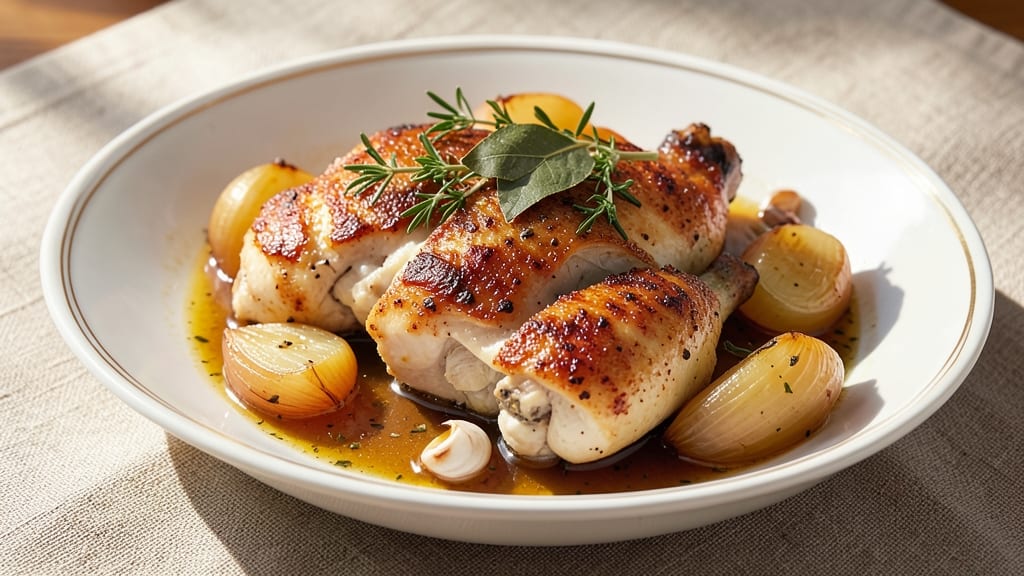
Boiled chicken thighs don't have to be bland or dry—this herb-infused method delivers tender, juicy results in just 20 minutes. After years of perfecting my grandmother's Sunday roast chicken techniques, I've adapted them for the stovetop to create a foolproof method that transforms simple thighs into flavorful bites.
The secret lies in aromatics and precise timing, not complicated techniques.
What makes this recipe stand out is the balance of simplicity and professional results. You'll use pantry staples like garlic, thyme, and bay leaves to infuse flavor directly into the chicken as it simmers. The thighs stay moist and tender, with crisp edges that signal perfect doneness.
This method works equally well for weeknight dinners or meal prep—just double the batch and store leftovers for up to four days.
By the time you're done, you'll have restaurant-quality chicken that's ready to serve over rice, in salads, or as a standalone protein dish. The herb-infused broth can even be strained and used for soups or sauces, reducing waste and maximizing flavor.
The process is straightforward: prep the thighs, simmer gently, and finish with a quick sear for texture.
This recipe proves that boiled chicken doesn't have to be boring—it can be the star of your meal. Whether you're feeding a family or prepping for the week, these herb-infused thighs deliver consistent, delicious results every time.
Let's get started with this foolproof method that transforms simple ingredients into something extraordinary.
Ingredients for boiled chicken thighs
Pantry staples plus a few aromatic herbs. Twenty minutes to restaurant-quality chicken.
| Ingredient | Amount | Notes |
|---|---|---|
| Chicken Thighs, Bone-In 🍗 | 1 ½ lb | Skin-on for crisp edges |
| Yellow Onion 🧅 | 1 whole | Quartered, skin on |
| Garlic Cloves 🧄 | 4 cloves | Smashed, not minced |
| Fresh Thyme Sprigs 🌿 | 4 sprigs | Stems intact for easy removal |
| Fresh Rosemary 🌿 | 1 tbsp | Chopped, needle-like leaves |
| Bay Leaves 🍃 | 2 whole | Dried, standard size |
| Extra-Virgin Olive Oil 🫒 | 2 tbsp | High quality, fruity |
| Water 💧 | 2 cups | Room temperature preferred |
| Salt 🧂 | 1 ½ tsp | Diamond Crystal kosher |
| Black Peppercorns 🌶️ | ½ tsp | Freshly cracked |
| Lemon Juice 🍋 | 1 tbsp | Freshly squeezed |
| Unsalted Butter 🧈 | 2 tbsp | Cold, cubed for finishing |
The chicken thighs should have a good amount of fat—bone-in, skin-on is ideal for juiciness. Trader Joe's or Costco often have great deals on family packs. Look for thighs with a vibrant pink color and minimal bruising. Fresh herbs make all the difference here: Whole Foods or your local market usually have the freshest thyme and rosemary. If you can't find fresh rosemary, dried at half the amount works in a pinch, but fresh is worth the hunt. The bay leaves? Any dried will do, but California brand is widely available and reliable.
No fresh thyme? Dried thyme at one-third the amount gets you close, though the flavor won't be as bright. Running out of rosemary? Fresh oregano is a decent swap, but reduce to half the quantity. The onion and garlic are non-negotiable for flavor, but if you're in a rush, onion powder and garlic powder (each 1 tsp) will work—though nothing beats the real deal. The olive oil should be extra-virgin—cheap oil will make the dish taste flat. For the finishing butter, European-style brands like Plugrá add a richer flavor, but any unsalted butter works. The lemon juice can be bottled, but fresh is always better if you've got it.
This chicken reheats beautifully—just cover with broth and simmer for 5 minutes on low heat. Store leftovers in the fridge for 4 days or freeze for 3 months. The broth can be strained and used for soups or sauces, so don't pour it down the drain. I like to portion the chicken into containers with some of the broth for easy reheating. If you're prepping for the week, double the batch—it's that good.
Why You'll Love This Recipe
- Here’s what sold me: the skin-on thighs get that glorious crisp edge while staying shockingly juicy inside. The butter-lemon sauce at the end? It’s the cherry on top—bright, herby, and rich all at once. Honestly, I’ve tried fancier methods, but this gentle simmer with the bay leaves and cracked peppercorns nails it every time.
- One-Pot Magic: I swear by this recipe because it’s literally one pot, one lid, and 15 minutes of hands-off time. No chopping boards overflowing with scraps, no multiple pans to wash—just the quartered onion, smashed garlic, and herbs tossed in with the thighs. That olive oil? It’s the secret to keeping everything from sticking like glue while the thyme and rosemary work their flavor magic.
- Crisp-Tender Perfection: Here’s what sold me: the skin-on thighs get that glorious crisp edge while staying shockingly juicy inside. The butter-lemon sauce at the end? It’s the cherry on top—bright, herby, and rich all at once. Honestly, I’ve tried fancier methods, but this gentle simmer with the bay leaves and cracked peppercorns nails it every time.
- Meal Prep MVP: Between us, this is my go-to for busy weeks. Cook a big batch, and you’ve got protein for salads, wraps, or even a quick pasta toss—just shred the leftovers and reheat with a splash of that fragrant broth. And since the thighs are bone-in, they stay moist for days, making it a solid choice for lunches. (Yes, even on a Tuesday night.)
Step-by-step instructions for herb-infused boiled chicken thighs
Here's the method that guarantees perfectly tender, herb-infused chicken thighs every time.
Prepare the Chicken and Aromatics
Pat the 1.5 lb chicken thighs, bone-in dry with paper towels to remove any surface moisture. This step is crucial because moisture creates steam instead of crisp edges. Place them skin-side up in a large pot with the quartered yellow onion, smashed 4 cloves garlic, 4 sprigs fresh thyme, 1 tbsp chopped fresh rosemary, and 2 whole bay leaves.
Add the 2 tbsp extra-virgin olive oil to the pot and gently toss everything to coat the chicken evenly. The oil helps distribute the aromatics and prevents the chicken from sticking to the pot. This is where all those herb flavors will infuse into the meat during cooking.
Season and Add Liquid
Sprinkle the chicken with 1.5 tsp salt and 0.5 tsp freshly cracked black peppercorns. Make sure to get the seasoning under the skin as well—this ensures flavor penetration. Pour in the 2 cups room-temperature water, which helps maintain even cooking temperatures throughout the process.
Here's the thing—adding the water gradually prevents sudden temperature fluctuations that could make the chicken tough. The herbs will steep in the water, creating a fragrant broth that keeps the chicken moist while it cooks. Bring everything to a gentle simmer over medium heat.
Simmer Until Tender
Once the liquid reaches a gentle simmer, reduce the heat to maintain a steady temperature—you should see just a few small bubbles breaking the surface. Cover the pot with a tight-fitting lid and let it cook for 15 minutes. This low-and-slow approach is key to achieving tender meat without drying it out.
After 15 minutes, check for doneness by inserting a meat thermometer into the thickest part of a thigh. It should read 165°F. If it's not quite there, continue cooking for another 2-3 minutes. The skin should be golden brown and crisp, while the meat should pull away from the bone with just slight resistance.
Finish with Butter and Lemon
Remove the chicken from the pot and transfer it to a serving platter. Here's where we elevate the dish—add the 2 tbsp cold unsalted butter and 1 tbsp freshly squeezed lemon juice to the cooking liquid. Stir well and let it heat through for 1 minute over low heat. This creates a silky, herb-infused sauce that ties everything together.
Ladle the sauce over the chicken thighs and serve immediately. The butter adds richness, while the lemon juice brightens all those deep herb flavors. Each bite should be perfectly tender with a crisp skin and a burst of aromatic herbs in every mouthful. This is the moment that matters—don't skip the finishing touches.
Pro Tips For Making Boiled Chicken Thighs
- Skip the Boil Rush: That first 5 minutes of simmering? Don’t rush it. Let the water actually reach a gentle simmer before covering—anything hotter will cook the skin too fast and leave it rubbery. I used to crank the heat and wonder why my crisp edges never happened.
- Smash, Don’t Mince Garlic: Those smashed garlic cloves aren’t just for show—they bruise and release flavor into the broth while staying intact. Minced garlic burns and turns bitter. Trust me, your sauce will taste deeper if you leave those cloves whole but damaged.
- Salt Under the Skin: Don’t just sprinkle salt on top. Slide your fingers between the skin and meat to create pockets, then season there too. That’s how the flavor gets locked in—not just on the surface. (Yes, even if you’re impatient like me.)
- Finish with Cold Butter: Adding that 2 tbsp cold unsalted butter at the end isn’t just for richness—it cools the sauce just enough to prevent curdling when you add the lemon juice. Stir it in after removing the chicken, or you’ll end up with a greasy mess instead of a silky glaze.
Flavor customization for this dish
Herb Variations
Swap out the classic thyme and rosemary for fresh sage and oregano—just 1 tbsp each—for an Italian-inspired twist. The sage adds earthy depth while oregano brings brightness. I tested this combo and loved how it paired with garlic bread.
For a Mediterranean touch, replace rosemary with fresh marjoram (1 tbsp) and add ½ tsp cinnamon—trust me, it works surprisingly well. 🌿
Spicy Kick
Add ½ tsp crushed red pepper flakes or 1-2 slices of fresh jalapeño to the pot during simmering for subtle heat. For a smoky profile, swap one bay leaf for ½ tsp smoked paprika.
I once added ½ tsp cayenne to the water and was amazed at how it infused the meat without overpowering. The key is balance—start with less and adjust to taste.
Citrus Brightness
Boost the lemon with ½ tsp orange zest or 1 tbsp fresh lime juice in the finishing sauce. The citrus cuts through the richness beautifully.
For a tropical vibe, add ½ cup pineapple juice to the water (reduce the regular water to 1.5 cups)—it creates a fragrant broth perfect for serving with rice. The pineapple's acidity tenderizes the chicken slightly too.
Umami Depth
For extra richness, add 1 tsp fish sauce or 1 tbsp soy sauce to the water. I discovered this trick when adapting Asian-inspired recipes, and it adds incredible depth without overpowering.
Another option is 1 slice of bacon cooked with the aromatics before adding chicken—remove it before serving but leave the rendered fat for extra flavor. The bacon adds a smoky-sweet note that pairs perfectly with the herbs.
Sweet Balance
Add 1 tbsp honey or 1 tbsp maple syrup to the water for subtle sweetness that caramelizes during cooking. This works especially well with the rosemary and thyme.
For a more pronounced sweetness, try ½ cup apple cider instead of water—it creates a beautiful, aromatic broth perfect for serving with mashed potatoes. The sweetness balances the savory herbs beautifully.
Nutrition facts
Frequently asked questions
Why do you use bone-in chicken thighs instead of boneless?
The bone helps keep the meat moist and tender during cooking. Bone-in thighs stay juicier because the bone acts like a natural insulator, preventing the meat from drying out. Plus, the flavor infusion happens more evenly when the bone is included. For best results, stick with bone-in, skin-on thighs.
Can I use chicken breasts instead of thighs?
Chicken breasts cook faster and are more prone to drying out when boiled. For this method, thighs are ideal because their higher fat content stays tender during simmering. If you must use breasts, reduce cooking time to 10-12 minutes and avoid overcooking. They'll be less flavorful without the fat and connective tissue.
What if my chicken isn't crispy after boiling?
Crispy skin comes from proper drying before cooking and a gentle simmer. Pat the thighs very dry with paper towels before adding to the pot. If the skin isn't crisp after cooking, try searing them in a hot pan for 1-2 minutes per side after boiling for extra crispiness. The butter and lemon finishing step also adds a subtle richness that enhances texture.
How can I make this dish ahead of time?
Cook the chicken as directed, then let it cool completely before storing. Reheat covered with a splash of broth or water in a pot over low heat for 5 minutes. The herbs and aromatics will still be vibrant. For meal prep, double the batch and store in airtight containers for up to 4 days in the fridge or 3 months in the freezer.
What's the best way to use the leftover cooking broth?
Strain the broth through a fine-mesh sieve to remove herbs and solids. Use it as a base for soups, risottos, or sauces. The aromatic herbs give it deep flavor—try adding it to rice dishes or drizzling over roasted vegetables. For extra richness, whisk in 1 tbsp butter or 1 tbsp cream before using.