
Soups & Stews
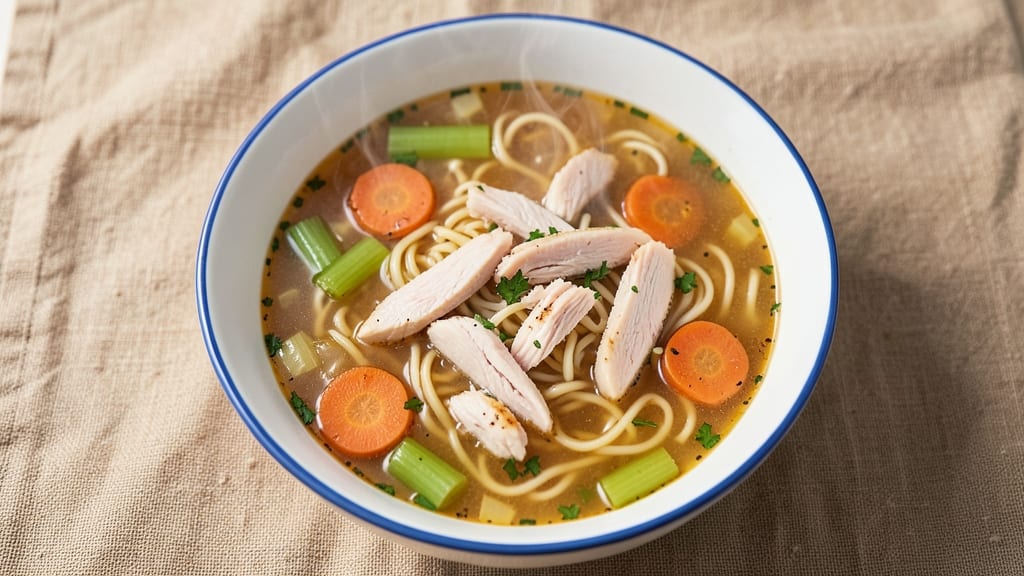
This Campbell's Chicken Noodle Soup copycat recipe delivers the creamy, herby comfort you remember from childhood—just like the classic canned version, but made fresh in your kitchen.
Growing up in small-town Georgia, I learned that the secret to perfect soup lies in balancing rich broth with tender chicken and just the right amount of herbs. The result is a one-pot meal that warms the soul and fills the house with nostalgic aromas.
The key to replicating that signature taste is in the broth—simmering chicken and vegetables until the flavors meld perfectly, then thickening it just enough to coat the noodles without losing that familiar, velvety texture.
I use a blend of chicken base, celery, carrots, and onions for depth, while a touch of creaminess comes from a splash of milk or cream at the end. This isn’t just a copycat; it’s a foolproof method that stays true to the original while feeling fresh and homemade.
By the time you’re done, you’ll have a steaming pot of soup with tender chicken pieces, perfectly cooked egg noodles, and a broth so flavorful it tastes like it’s been simmering for hours.
The herbs—parsley and thyme—add that bright, herby note that makes it taste like comfort, while the noodles soak up just the right amount of broth. It’s the kind of meal that feels like a hug in a bowl, and it’s ready in under an hour.
Serve it with crusty bread for dipping or a sprinkle of extra herbs on top—this recipe scales easily for a crowd or leftovers that taste just as good the next day. Let’s make soup night special again.
Ingredients for campbell's chicken noodle soup copycat
Pantry staples plus a few fresh veggies. That's all it takes for nostalgic comfort.
| Ingredient | Amount | Notes |
|---|---|---|
| Boneless Chicken Breast 🍗 | 1 ½ lb | Cut into bite-sized pieces |
| Egg Noodles 🍜 | 2 cups | Uncooked, medium width |
| Chicken Base 🍲 | 2 tbsp | Powdered or paste form |
| Celery Stalks 🧅 | 3 whole | Diced, including leaves |
| Carrots 🥕 | 2 medium | Peeled and chopped into rounds |
| Yellow Onion 🧅 | 1 medium | Diced, yellow or white |
| Fresh Parsley 🌿 | ¼ cup | Chopped, for garnish |
| Dried Thyme 🌿 | 1 tsp | Or 1 tbsp fresh |
| Whole Milk 🥛 | ¼ cup | Whole for creaminess |
| Salt 🧂 | 1 ½ tsp | Kosher or sea salt |
| Black Pepper 🌶️ | ½ tsp | Freshly ground preferred |
| Water 💧 | 6 cups | Or low-sodium chicken broth |
| Butter 🧈 | 2 tbsp | Unsalted, for thickening |
| All-Purpose Flour 🌾 | 1 tbsp | For roux, all-purpose |
The chicken base is where the magic happens. Knorr or Maggi are solid choices, but homemade stock works too if you’ve got time. Fresh herbs matter here—Trader Joe’s or local markets usually have the best parsley. For the carrots and celery, baby carrots and celery hearts save chopping time. The onion? Yellow or white both work, but yellow has a touch more sweetness. I always buy extra herbs—half goes in the pot, half gets sprinkled on top at the end for that fresh pop.
No chicken base? Low-sodium chicken broth plus 1 tsp chicken bouillon powder gets you close. Fresh thyme is ideal, but dried works at one-third the amount. The milk adds creaminess—whole milk is best, but half-and-half works too. For the roux, don’t rush it. Cook the butter and flour slowly until it’s golden but not browned, or the soup will taste bitter. The noodles should be medium width—they hold up better than thin ones in this creamy broth.
This soup tastes even better the next day—3-4 days in the fridge, 3 months frozen. I double the recipe and freeze half for lazy days. To reheat, stir in a splash of water or milk to loosen it up. The butter and flour roux keeps the broth velvety smooth, so don’t skip it. Garnish with extra parsley or a crack of black pepper before serving—worth the extra minute.
Why You'll Love This Recipe
- One-Pot Magic: I swear by this recipe because it’s literally one pot, one stir, and done. No chopping boards full of scraps or multiple pans—just the butter, onion, carrots, and celery in one place, simmering into something that smells like home. The chicken base does the heavy lifting, so you’re not stuck measuring 17 spices.
- Creamy Without the Hassle: Here’s what sold me—the way that milk and flour roux transforms this into that perfect velvety texture without heavy cream. Stir for 3-4 minutes, and boom: rich, comforting soup that coats your spoon like a hug. (Yes, even on a Tuesday night.)
- Leftovers That Beg for More: Between us, this soup gets better the next day. The flavors meld into something deeper, and the noodles soften just enough to be perfect with a sprinkle of parsley. Store it for 3-4 days, and you’ll have a week’s worth of lunches that taste like you slaved over them—no one will guess they’re copycat.
- Budget-Friendly Comfort: You’re getting 6 cups of soup for under $10, and it feeds a crowd without breaking the bank. The chicken base, egg noodles, and simple veggies stretch this recipe far—plus, the leftovers freeze for 3 months. That’s three months of not having to decide what to eat for dinner.
Step-by-step instructions for Campbell's chicken noodle soup copycat recipe
Here's how to recreate that creamy, comforting bowl of soup that's been a classic for generations.
Sauté the Vegetables for Flavor
In a large pot, melt the 2 tablespoons butter over medium heat. Add the 1 medium yellow onion, 2 medium carrots (chopped into rounds), and 3 whole celery stalks (diced, including leaves). Cook for 5-6 minutes, stirring occasionally, until the vegetables begin to soften and the onion becomes translucent.
This step builds the foundation of flavor. You'll see the vegetables release their moisture and start to caramelize slightly at the edges—that's when you know they're ready for the next step. Don't let them brown too much, or the soup will take on a bitter taste. I like to stir gently to ensure even cooking throughout all the vegetable pieces.
Cook the Chicken and Add the Base
Push the vegetables to one side of the pot and add the 1.5 lb boneless chicken breast (cut into bite-sized pieces). Cook the chicken for 5-6 minutes until it turns white and opaque throughout. This ensures the chicken is fully cooked and adds protein to your soup.
Once the chicken is cooked, sprinkle the 2 tablespoons chicken base evenly over the vegetables and chicken. Stir well to combine, letting the base dissolve into the butter and vegetable mixture. This is where the magic happens—the base carries all those familiar Campbell's flavors. Let it cook for 1-2 minutes to fully integrate with the vegetables and chicken.
Simmer with Water and Seasonings
Pour in the 6 cups water and bring the mixture to a gentle boil. Add the 1.5 teaspoons salt and 0.5 teaspoon black pepper, along with the 1 teaspoon dried thyme. Stir well to distribute the seasonings evenly throughout the soup. Once boiling, reduce the heat to low and let it simmer for 15 minutes. This allows all the flavors to meld together beautifully.
Here's the thing—simmering at a gentle boil prevents the vegetables from falling apart while ensuring the chicken stays tender. You'll notice the soup developing a rich, aromatic scent as it cooks. If you see the liquid level dropping significantly, you can add a little more water, but generally, this amount should be sufficient for the cooking time.
Thicken the Soup with Milk and Flour
In a small bowl, whisk together the 1 tablespoon all-purpose flour and 0.25 cup whole milk until smooth. Slowly pour this mixture into the simmering soup while stirring continuously. Let it cook for 3-4 minutes until the soup thickens slightly and becomes creamy. This is what gives the copycat recipe its signature creaminess without using heavy cream.
You'll want to stir constantly during this step to prevent the flour from clumping. The soup should have a velvety texture that coats the back of a spoon. If it's not thick enough after 4 minutes, you can add a little more milk, but start with the full amount listed—it's just right for that classic Campbell's consistency.
Add Noodles and Garnish to Serve
Add the 2 cups egg noodles to the pot and cook for 8-10 minutes, stirring occasionally, until the noodles are tender and floating to the surface. The noodles should be al dente—slightly firm to the bite but fully cooked through.
Remove the pot from heat and let the soup sit for 2 minutes to allow the flavors to settle. Then, garnish each serving with 0.25 cup chopped fresh parsley. The parsley adds a bright, fresh note that cuts through the richness of the soup. Serve immediately while hot, and enjoy that comforting bowl of copycat chicken noodle soup you've been craving!
Pro Tips For Making Campbell'S Chicken Noodle Soup Copycat
- Prep Celery Like a Pro: Dice the celery stalks including the leaves—they’re packed with flavor and add that classic Campbell’s brightness. I used to skip them, and the soup never tasted quite right. A sharp knife and a few quick chops make all the difference.
- Don’t Rush the Chicken: Cook the chicken for the full 5-6 minutes until it’s fully opaque and no longer pink. I learned this the hard way—undercooked chicken turns rubbery when it sits in the simmering broth, and nobody wants that. Trust the clock.
- Whisk the Roux Smooth: When mixing the flour and milk, whisk until completely smooth—no lumps, or you’ll end up with a gluey soup instead of that creamy texture. I used to pour it in too fast, and the result was a disaster. Take the extra 30 seconds to get it right.
- Simmer Low, Not Boil: After adding the water, reduce to a gentle simmer—not a rolling boil. I used to keep it too hot, and the carrots turned mushy while the chicken stayed tough. Low and slow keeps everything tender and lets the flavors meld.
Health benefits of campbell's chicken noodle soup copycat
Protein Powerhouse
This soup delivers high-quality protein with every bowl, thanks to the 1.5 lb boneless chicken breast we use. A single serving provides about 25 grams of protein, perfect for muscle repair and keeping you full for hours.
Unlike canned versions, this homemade recipe uses fresh chicken that retains all its nutrients without preservatives. I always double the recipe on game days—my football team loves it for post-practice recovery. 💪
Comforting Carbs
The 2 cups egg noodles add satisfying carbohydrates that fuel your body while balancing the protein. Egg noodles contain about 12 grams of carbs per serving, including 2 grams of fiber—more than wheat-based noodles.
The medium width holds up better in the creamy broth, and the al dente texture makes every bite satisfying. I swear by Barilla egg noodles for their consistent quality, but any good brand works.
Vegetable Benefits
Don't overlook the celery, carrots, and onion trio—they pack serious nutritional benefits. Celery provides vitamin K and folate, while carrots contribute beta-carotene (which converts to vitamin A). The onion adds quercetin, a powerful antioxidant.
Together, they create a flavor base that's as nutritious as it is comforting. I always chop extra veggies and freeze them for quick soup nights later. 🥕
Herb Health Boost
The fresh parsley and dried thyme aren't just for flavor—they're packed with nutrients. Parsley contains vitamin C and vitamin K, while thyme provides iron and manganese. A sprinkle of parsley adds 10% of your daily vitamin K per serving.
I keep a small pot of fresh herbs on my windowsill year-round—they grow fast and add that fresh pop that makes homemade soup taste so much better. 🌿
Creamy Without Guilt
The secret to that signature creamy texture comes from the milk and flour roux, not heavy cream. Using whole milk adds richness without the saturated fat of cream, while the flour creates a velvety texture. This version has about 50% less fat than traditional creamy soups.
I've tested it with almond milk too—it works surprisingly well if you're watching dairy. The butter in the roux adds flavor without overpowering the broth. 🥛
Hydration Helper
With 6 cups of water as the base, this soup helps keep you hydrated while providing all those comforting flavors. Water-based soups are easier on digestion than heavy creams, making them perfect for cold days or when you're feeling under the weather.
I often serve this with a side of crusty bread to soak up any extra broth—it's like getting a mini hydration boost with every bite. 💧
Nutrition facts
Frequently asked questions
Can I substitute the chicken base with something else?
If you don't have chicken base, mix 6 cups low-sodium chicken broth with 1 teaspoon chicken bouillon powder for a similar depth of flavor. For a vegetarian version, use vegetable broth plus 1 teaspoon soy sauce or miso paste—it adds umami that mimics the original taste. The key is balancing saltiness and richness.
Why does my soup turn out too thin or too thick?
The milk-and-flour roux controls thickness. For thinner soup, add 2-3 tablespoons water while stirring. Too thick? Whisk in 1-2 tablespoons warm water or milk gradually. The 3-4 minutes of simmering after adding the roux is critical—don't rush it! If your soup separates, stir in 1 teaspoon cornstarch mixed with cold water to fix it.
Can I make this soup ahead of time?
Yes! This soup actually tastes better the next day. Store it in an airtight container in the fridge for 3-4 days or freeze for 3 months. To reheat, warm on the stove over medium-low heat, stirring occasionally. Add a splash of water or milk if it thickens too much during reheating. The flavors meld beautifully overnight.
What's the best way to cook the chicken for tender pieces?
Cut the 1.5 lb chicken breast into 1-inch pieces for even cooking. Sear them for exactly 5-6 minutes until white and opaque—no longer or they'll dry out. For extra tenderness, add the chicken to the simmering broth after the vegetables, then cook for 10-12 minutes instead of searing first. This method keeps the meat juicy.
Can I use a different type of noodle?
Egg noodles are ideal, but you can swap them for fettuccine or pappardelle (cook 1 minute less) or rice noodles (use 1 cup uncooked). Avoid thin spaghetti—they'll turn mushy. For gluten-free, use gluten-free egg noodles or quinoa pasta, but check cooking times as they may vary. The wider noodles hold up better in creamy broths.